 OBJECT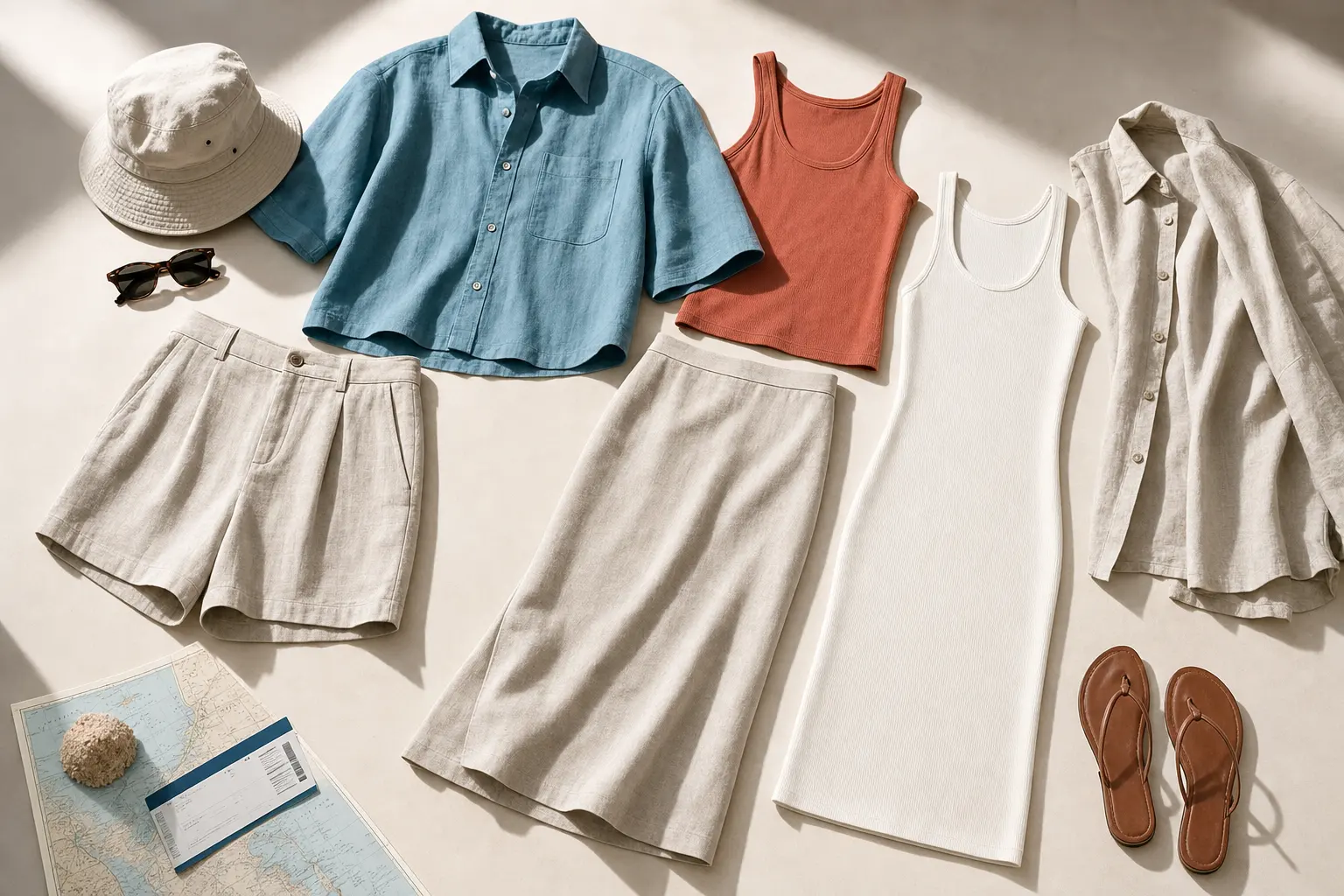
Think of Nauru not just as a tiny Pacific island, but as a perfectly edited mood board. When we talk about a Nauru style guide, we’re talking about micro-island minimalism: ocean-facing light, heat-adapted layers, and silhouettes that move effortlessly from runway to reef.
This guide translates that island into a wearable system: a tight capsule of breathable fabrics, lagoon-inspired color stories, and streetwear shapes stripped back to pure function. If you love Korean design precision but live for tropical air and off-duty ease, this is your blueprint.
Nauru Style Guide: Micro-Island Minimalism as a Design Language
Designers love constraints. A place like Nauru is the ultimate constraint: tiny landmass, intense sun, and a lifestyle that slides between bare-foot casual and quietly formal. Translating that into clothing means stripping out anything extra and building around purpose: protection from heat, ease of movement, and intentional simplicity. Every piece in your wardrobe has to work hard or it does not make the cut.
Micro-island minimalism starts with reduction. You’re editing silhouettes down to essential lines: straight-cut shorts, slightly boxy shirts, column skirts, clean tanks. Rather than relying on heavy detailing, interest comes from proportion, subtle texture, and smart layering that responds to real climate, not just air-conditioned interiors. It’s a mindset that aligns naturally with modern Korean design, where clarity and structure sit quietly in the background and let the wearer lead.
Think about how a limited environment shapes behavior. With fewer shops, fewer events, and fewer seasonal shifts, clothes in a place like this need longevity. Pieces are worn often, washed hard, and expected to slot into multiple roles. That’s why we prioritize durable fabrics that soften beautifully over time, ultra-versatile silhouettes, and color palettes borrowed straight from reef, cloud, and sand. You’re not dressing for spectacle; you’re dressing for a highly edited life that still feels rich in detail.
Principles of micro-island style
- Purpose-first design: Every garment earns its place through function, not trend.
- Breathable structures: Cuts that stand off the skin to allow airflow, rather than clinging.
- Soft but resilient fabrics: Materials that handle sun, sweat, and sea-salt air with grace.
- Low-maintenance care: Pieces that can be line-dried, re-worn, and styled multiple ways.
- Subtle personality: Expression through color stories and quiet details instead of loud logos.
When you build a wardrobe on these principles, you’re not just copying an island look. You’re adopting a design system: fewer pieces, deeper intention, and a style language that feels calm, even when the sun is unforgiving and the days are long.
Building a Heat-Ready Capsule Wardrobe Inspired by Nauru
A capsule wardrobe shaped by a tiny equatorial island has to be brutally efficient. There’s no room for single-use outfits or delicate fabrics that melt in humidity. Instead, you work with a lean set of silhouettes that layer easily, breathe well, and transform under accessories. The result is a focused system that still feels expressive and modern.
Start by defining your weekly rhythm: beach mornings, city errands, casual dinners, maybe a work session in a cool cafe or hotel lounge. Your capsule should flex across all of these without feeling overbuilt. Think in terms of modular outfits: the same shorts under an airy shirt for day, then under an oversized blazer-style shirt for night; a dress layered over swimwear by day and over a bralette and jewelry by evening.
Core island capsule checklist
- 2–3 tops: One structured tank, one relaxed short-sleeve shirt, and one long-sleeve overshirt for sun and AC.
- 2 bottoms: Tailored shorts and a column skirt or relaxed wide-leg pants in a breathable fabric.
- 1–2 dresses: A straight-cut tank dress and/or a T-shirt dress that can be belted, layered, or worn as a beach cover-up.
- 1 light layer: An unlined shirt-jacket or kimono-style layer for evenings, flights, or unexpected temperature drops.
- Swim-adjacent pieces: A sleek bodysuit or bikini top that doubles as a base layer under sheer or open-weave items.
The key move is color alignment. Choose one neutral base (sand, stone, or deep navy) and one or two accent shades that reference reef and sky. When every piece sits in the same palette, you unlock near-infinite combinations. A single sand-toned skirt can anchor bright lagoon blue one day and a muted coral top the next without ever feeling repetitive.
From a Korean design perspective, this capsule is about hidden complexity. At first glance the wardrobe looks very simple, but subtle decisions in cut and proportion shift mood completely. A slightly dropped shoulder on a shirt, a razor-clean neckline on a tank, or a hem that hovers just above the ankle — these micro-adjustments are what keep a minimal island capsule from feeling generic.
Fabrics, Breathability, and Texture for Island-Level Heat
On a small equatorial island, fabric choice is non-negotiable. You’re dealing with high UV, heavy humidity, and a constant push-pull between blazing outdoor light and aggressively air-conditioned interiors. The wrong fabric feels suffocating within minutes; the right fabric turns the same silhouette into armor built for heat and motion.
For base layers and core pieces, prioritize light to midweight materials with open weaves or moisture-wicking structures. Natural fibers like cotton and linen are classics for a reason: they absorb sweat, dry relatively quickly, and soften beautifully over repeated wear. Modern engineered fibers can also perform well here, especially when knit or woven in a way that pulls moisture away from the skin and releases it into the air.
Fabric choices for a Nauru-inspired wardrobe
- Linen and linen blends: Ideal for shirts, wide-leg pants, and relaxed dresses. Expect some wrinkling; embrace it as part of the texture story.
- Lightweight cotton poplin: Crisp, structured, and breathable — perfect for boxy shirts and shirt-dresses that hold shape off the body.
- Cotton jersey or modal: Soft, drapey knits that work for tanks and T-shirt dresses while still allowing air to circulate.
- Technical blends: Smooth, quick-dry fabrics for shorts or hybrid swim pieces that can handle water and dry in the sun without clinging.
- Open-weave textures: Gauze, mesh panels, or crochet-style details that create visual depth while ventilating heat-prone zones.
Texture plays a critical role in a minimal palette. When your color story leans into neutrals and ocean tones, surface interest becomes the primary way to keep looks from feeling flat. Pair a crisp poplin shirt with a slubby linen skirt, or a matte jersey dress with a subtly sheened technical short layered underneath. You’re building tiny contrasts that reward a second look, even when the silhouette is extremely simple.
Maintenance is the final consideration. In a place with strong sun and salt air, you want fabrics that handle frequent washing and line drying without degrading instantly. Pre-washed linens, enzyme-treated cottons, and well-constructed knits are worth prioritizing. They may feel slightly more structured on day one, but they relax into your body over time, echoing that lived-in island energy while holding onto the clean lines that define contemporary Korean-inspired design.
Lagoon Blues and Coral Sands: Color Stories from Nauru
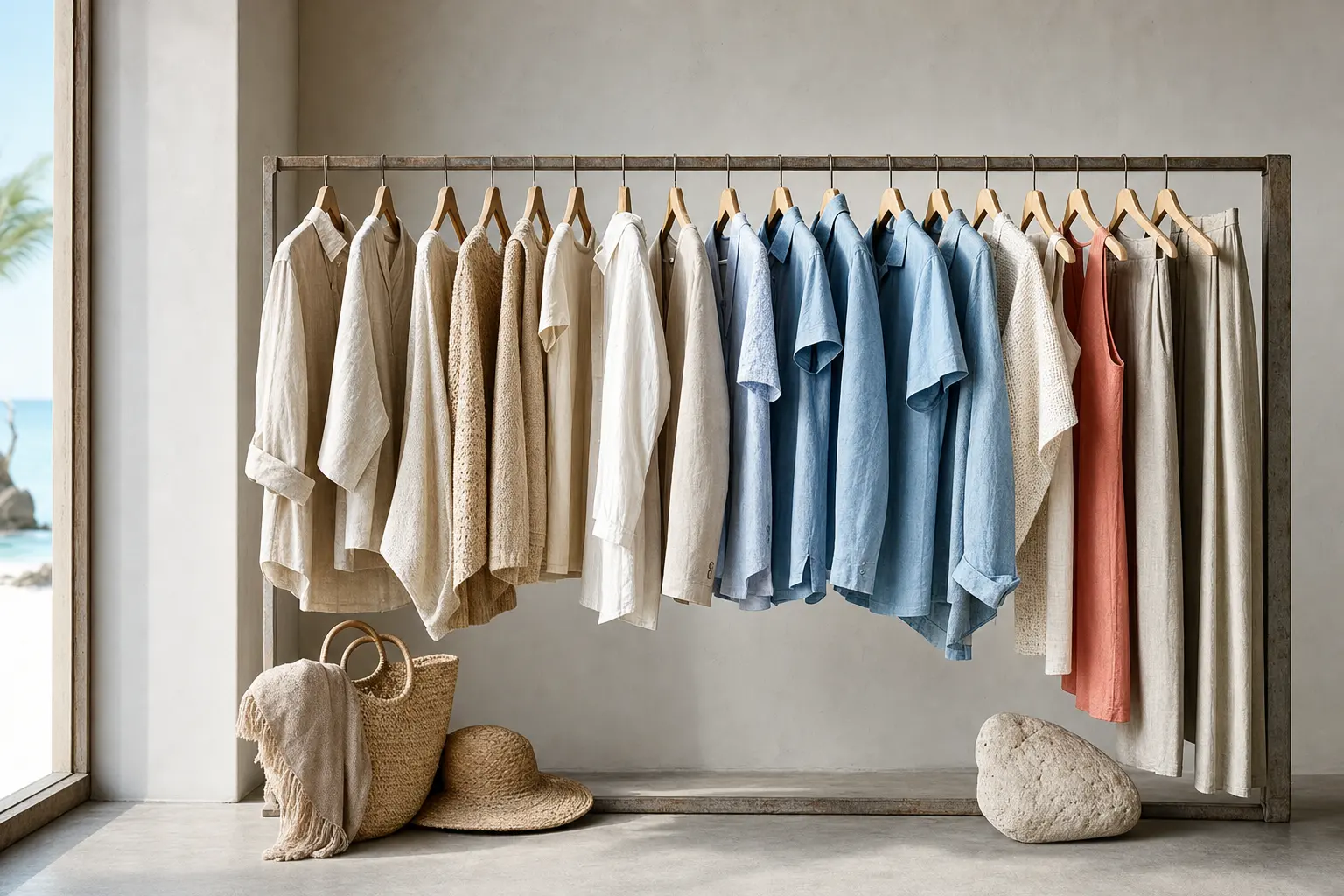
Color is where an island really speaks. Instead of chasing trend palettes, you can lift directly from the landscape: the sharp cerulean of open water, the pale turquoise of the shallows, the desaturated coral tones of weathered stone, and the chalky beige of sun-baked sand. Together, these shades create a palette that feels both serene and electric — perfect for a modern minimalist who still wants impact.
Begin with your base neutrals. On a micro-island, white can be brutal under midday sun, so think in terms of softened alternatives: oat, shell, bone, and stone. These off-whites and light beiges are easier on the eyes, more forgiving with sunscreen and sea-spray, and more interesting when styled monochrome. Anchor pieces like skirts, shorts, and dresses in these tones to ensure everything works together without effort.
Island-inspired palette architecture
- Base neutrals: Sand, stone, and warm gray for grounding pieces like bottoms and outer layers.
- Ocean tones: Lagoon teal, muted aqua, and deep navy for shirts, tanks, and swim-adjacent layers.
- Coral accents: Soft coral, faded terracotta, or blush as strategic pops in accessories or statement pieces.
- Shadow tones: Charcoal or midnight blue to add depth for evening, especially in structured shirts or light jackets.
Monochrome dressing works beautifully with this palette. A full sand look — tank, skirt, and sandals — becomes a canvas for one sharp coral accessory or a single ocean-blue piece. Similarly, head-to-toe navy feels cooler and more architectural than black in tropical light, echoing the depth of the sea at dusk while remaining rigorously chic.
From a styling perspective, treat these colors the way a Korean graphic designer handles a grid: controlled, intentional, with negative space left for air and light. One statement shade per outfit is often enough. A lagoon-toned shirt with stone shorts and neutral slides. A coral tank under a bone overshirt with navy shorts. It’s the restraint that keeps the look refined, even when the setting is pure beach.
Island Streetwear: Sport, Utility, and Relaxed Tailoring
Streetwear on a small Pacific island is less about hype graphics and more about smart hybridity. Pieces have to move between dock, scooter, beach, and evening hangouts without looking out of place or falling apart under UV. That makes functional details — pockets, drawcords, mesh vents — more valuable than oversized logos, and relaxed tailoring more useful than heavy hoodies.
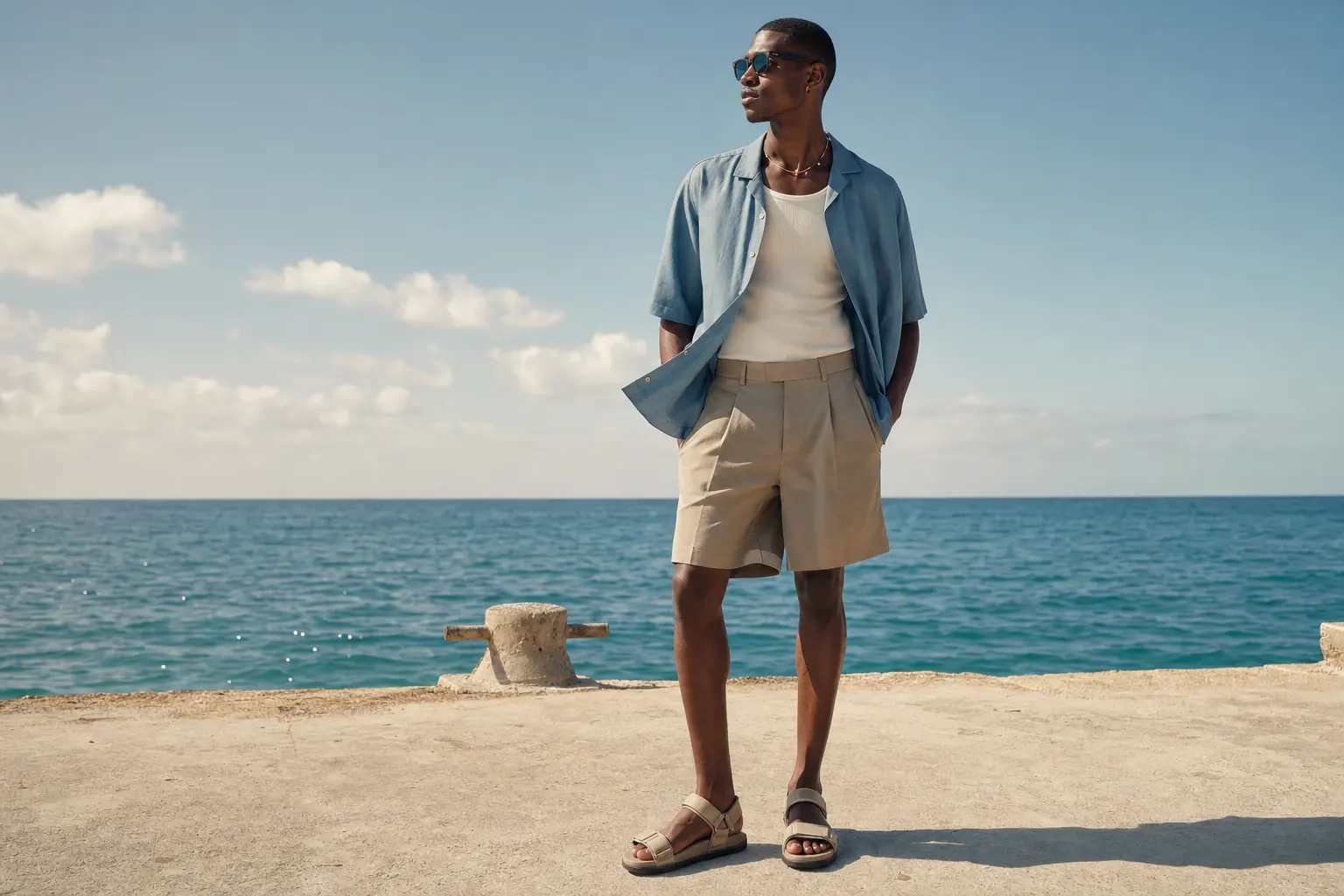
Start with the bottom half. A clean, slightly longer short with a tailored line instantly feels more polished than a traditional board short but still reads casual. Wide-leg, cropped pants in technical fabric or linen give you streetwear volume without excess weight. Pair these with boxy T-shirts, structured tanks, or open-collar camp shirts to riff on classic street shapes while staying heat-conscious.
Elements of a Nauru-inspired streetwear uniform
- Relaxed but sharp shorts: Mid- to high-rise, straight through the leg, stopping just above the knee.
- Boxy tops: Slightly cropped or half-tucked to keep proportion clean and intentional.
- Utility details: Cargo-style pockets, contrast stitching, or webbing tabs that add visual rhythm without overload.
- Technical touches: Mesh panels, quick-dry finishes, and elasticated waistbands hidden under clean waist facings.
- Understated graphics: If you use prints, keep them subtle: tonal waves, minimal typography, or abstract reef patterns.
Because the setting is more open sky than skyscraper, silhouettes feel better when they echo that looseness. Oversized shirts worn open over swimwear, long tanks layered under cropped overshirts, or midweight jersey pieces that sit away from the body all capture a street sensibility without trapping heat. The trick is in balancing volume: if the shorts are wide, keep the top more controlled; if the top is boxy and long, streamline the bottom.
Footwear seals the look. Lightweight sneakers with breathable uppers, clean slide sandals, or minimal sport sandals with slim straps bridge street and shore seamlessly. Colors can mirror your main palette, but hardware and sole details introduce that utilitarian edge. Combined with tight editing of logos and a focus on fabric, you get a version of streetwear that feels rooted in island life yet fully aligned with global design culture.
Accessories and Layering: Small Details, Big Island Impact
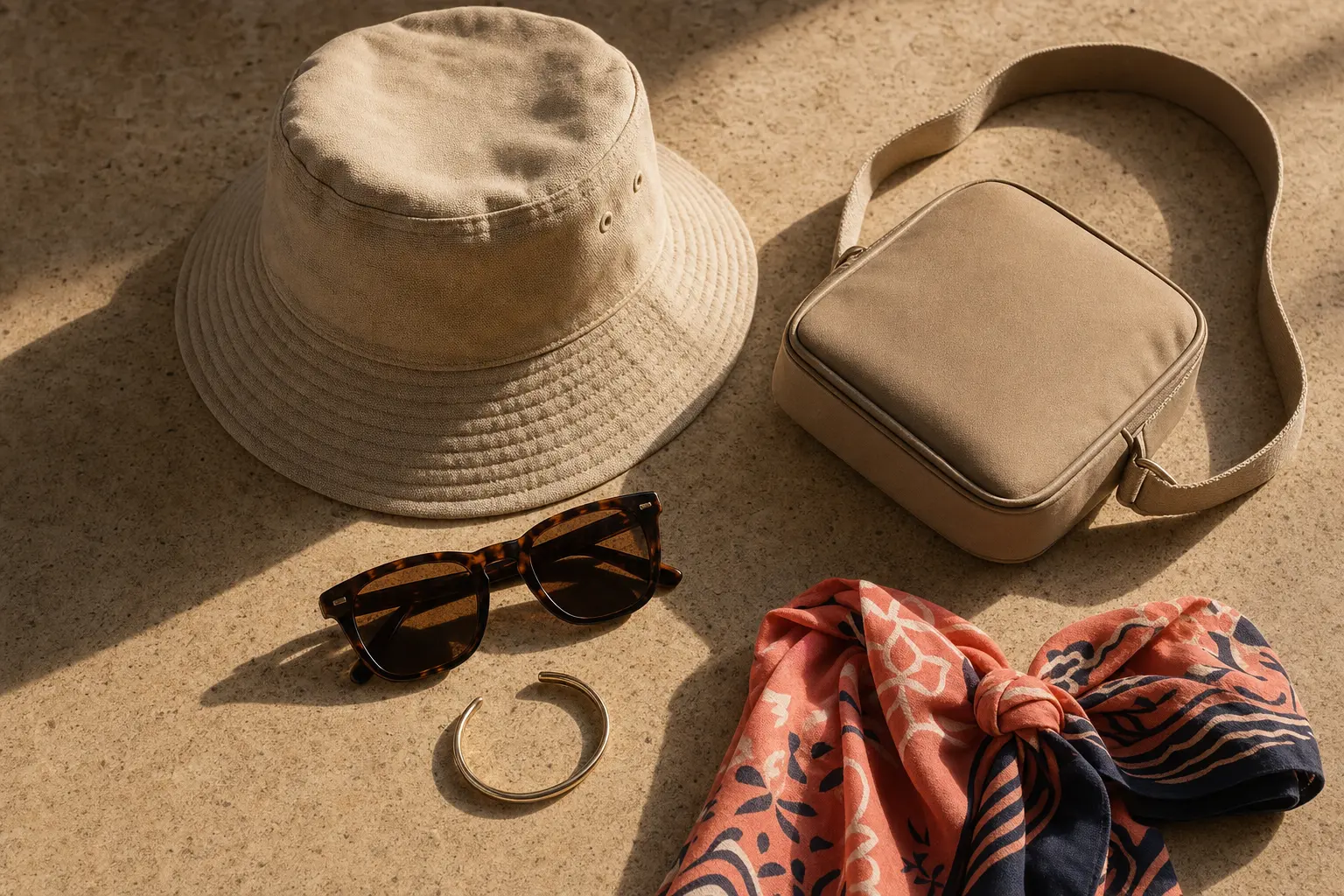
In a climate this intense, accessories become part of your survival strategy as much as your style language. Hats, bags, and jewelry have to be lightweight, sun-ready, and resistant to sweat and sea air — but when chosen well, they also transform a very minimal base outfit into something sharply personal. Think of them as modular upgrades you can add or strip back as the day changes.
Headwear is non-negotiable under equatorial sun. Instead of defaulting to a single cap, consider a tiny rotation: a soft bucket hat in sand or stone, a sleek visor for active days, and maybe a minimal, slightly structured wide-brim option for more polished settings. Each shape changes the energy of your outfit while protecting your face and eyes.
Island accessory toolkit
- Hats: Lightweight, crushable, and washable pieces that can survive luggage and beach bags.
- Sunglasses: Clean, geometric frames in black or deep tortoise to anchor soft color palettes.
- Bags: Compact crossbody or belt bags for daily essentials, plus a foldable tote for market or beach moments.
- Jewelry: Minimal metal pieces — thin cuffs, small hoops, or flat chain necklaces that sit cool on the skin.
- Scarves and bandanas: Breathable squares in cotton or silk blends for sun protection, hair control, or improvised top layers.
Layering in the tropics is more about modulation than warmth. A sheer or mesh overshirt adds dimension without heat. A long-sleeve, ultra-light layer in a neutral shade provides sun coverage for midafternoon walks. For evening, swapping a soft overshirt for a more structured unlined jacket instantly sharpens your outline without changing the core pieces underneath.
These small shifts are where the Korean design sensibility shows up. Instead of dramatic transformations, you work with slight adjustments in proportion, texture, or hardware: trading a canvas bag for a nylon crossbody, adding a single sculptural earring, or looping a narrow belt over a T-shirt dress. On a tiny island, everyone sees everything; subtle evolution over the day feels more interesting — and more sustainable — than constant full outfit changes.
Packing for a Micro-Island: From Airport to Lagoon
Packing for a destination this compact is a design exercise in itself. Luggage space is limited by small-plane realities, and once you arrive, overpacking becomes a burden rather than a comfort. The goal: a carry-on system built around your capsule pieces that takes you from air-conditioned airport lounge to blazing tarmac to breezy shoreline without drama.
Start by pre-building outfits on your bed or rack. For each day, map a day look and an evening variation using mostly the same core pieces. This exposes redundancy early and shows you where you might be overpacking similar items. Photograph these combinations if you need a quick reference later; it’s a simple move that saves decision fatigue once you’re actually in the heat.
Smart packing strategy for a Nauru-inspired trip
- Layered flight look: Soft pants or long shorts, structured tank, light overshirt, and packable scarf for temperature swings.
- Repeating base pieces: One pair of shorts, one skirt or pants, and one dress that each work with at least three tops.
- Footwear triad: Lightweight sneakers, minimal slides, and one water-friendly sandal or flip-flop.
- Micro-laundry plan: Quick-dry fabrics and a small sachet of gentle detergent so you can wash a few pieces at a time.
- Compact accessories: One sunglasses case, two hats, a small jewelry roll, and one foldable tote.
Wear your heaviest pieces on the plane: sneakers, long pants, and your most substantial overshirt or jacket. Keep your softest, quickest-drying items near the top of your bag for immediate access on arrival; often you’ll want to change quickly into something lighter and more open-cut. Roll garments to minimize creasing and create zones in your luggage — bottoms in one segment, tops in another, accessories in pockets.
Because a small island tends to have a slower, more communal rhythm, packing light also has a social benefit: you’re not constantly buried in your suitcase, changing outfits for every micro-occasion. Instead, you can lean into repeating pieces with different styling cues, echoing the steady, cyclical feel of island days — sunrise, heat peak, sunset, night air — rather than chasing constant novelty.
Slow Fashion Mindset: What a Tiny Island Teaches Your Closet
Living or spending time on a tiny island naturally invites a slower, more conscious approach to consumption. Limited space, limited resources, and visible environmental impact create an unfiltered feedback loop for every object you bring in — clothes included. Translating that perspective into your everyday wardrobe turns island style into more than just an aesthetic; it becomes a set of values.
First, you start to appreciate longevity over instant gratification. When options are fewer, each piece needs to work harder and last longer. That means choosing construction quality, reinforced seams, and fabrics that age gracefully. It also encourages neutral-heavy palettes and simple shapes that resist trend cycles and remain relevant far beyond a single season.
Island-influenced slow fashion habits
- Buy less, choose better: Invest in a smaller number of high-impact, high-utility pieces instead of frequent hauls.
- Prioritize versatility: Ask if each item can work in multiple outfits, environments, and times of day.
- Care with intention: Line-dry when possible, wash only when needed, and repair minor damage instead of replacing.
- Respect the environment: Be mindful of microplastics from synthetic fabrics and consider more natural fibers where practical.
- Rotate with purpose: Give garments rest days, letting them air out and recover shape between wears.
This mindset aligns strongly with the disciplined approach of Korean studio design, where restraint and respect for material often outrank buzz and novelty. A carefully chosen linen shirt worn one hundred times in different ways is far more modern than a closet full of barely-used prints. On a micro-island, that kind of emotional durability is not just aspirational; it’s functional.
Carrying this approach back into your city life means your Nauru-inspired wardrobe doesn’t end when the trip does. Instead, your everyday closet gets lighter, sharper, and more considered. Each morning becomes less about searching and more about styling — remixing a limited, well-made set of pieces in new configurations that still feel clean, current, and intimately yours.
Frequently Asked Questions
What defines a Nauru-inspired fashion look?
A Nauru-inspired look is built around micro-island minimalism: heat-ready silhouettes, breathable fabrics, and a tight, intentional color palette. Instead of heavy detailing or loud branding, it leans on clean lines, subtle texture, and lagoon- and sand-influenced tones. Streetwear elements like relaxed shorts and boxy shirts appear, but always in lightweight, functional materials. The result is modern, unfussy, and designed to perform in strong sun and humidity.
How many pieces do I need for a Nauru-style capsule wardrobe?
You can create a highly functional capsule with around 10–14 pieces if you choose carefully. Aim for 3–4 tops, 2–3 bottoms, 1–2 dresses or jumpsuits, 1 light outer layer, and 2–3 pairs of shoes, plus a small set of accessories. The key is a cohesive color palette and silhouettes that layer easily, so each item can appear in multiple outfits. When everything works together, your wardrobe feels larger than it actually is.
Which fabrics work best for an equatorial island climate?
Lightweight, breathable fabrics are essential in an equatorial setting. Linen and linen blends, cotton poplin, soft jersey, and certain technical quick-dry materials are all solid choices. Look for open weaves or moisture-wicking constructions that allow air to move and help sweat evaporate quickly. Avoid heavy, non-breathable synthetics that trap heat and cling to the skin in humidity.
Can island-inspired outfits still look polished for evening?
Yes, island-influenced outfits can feel very refined with a few strategic upgrades. Switch from lighter shorts to a column skirt or wide-leg pants, and add a structured shirt or unlined jacket in a deeper tone like navy or charcoal. Adjust accessories — clean metal jewelry, sharper eyewear, and a compact crossbody bag can instantly elevate a simple base look. Keeping silhouettes clean and color choices restrained helps your evening style feel intentional rather than beach casual.
How do I keep a minimal color palette from feeling boring?
The secret is to work with texture, proportion, and a few well-placed accent tones. Mix crisp fabrics with slubby or open-weave materials, play with lengths and volumes, and reserve brighter lagoon or coral shades for one element in each outfit. Monochrome looks in sand, stone, or navy can be especially striking when accessorized thoughtfully. This approach preserves the calm of minimalism while still delivering visual interest.
Is a Nauru-style wardrobe practical outside of island travel?
Absolutely — the same qualities that make this wardrobe work on a tiny island translate well to city life, especially in warm or transitional climates. Breathable fabrics, simple silhouettes, and a cohesive palette make daily dressing faster and more flexible. You can adapt by swapping sandals for loafers or sneakers and layering under a heavier coat when needed. The core idea is efficiency and ease, which remain useful wherever you are.
















0 responses