 OBJECT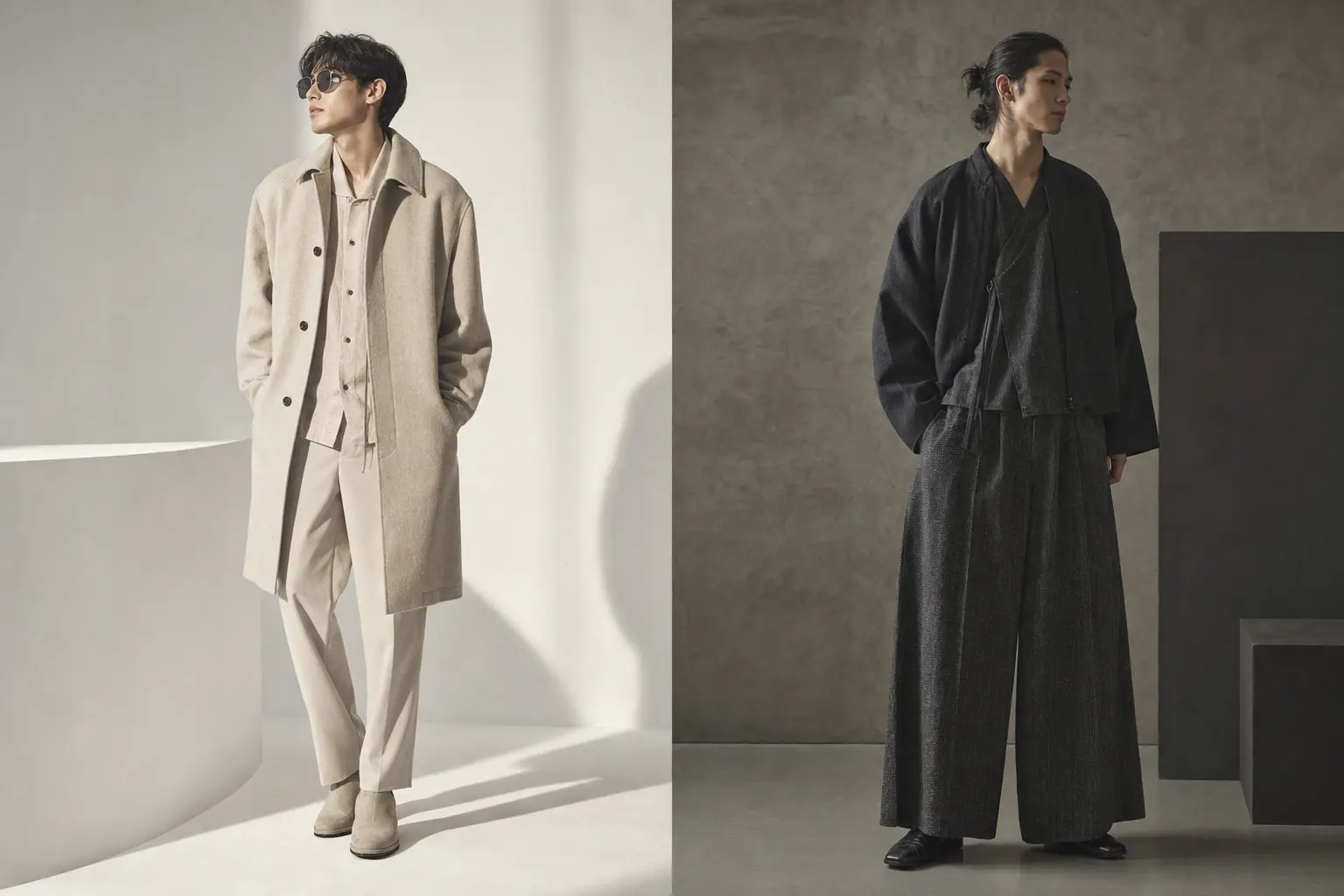
The conversation around korean vs japanese fashion style differences usually starts with clichés: K-pop idols versus Harajuku kids, glossy versus grunge. But the real story is more nuanced, and way more useful if you are actually building a wardrobe.
From Seoul’s export-driven fashion engine and 25 years of Seoul Fashion Week to Tokyo’s avant-garde legacy and newly energized streetwear IPOs, both scenes are evolving fast. This guide breaks down how each aesthetic moves, feels, and lives on the body—so you can shop smarter and style outfits that are distinctly Korean, distinctly Japanese, or a clean fusion of both.
Korean vs Japanese fashion today: beyond the clichés
When people compare these two style powerhouses, they often reduce them to a few surface images: airport K-pop looks vs neon Harajuku layering. In reality, both ecosystems are complex, commercially powerful, and constantly remixing references from luxury, streetwear, and subculture. Understanding how each country’s scene is structured helps explain why their everyday outfits feel so different.
Contemporary Korean fashion is defined by a polished, export-ready energy. With textile and apparel exports in the billions and Seoul Fashion Week celebrating its 25th anniversary in 2025, the industry is built to travel. Municipal programs lean into K-pop and K-drama visibility, using idols and actors as global amplifiers. The result: silhouettes and styling that photograph beautifully, translate easily to international customers, and move quickly with seasonal drops.
Japanese fashion, on the other hand, runs on a dual track. On one side, there is avant-garde craft from designers like Comme des Garçons, Yohji Yamamoto, and Issey Miyake. On the other, there is a hardened, highly monetized streetwear scene where labels like BAPE, Human Made, Sacai, and Undercover thrive. The recent blockbuster IPO of Human Made in Tokyo, with plans for a major Harajuku flagship, shows how strong the hype and investor confidence remain. Between these poles lies a culture of experimentation, niche subcultures, and detail-obsessed basics that have shaped global style for decades.
Main ways the two aesthetics feel different
- Polish vs experimentation: Korean looks often read clean, aspirational, and social-media ready; Japanese dressing leans more into conceptual layering, irregular proportions, and visible individuality.
- Trend pace: Korean brands and stylists respond rapidly to global micro-trends, while Japanese labels more often cultivate slow-burning signatures that stay relevant over many seasons.
- Everyday wearability: Both are wearable, but in different ways. K-style focuses on streamlined outfits that feel refined even at streetwear level, while J-style often foregrounds a single disruptive element—shape, print, or accessory—that shifts the whole mood.
Instead of deciding which country is “better,” it is more interesting to treat each style as a toolkit. Korean aesthetics are powerful for building a clean, modern base wardrobe. Japanese influences are ideal when you want to inject risk, depth, or craft into that base.
Cultural roots and industry ecosystems: Seoul vs Tokyo
The visual differences between Korean and Japanese outfits start with how each city’s fashion machine is built. Seoul and Tokyo are both style capitals, but their priorities, infrastructures, and cultural histories lead to distinct outcomes on the street.
Seoul’s industry is sharply focused on export and visibility. With apparel exports reported in the double-digit billions of dollars, Korea’s fashion economy is designed to scale. Seoul Fashion Week, which reached its 25th anniversary in 2025, has shifted toward a more business-oriented agenda: trade shows, buyer programs, and a high concentration of global press and influencers. A collaborative program with Milan announced for 2026 signals a clear ambition to embed Korean labels deeper into European retail and editorial calendars.
This export mindset shapes style choices. Designers like Ader Error, Wooyoungmi, Juun.J, KYE, and Pushbutton favor strong but digestible silhouettes, streamlined branding, and aesthetics that work across markets from North America to Southeast Asia. Retail experiments—such as immersive eyewear spaces from Gentle Monster, now with over 80 stores across 14 countries—train consumers to expect experiences that are both highly designed and immediately Instagrammable.
Tokyo’s layered fashion ecosystem
Tokyo’s fashion culture evolved around different anchors: deep craft traditions, subcultural neighborhoods, and independent designers with strong authorial voices. Districts like Harajuku and Shibuya incubated micro-scenes ranging from gothic lolita to techwear and classic Americana. While some of the loudest Harajuku looks have faded, the city still nurtures a huge diversity of niche uniforms, each with its own unwritten rules.
On the business side, Japan’s contemporary scene is defined by two powerful poles. The avant-garde side emphasizes technical mastery and conceptual design, visible in the work of long-established houses. The streetwear and mass-market pole is commercially explosive, with labels like BAPE, Human Made, and others driving tourist traffic and local hype. Human Made’s oversubscribed IPO in late 2025, raising nearly 18 billion yen and supporting a new Harajuku flagship, highlighted the financial strength behind Japanese street culture.
- Seoul: highly coordinated initiatives, government-backed global expansion, and pop culture leverage create a cohesive national image of K-style.
- Tokyo: a web of independent labels, legacy houses, and neighborhood tribes results in many parallel aesthetics, not a single unified “look.”
- Impact on style: Korean outfits aim to be widely legible and aspirational across regions, while Japanese outfits often communicate more to insiders who understand a specific designer, subculture, or archive reference.
When you factor in this ecosystem context, the different moods on the street make sense: Seoul aims outward to the world; Tokyo often speaks inward to long-running, detail-rich conversations about fashion itself.
Silhouette, fit, and proportion: how clothes sit on the body
Silhouette is where many people first notice the difference between a Seoul-inspired look and a Tokyo-driven one. Even when both draw from streetwear, the way garments hang, crop, and stack against each other feels distinct. Thinking in terms of shape first—rather than prints or logos—will immediately sharpen your eye.
Korean styling frequently balances slim lines with controlled volume. You might see a crisp oversized blazer over a fitted knit and straight, slightly long trousers; a roomy sweatshirt paired with neat, tapered denim; or a short skirt grounded with a structured boot. The fit is rarely chaotic. Even oversized pieces tend to be anchored by something clean: a cinched waist, narrow ankle, or precise shoulder line. This supports the aspirational, camera-ready fantasy that K-pop and K-dramas project.
Japanese silhouettes are more willing to destabilize the body’s outline. Boxy jackets over wide pants, layered tunics, asymmetric hems, and intentionally awkward lengths are common. Avant-garde designers frequently obscure the waist and blur where the body begins and ends, while streetwear labels play with exaggerated hoods, ultra-wide cargos, or cropped tops layered over longer tees. The result can look sculptural, slouchy, or rhythmically stacked depending on the subculture you are reading.
Typical differences in fit and size
- Korean fits: often true-to-size in the shoulders and waist with a gently elongated leg line. Even unisex items are designed to sit in a streamlined way. Outerwear can be significantly oversized, but inner layers tend to skim rather than drown the body.
- Japanese fits: more varied and sometimes intentionally ambiguous. Many labels adopt a boxy, genderless block for tops and jackets, while pants might be very wide or perfectly straight. Lengths are often played with, so hems may hit at unexpected points on the shin or ankle.
- Uniform dressing trend: The wider Spring 2026 move toward uniforms—cohesive sets, repeated silhouettes, and pared-back styling—plays out differently. Korean designers may offer matching suits or coordinated knit-and-skirt sets that feel polished and office-friendly. Japanese designers might riff on workwear, school uniforms, or military references, exaggerating details like pockets, pleats, or straps.
If you prefer clarity and a reliably flattering line, Korean-inspired silhouettes are a strong base. If you enjoy pushing proportion—cropped jackets over long shirts, high-rise wide pants, or tunic-length knits—Japanese influences will give you more room to experiment.
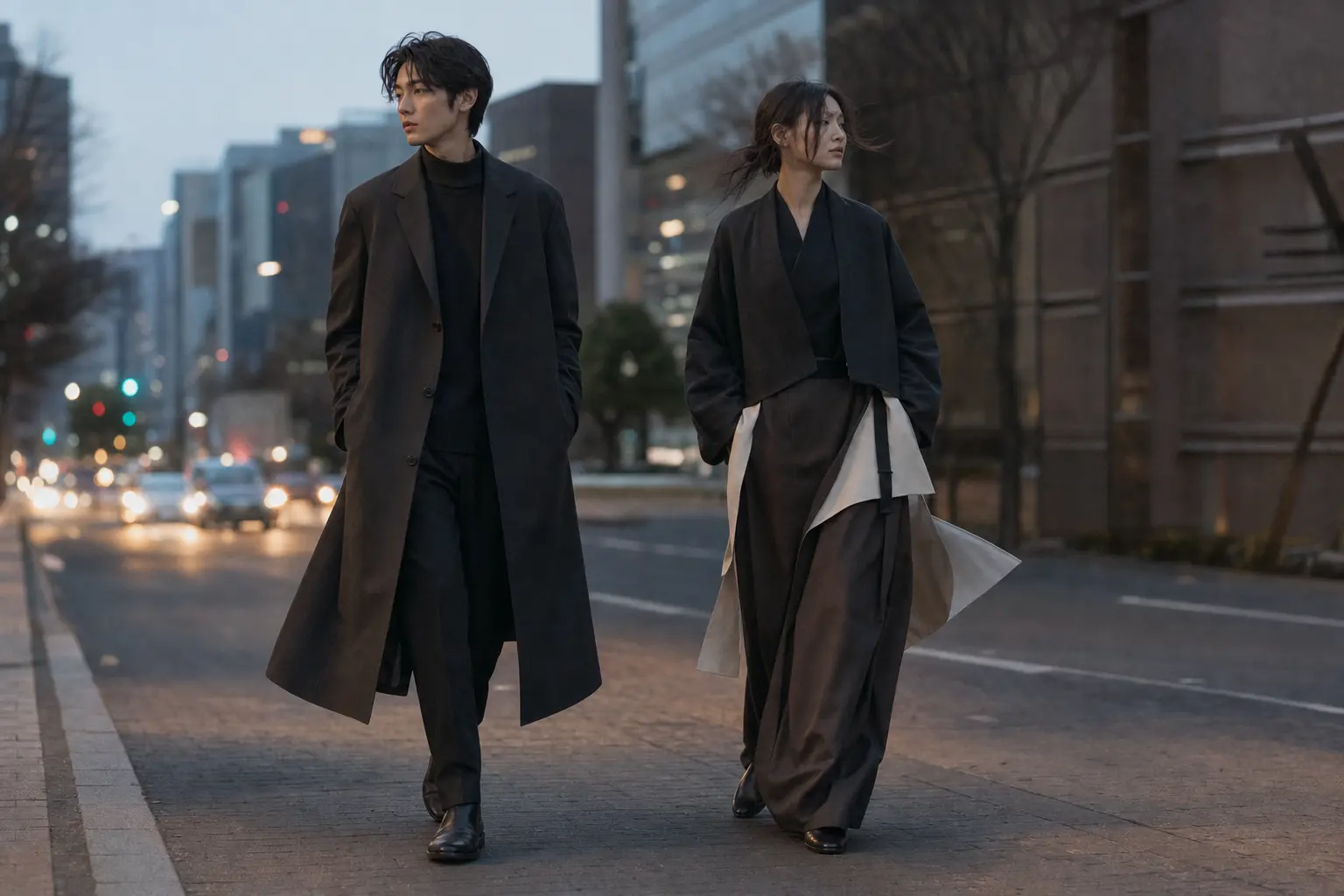
Color, print, and texture: mood boards for Seoul and Tokyo
Color and surface detail are another clear dividing line between the two aesthetics, even when both pull from similar global trends. Think of Korean style as tuned for luminous clarity and Japanese style as tuned for layered depth, though each can flex outside these lanes when designers choose.
Contemporary Korean outfits often lean toward soft, wearable palettes: cool beiges, milk tea browns, muted sage, blush, and monochrome black-and-white. Pastels and washed neutrals dominate everyday looks, while bolder shades tend to appear in a single accent piece—such as a bright knit, statement bag, or saturated outer layer. Prints are usually controlled and commercial: narrow stripes, restrained checks, small florals, or graphic but minimal logos. The overall effect is polished and visually light.
Japanese fashion is more likely to push into extremes: pure black or intense color; complex prints or deliberately clashing patterns. Avant-garde designers often use head-to-toe black or dark tones to emphasize structure, pleating, and shadow. Streetwear and Harajuku-rooted scenes meanwhile embrace cartoon graphics, reworked vintage band art, collage prints, and bold typography. Texture plays a key role—think crinkled technical fabrics, dense knits, treated denim, and artfully wrinkled pleats.
How to read color and texture differences
- Korean palettes: soft gradients, tone-on-tone layering, and minimal contrast. Great for workwear, date looks, and social settings where you want to look put-together without shouting.
- Japanese palettes: either maximal contrast (brights, prints, graphic tees) or ultra-minimal (an all-black set where interest comes from shape and fabric). Stronger link to subculture identity and personal storytelling.
- Texture strategy: Korean pieces often rely on clean finishes—smooth wool, crisp cotton, neat knits—while Japanese pieces may celebrate irregularity: slub weaves, wrinkled synthetics, raw hems, or visibly reinforced seams.
If you are building a versatile wardrobe, start with Korean-style neutrals and soft hues for your base layers. Then add Japanese-inspired depth through one or two pieces per outfit—perhaps a pleated technical skirt, an artistic graphic tee, or a textured overshirt—to keep the look from feeling flat.
Streetwear and subcultures: K-pop polish vs Harajuku chaos
Both Korea and Japan sit at the heart of global streetwear, but they channel that energy very differently. On the Korean side, streetwear is polished, camera-ready, and often tightly integrated with idol styling. On the Japanese side, it retains strong roots in subculture, skate, and archival collecting, even as certain brands reach massive commercial success.
In Seoul, unisex streetwear from labels such as Ader Error and Juun.J merges oversized shapes with clean branding and careful tailoring. Hoodies, cargos, and bomber jackets are present, but styled with intentional balance: structured coats over sweat sets, dress shoes with track pants, or a single graphic piece grounded by otherwise neutral basics. The influence of K-pop and K-drama wardrobes keeps everything aspirational. Streetwear is rarely sloppy; it is carefully stage-managed, even when it reads casual.
Japan’s street culture, centered around Tokyo neighborhoods like Harajuku, Shibuya, and Ura-Harajuku, is more fragmented. Some scenes orbit around legacy hype labels, vintage American workwear, or skate shops. Others are tied to high-fashion crossovers, where technical sneakers meet deconstructed tailoring. The 2025 IPO of Human Made underscored how powerful this sector has become, with investors betting on global growth and new flagship retail experiences. Yet even as certain logos go mainstream, smaller brands and DIY communities keep the scene strange and unpredictable.
Signature streetwear differences
- Styling reference points: Korean looks frequently mirror idol airport outfits, music video concepts, or drama characters. Japanese looks may draw from underground music, manga, classic Americana, or specific designers’ archives.
- Logo logic: Korean streetwear tends toward crisp, centralized branding—one strong logo on a sweatshirt, minimal graphics on caps and bags. Japanese streetwear welcomes all-over prints, disrupted logos, and dense graphic narratives.
- Retail experience: Korean brands are leaning hard into experiential stores—artful eyewear galleries, concept flagships, and seasonal pop-ups. Japanese streetwear mixes curated boutiques, long-running neighborhood shops, and incoming tourist-heavy flagships in districts like Harajuku.
For your own wardrobe, borrow Korean streetwear when you need outfits that transition from brunch to nightlife seamlessly. Dip into Japanese references when you want your look to feel like a niche playlist: a bit harder to read, but deeply satisfying once you understand the story behind each piece.
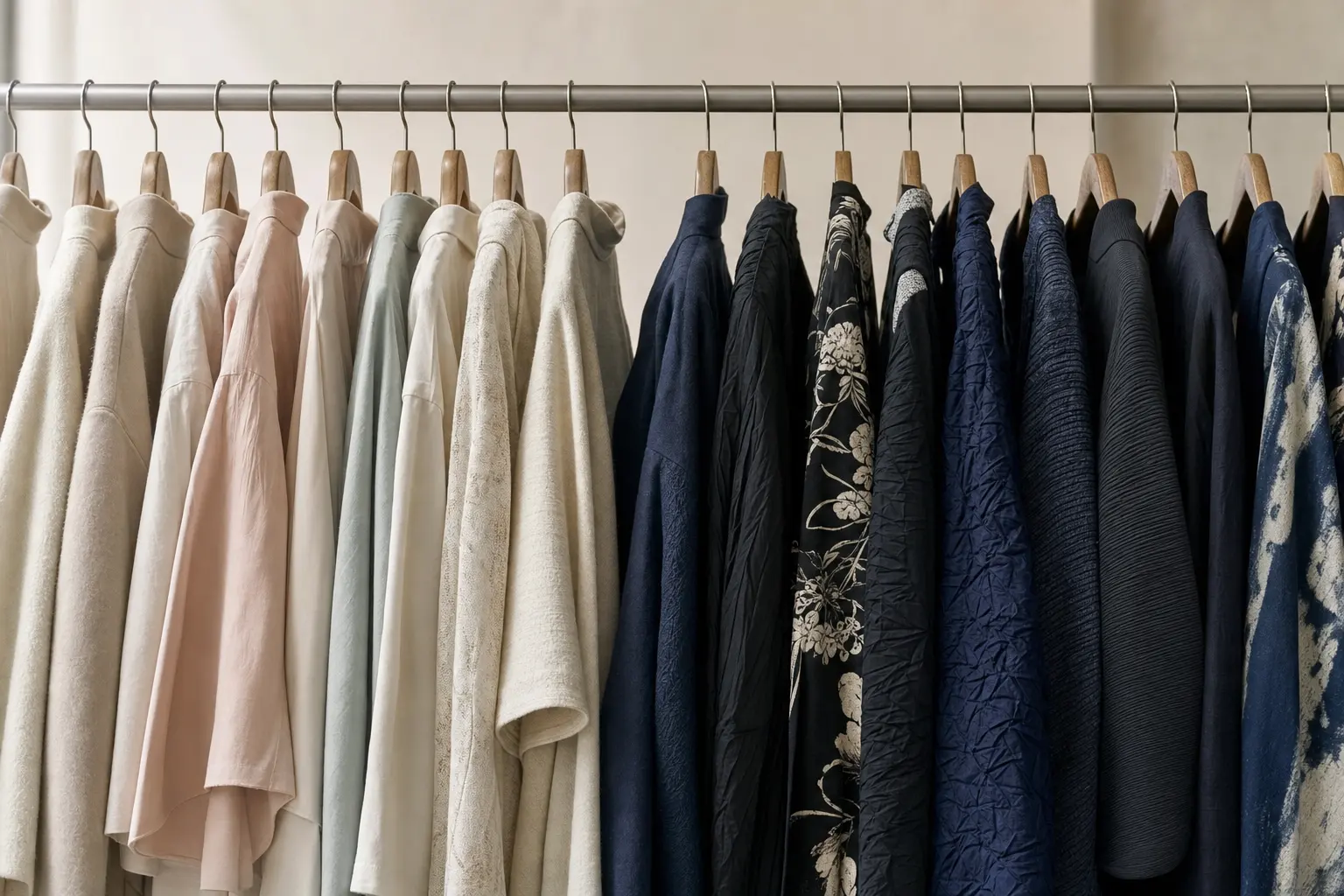
Gender, work, and age: how each style handles real life
Beyond runway imagery, fashion has to survive commutes, offices, and family gatherings. How each country’s style culture handles gender expression, work dress codes, and age is key to understanding which elements will actually fit your life.
Contemporary Korean fashion shows a strong move toward unisex and gender-fluid silhouettes, particularly in streetwear and casual tailoring. Oversized shirts, straight-leg trousers, bomber jackets, and long coats often come in patterns and colorways designed to sit comfortably on any body. However, styling in media still leans toward conventional beauty standards: sharp jawlines, slim legs, and coordinated couples’ looks. For womenswear, trends such as mini skirts, cropped cardigans, and fitted knits coexist with roomy cargo pants and boxy blazers, reflecting the Spring 2026 return of shorter hemlines and uniform-inspired sets.
Japanese style has long experimented with androgyny, not just in unisex streetwear but also in avant-garde tailoring that deliberately erases typical gender cues. Boxy suits, wide pants, and tunic-length tops create silhouettes that work across bodies without emphasizing curves or musculature. Subcultures introduce their own rules: some lean hyper-feminine or hyper-masculine, others abandon those categories entirely. Workwear-inspired uniforms—coveralls, chore jackets, and utilitarian trousers—blur boundaries between fashion, labor, and art.
Workwear, uniforms, and age inclusivity
- Work and office dressing: Korean brands often interpret business-casual codes in clean, approachable ways: single-breasted blazers, tapered slacks, neat knit polos, and trench coats. Japanese designers may twist the idea of work uniforms, turning factory jackets, school blazers, or security vests into fashion objects via unusual cuts and fabrics.
- Uniform trend in 2026: As global fashion leans into uniform dressing and cohesive sets, Korean interpretations tend to look polished and social-media ready, while Japanese takes may reference historical or industrial uniforms, amplifying pockets, straps, and patches.
- Age range: Korean high-street and designer looks are heavily youth-coded but still accessible for older wearers through neutral palettes and modest cuts. Japanese fashion often feels ageless, particularly in minimalist or workwear-inflected looks where the main language is shape and material, not youth culture.
If you are building a wardrobe that has to function from weekday meetings to weekend events, Korean-inspired pieces will likely give you the most plug-and-play outfits. To avoid feeling too conventional, layer in Japanese workwear or avant-garde basics that skew ageless and make your styling less predictable.
Building a Korean-inspired vs Japanese-inspired wardrobe
Turning all of these style observations into a real closet starts with intention. Rather than chasing every micro-trend, anchor your wardrobe in a few clear silhouettes from each aesthetic, then layer personality with color, accessories, and occasional statement pieces. Think of your closet as a modular system: Korean elements create a stable foundation, Japanese elements inject surprise and depth.
For a Korean-inspired base, focus on streamlined essentials in soft neutrals. Start with a tailored wool coat, a boxy blazer, straight-leg trousers, clean denim, and one or two matching knit sets. Add a rotation of simple tees, turtlenecks, and shirts in white, cream, and muted tones. For skirts and dresses, look for mini or midi lengths with subtle structure—A-line minis, slip dresses with a bit of weight, or shirt dresses that can be cinched at the waist. Finish with minimal sneakers, ankle boots, and a single sculptural bag.
For a Japanese-inspired capsule, shift the emphasis to shape and texture. Seek out wide-leg or balloon pants, boxy overshirts, and tunic-length knits or shirts. Add one sculptural coat—perhaps in a darker tone or technical fabric—and at least one pleated or crinkled piece that holds its own visually. Mix in graphic tees or shirts with unusual prints, but keep the quantity controlled to avoid visual noise. Footwear can range from retro runners and chunky sneakers to leather boots that feel borrowed from workwear or military uniforms.
Practical wardrobe-building tips
- Start with 70/30 balance: If you live in a conservative or office-heavy environment, let Korean-inspired pieces make up about 70% of your closet and Japanese-inspired pieces 30%. Reverse the ratio if your lifestyle is creative and casual.
- Choose a signature silhouette: Decide whether your anchor line is a straight-leg pant, a wide cropped trouser, or a mini skirt. Build multiple outfits around that shape, switching between Korean-neutral tops and Japanese-experimental layers.
- Think in outfits, not items: When adding a new piece, immediately plan three looks that combine both aesthetics—for example, wide Japanese-style trousers with a Korean-style blazer, or a Korean knit set with a Japanese workwear jacket.
This approach ensures that every new purchase works hard across different moods: clean and minimal for weekdays, more challenging and expressive when you feel like pushing your style envelope.
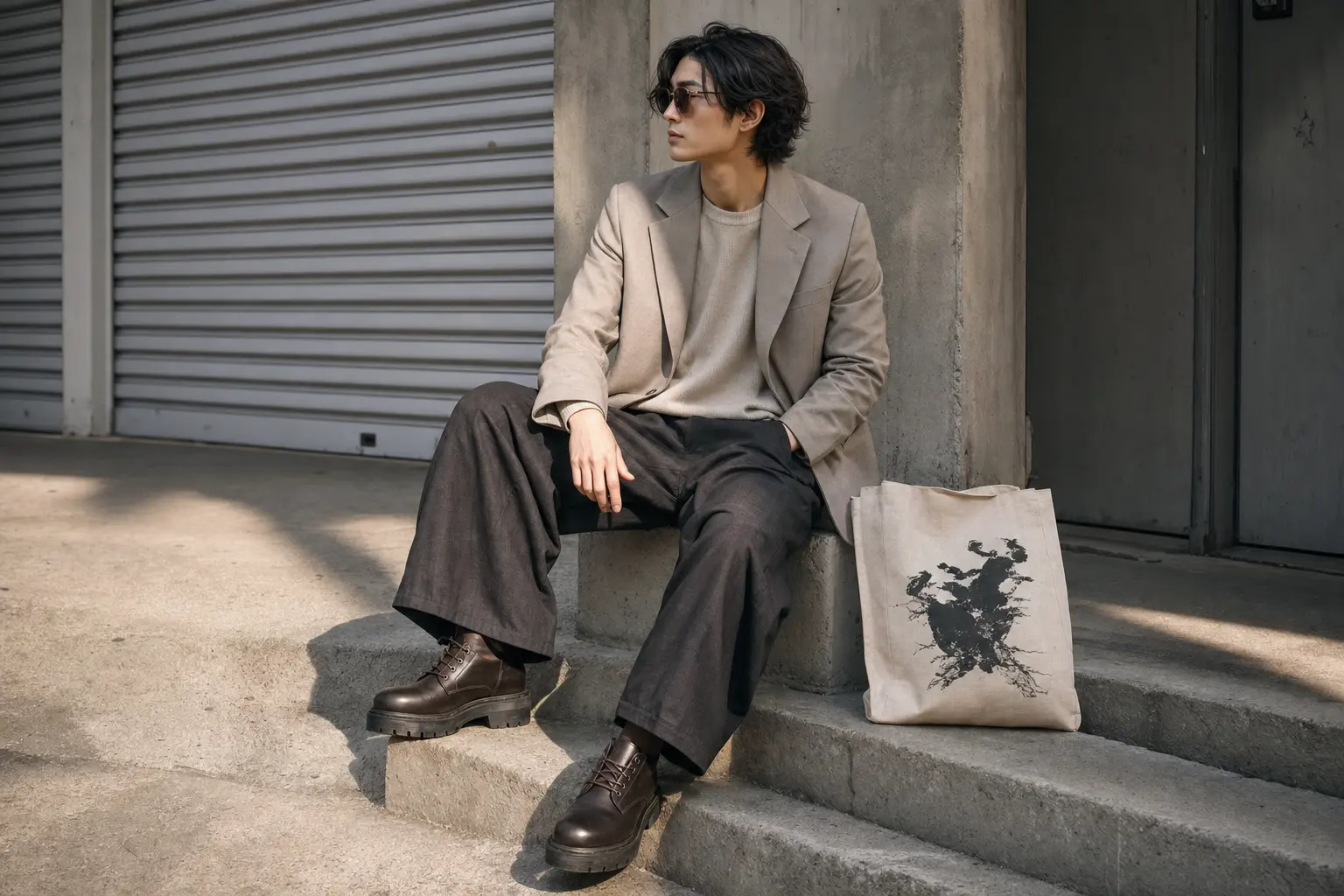
How to mix Korean and Japanese style without clashing
Blending both aesthetics is where things get interesting. The goal is not to wear a full K-drama look one day and a head-to-toe Harajuku revival the next, but to let elements talk to each other: polish meeting experimentation, softness meeting edge. Done well, the result feels contemporary, global, and completely personal.
Start by choosing one country’s style to lead the silhouette, and let the other lead the details. For example, you might build a clean Korean base—straight-leg trousers, fitted knit, long coat—then inject Japanese attitude through a graphic tee layered underneath, a textured overshirt tied around the waist, or bolder accessories. Or you could commit to a Japanese wide-leg, boxy-top silhouette and keep the palette strictly Korean: soft beige, cream, and black with no chaotic prints.
Accessories are a low-risk way to mix influences. Think sculptural sunglasses and sleek bags from Korean-inspired design language paired with Japanese-coded beanies, belts, or jewelry that nod to punk, workwear, or techwear. Gentle Monster’s immersive eyewear concepts, for instance, have helped normalize eyewear as a strong style focal point rather than a mere utility item, making it easy to anchor hybrid looks around a standout frame.
Mixing strategies that always work
- One drama piece per outfit: Whether it is a pleated cocoon skirt, an exaggerated bomber, or a hyper-bright knit, keep the rest of the look controlled and mostly neutral. This prevents clashing while still showcasing personality.
- Shared color, mixed silhouette: Use a unified palette—say black, charcoal, and off-white—while mixing a Korean-style blazer with Japanese-style wide pants, or a Korean mini skirt with Japanese workwear boots.
- Layer in thirds: Treat your outfit as three layers (inner, mid, outer). Let one layer be clearly Korean (smooth, polished), another clearly Japanese (textured, experimental), and keep the third as a quiet bridge piece that harmonizes both.
By focusing on one disruption at a time—shape, print, or accessory—you will avoid the costume effect. Over time, you will train your eye to sense when the balance feels right: visually rich without tipping into chaos, modern without losing warmth.
Shopping smart globally: sizing, quality, and seasonal timing
As Korean and Japanese brands expand worldwide, especially through global retail and online platforms, it has become much easier to access both aesthetics from anywhere. Still, there are practical differences in sizing, quality focus, and seasonal timing that matter when you are building a closet from abroad.
Sizing can be the first hurdle. Korean labels often run slightly smaller than typical US or European standards, especially in shoulder width and sleeve length, though recent export-focused collections are increasingly graded with international customers in mind. Japanese sizing varies more dramatically by brand and subculture; avant-garde and workwear labels might use relaxed, boxy cuts that fit a broad range of bodies, while certain streetwear or mass-market pieces skew narrower.
Quality expectations also diverge. Korean brands, shaped by strong export competition, often highlight clean finishes, reliable fabrics, and trend-aware details that deliver strong value. Japanese labels tend to emphasize either high-concept design or meticulous craft: you will find everything from experimental synthetics to heritage denim and carefully engineered pleats. Neither approach is inherently better; the right choice depends on how hard you plan to wear each item and whether you prioritize design concept, durability, or price.
Timing and care for long-lasting style
- Seasonal calendars: Seoul Fashion Week, running biannually with a growing trade focus, increasingly aligns its drops with global cycles and K-pop promotion windows. Expect new silhouettes to appear around these events, especially in categories like outerwear, matching sets, and accessories.
- Tourist-driven spikes: Tokyo shopping districts still experience surges in streetwear demand driven by travel and hype cycles, especially around major announcements like IPOs or new flagships. Limited releases may sell quickly, but quieter collections often carry the most enduring style.
- Care habits: Korean pieces with lighter colors and softer fabrics may require more delicate washing and storage to maintain that fresh, polished look. Japanese items that lean into texture, denim, or technical fabrics benefit from specific care—air-drying, minimal washing for denim, and storing pleated items properly to keep their structure.
When shopping globally, focus on pieces that align with your climate and lifestyle. Invest in outerwear, shoes, and bags that bridge both aesthetics—these will anchor your outfits—then sprinkle in more trend-sensitive items around big seasonal shifts such as the Spring 2026 wave of mini silhouettes and uniform-inspired looks. Over time, your closet will read less like a souvenir collection and more like a coherent, personal interpretation of two powerful fashion cultures.
Shop the collection: Korean graphic tees, Korean long sleeve shirts, Korean sweatshirts, Korean hoodies and Korean tank tops – original graphics designed in Korea, made to order.
Frequently Asked Questions
What are the main silhouette differences between Korean and Japanese fashion?
Korean silhouettes tend to balance a clean, elongated line with controlled volume—think straight-leg pants, structured coats, and oversized pieces anchored by something fitted. Japanese silhouettes are more experimental, often using boxy tops, very wide pants, tunic lengths, and unexpected hem placements. Korean fits usually prioritize immediate flattery and photo readiness, while Japanese fits explore proportion as a design language in itself. Both can be wearable; the key is choosing which level of experimentation fits your lifestyle.
Are Korean fashion pieces usually unisex or gender-neutral?
Many contemporary Korean labels design streetwear and casual tailoring with unisex wear in mind, especially oversized shirts, sweatshirts, cargos, and long coats. However, styling in media often leans toward conventional gender cues, such as mini skirts and fitted knits for women and structured tailoring for men. You can still wear most pieces across genders if you focus on fit in the shoulders, length, and rise. Reading size charts carefully and checking garment measurements is more important than relying on traditional gender labels.
How can I mix Korean and Japanese style without looking chaotic?
Choose one style to lead the silhouette and let the other handle details like accessories, prints, or a single statement piece. For example, build a clean Korean base—straight trousers, simple knit, long coat—and layer in one Japanese element such as a textured overshirt, graphic tee, or sculptural bag. Keep your palette cohesive, ideally with two or three main colors, and limit yourself to one high-impact item per outfit. This approach preserves clarity while still showing a strong point of view.
Which brands represent Korean and Japanese fashion at different price levels?
On the Korean side, you will find designer labels known for polished streetwear, experimental unisex pieces, and sharp tailored outerwear, as well as more accessible brands delivering clean basics and trend-forward silhouettes. In Japan, the spectrum runs from avant-garde houses celebrated for conceptual design, to streetwear names with strong graphic identities, to mass-market labels offering minimalist everyday pieces. Each price level reflects a different balance of fabrication, detailing, and design risk. Focus first on the aesthetic and fit you love, then choose a tier that matches your budget.
Is Japanese fashion always more experimental than Korean fashion?
Japanese fashion has a strong reputation for experimentation thanks to its avant-garde designers and subcultural history, but not every Japanese outfit is extreme. There are plenty of understated Japanese looks built on clean denim, workwear jackets, and simple knits. Likewise, Korean fashion is not always safe or minimal; some designers and stylists push bold color, structure, and conceptual details. As a rule of thumb, Japanese style makes it easier to find highly experimental pieces, while Korean style provides more ready-to-wear, polished interpretations of current trends.
How do I choose between a Korean-inspired and Japanese-inspired wardrobe?
Start by evaluating your daily life: dress codes, climate, and how much attention you enjoy attracting. If you want outfits that feel polished, easy to style, and universally flattering, lean more Korean with soft neutrals, clean tailoring, and streamlined silhouettes. If you crave uniqueness and enjoy taking sartorial risks, add stronger Japanese influences in shape, texture, and graphics. Many people land in the middle—using Korean pieces as a reliable base and layering in Japanese elements for depth, edge, and individuality.