 OBJECT
y2k korean aesthetic styling has re-emerged as a major force in Seoul and global streetwear scenes, blending low‑rise silhouettes, sculpted accessories, and a quieter post‑Y2K mood. This guide translates that energy into wearable steps you can adopt now.
We unpack core pieces, accessories, sizing and seasonal shifts shaped by social commerce and K‑content, so you can craft looks that feel both authentic and contemporary.
y2k korean aesthetic styling: origins, resurgence, and cultural context
The early 2000s aesthetic returned to Korea’s fashion conversation with renewed intent rather than mere nostalgia. Since mid‑2024 the look has been visible across K‑content, streetwear edits and idol styling, and by 2026 it sits comfortably as a recurring reference rather than a passing fad [1]. Social platforms accelerate its cycles, while Seoul Fashion Week and local marketplaces translate viral moments into real‑world product runs [3][5].
Understanding the cultural context helps you style more intentionally. In Korea, Y2K references often combine playful, tactile detailing—rhinestones, logo panels, miniature bags—with experimental proportions: ultra‑low rises countered by oversized outerwear, or cropped tees worn under boxy layers. This tension between body‑conscious pieces and roomy outer silhouettes is central to the aesthetic.
Why it’s relevant now
Several developments keep the aesthetic alive: strong influencer visibility, fast social‑commerce cycles, and designers who rework Y2K codes into contemporary collections. TikTok remains a primary discovery channel for youth fashion, driving rapid trend rotations and explosive moments of demand [2]. Meanwhile, brands and eyewear houses have leaned into accessory drops and tech collaborations, increasing the visual cues associated with a modern Korean reinterpretation of Y2K [6][7].
For styling, the takeaway is practical: adopt the details that read as intentional design—hardware, selective sparkle, purposeful seams—and pair them with updated proportions and muted palettes when you want a fresher, less literal take.
- Core tension: fitted vs. oversized
- Key motifs: rhinestones, cargo hardware, micro bags
- Platform footwear and defined accessories drive silhouette
Key elements: silhouettes, textures, and color in Korean Y2K styling
Identifying the building blocks makes mixing Y2K cues into your wardrobe controlled and modern. Silhouettes, textures and color choices are the axes to refine: think low rises and cropped tops balanced with roomy outerwear, glossy textures offset by matte cottons, and a palette that ranges from candy pastels to the calmer tones of post‑Y2K variants like Acubi.
Silhouettes to know
Start with the signature pairings: low‑rise denim or cargo pants with a baby tee or cropped knit; platform sneakers to lift the frame; oversized shirts or boxy jackets layered on top. The illusionary play—showing the midriff or a waistband with an oversized hem—creates the recognizable Y2K silhouette without feeling costumey.
- Low‑rise bottoms: emphasize hip placement and waistband detail.
- Cropped tops: short hems that read intentional, not ill‑fitting.
- Oversized layers: lightweight trench, boxy blazer or roomy cardigan for balance.
Textures and detailing
Texture choices create the tactile identity: soft velours, low‑sheen denim washes, glossy patent micro‑bags and rhinestone trims. Hardware—exposed zippers, D‑rings and cargo snaps—adds streetwear grit. When mixing textures, keep two dominant surfaces per outfit to avoid visual clutter.
Color strategy matters: traditional Y2K loves bright candy tones and metallics, but the 2026 shift favors calmer palettes—muted pastels, warm neutrals, and washed jewel tones. Use bold accents (neon stitches, rhinestone belts) sparingly to maintain a design‑aware, minimalist posture while still nodding to early‑2000s playfulness.
Building a modern wardrobe: staples, layering formulas and outfit recipes
To make the aesthetic wearable every day, curate a capsule of staples you can recombine. Focus on proportion anchors, repeatable layering formulas, and a short list of statement pieces that lift simple basics into curated looks. This section gives concrete outfit recipes plus advice on choosing fits.
Staples to invest in
- Low‑rise jeans in a range of washes: light wash, stone, and black.
- Crop tops & lightweight knit tanks that maintain shape through movement.
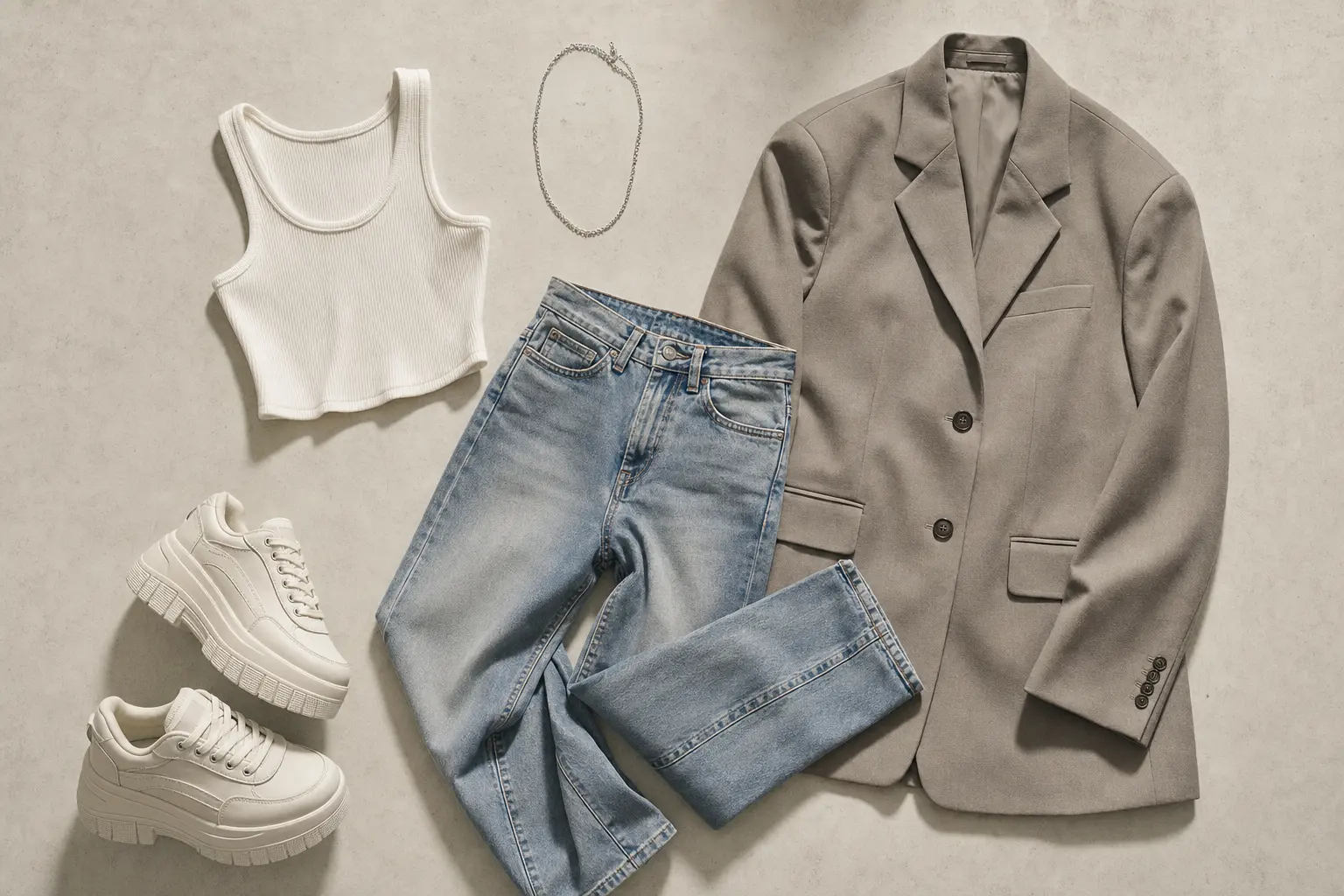
- Boxy outerwear: an oversized blazer, a roomy nylon jacket, or a relaxed trench.
- Platform sneakers or lug‑sole shoes for balance and height.
- Small crossbody or micro bags with hardware detail.
When selecting each piece, prioritize cut and material over branding. A well‑cut low‑rise jean with clean hardware reads far more design‑forward than heavily branded alternatives.
Layering formulas and outfit recipes
Try these reliable formulas that illustrate balance and proportion:
- Baby tee + low‑rise jeans + boxy blazer + platform sneakers = city‑ready contrast.
- Cropped knit + cargo pants + slender belt + micro bag = utilitarian minimalism.
- Slip dress over a fitted tee + chunky sneakers + thin metal sunglasses = feminine Y2K nod.
Common mistakes include over‑cropping (tops that are too small and distort proportion) and over‑accessorizing (too many competing shiny elements). Keep one focal point—either a silhouette, a texture, or a standout accessory—and let supporting pieces be neutral and tactile.
Accessories & eyewear: the small details that define Korean Y2K looks
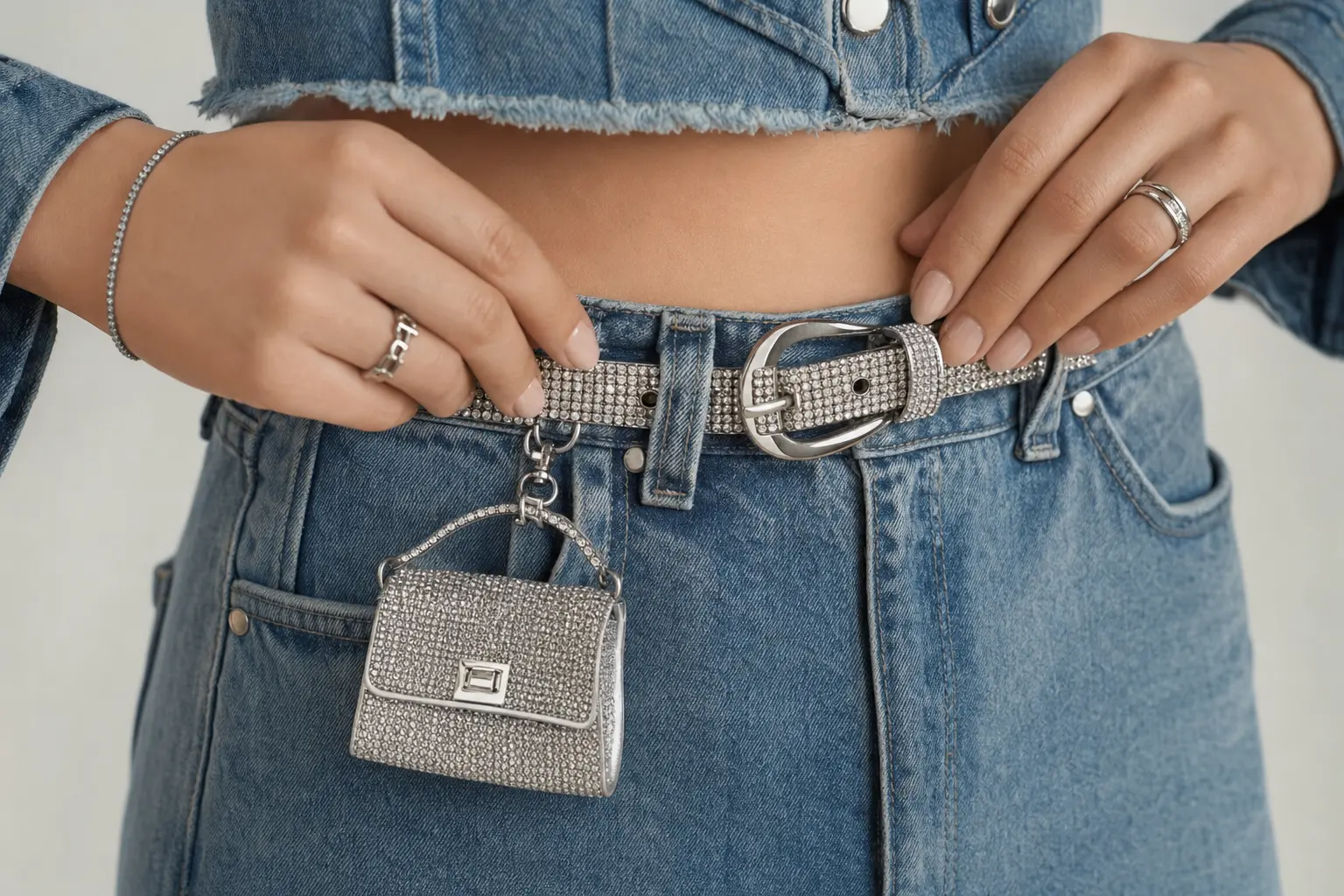
Accessories are often the most recognizable signals of Y2K Korean styling. Eyewear, micro bags, belts and jewelry not only finish a look but can update a basic outfit into something editorial. The eyewear category, in particular, has seen notable growth and innovation, with tech collaborations and new frames shaping seasonal searches and sales [6][7].
Eyewear choices and how to style them
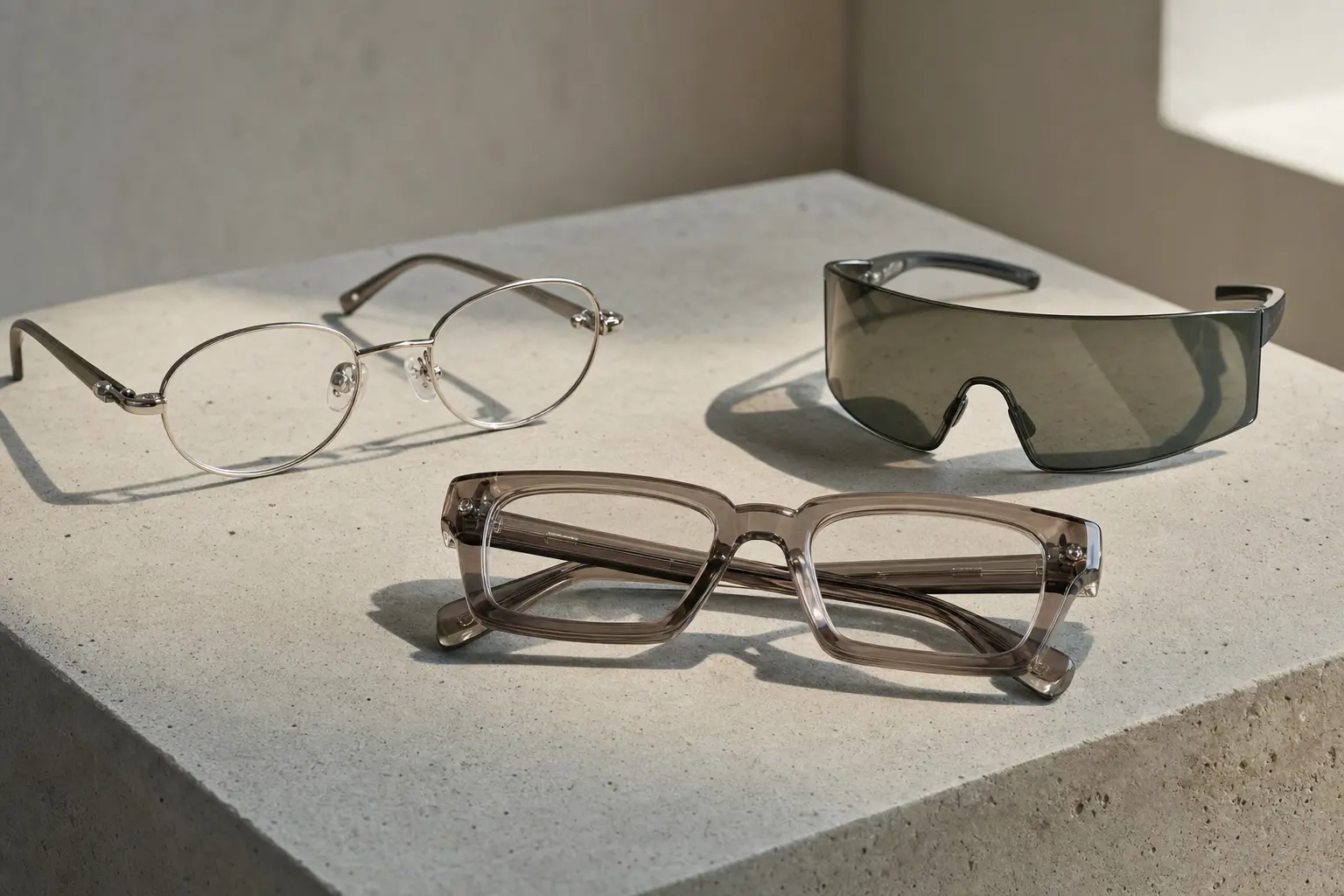
Frames that read Y2K include slim metal ovals, wraparound shield styles, and narrow rectangular sunglasses. Use eyewear to alter the mood: a thin metal frame feels polished and studio‑sophisticated, while a wrap or shield lens reads athletic‑futurist. Match frame metal to other hardware—belt buckles, bag chains or shoe eyelets—for a cohesive finish.
- Thin metal rectangles: refined, elongates the face.
- Oval/wrap shades: bold and instantly Y2K.
- Transparent frames: subtle but fashion‑forward.
Other finishing pieces
Micro bags and rhinestone belts act as focal accents; choose one statement accessory per outfit. Layered thin chains and asymmetric earrings add subtle complexity without overwhelming minimal palettes. Platform soles and sculpted sneakers remain primary drivers of proportion—select them for both comfort and visual balance.
Practical tip: invest in a versatile eyewear piece in a neutral metal or tortoiseshell, then add a seasonal or statement pair for editorial photos and event looks.
Hair, makeup, and grooming cues to complete a Korean Y2K aesthetic
Hair and makeup for a modern Y2K interpretation in Korea combine intentional polish with playful details. The aim is to enhance the outfit without overtaking it—think soft, lived‑in textures for hair and makeup that emphasizes glow and definition rather than heavy contouring.
Hair: cuts and textures
Popular hair cues include curtain bangs, short blunt bobs, and long layers with soft flicks. Texture matters: gentle waves and piecey, face‑framing layers give movement that complements cropped tops and low‑rise silhouettes. For shorter looks, a slightly undone finish reads contemporary; for longer hair, consider a low, sleek pony or small micro clips to add a Y2K‑flavored detail.
Makeup and nails
Makeup trends going into 2026 favor a dewy base, soft blush placement toward the temples or nose bridge, and natural‑looking brows. Lip finishes range from sheer gloss to muted stains; rhinestone or micro gem accents on lids and near the temple are a playful nod to earlier trends but should be used sparingly. For nails, minis and short almond shapes with glossy finishes or tiny motifs keep the aesthetic refined.
Skincare prioritization supports the look: hydrated skin may help makeup sit better, and lightweight protective SPF is a daily habit for editorial and street looks. Avoid claiming clinical benefits; instead, recommend habits that commonly help makeup application and skin appearance.
Layering, proportions and advanced styling techniques from Seoul streets
Mastering proportion is the key to elevating Y2K cues from costume to considered style. Seoul streetwear often juxtaposes body‑conscious pieces with roomy outerwear; the resulting tension reads modern and editorial. This section gives concrete techniques for layering and proportion control, plus corrective tips for common fit issues.
Techniques for refined layering
Start with a base that defines the body—fitted tank, crop, or slip. Add a mid layer of lightweight knit or cropped jacket if needed, then finish with an oversized coat, blazer or nylon shell. The vertical progression—fitted to mid to oversized—creates visual interest without stacking bulk. Use belts to introduce horizontal breaks at the waistline and to anchor low‑rise bottoms without overemphasizing compression.
- Vertical balance: fitted base, casual middle, oversized outer.
- Horizontal anchors: belts, bag straps, and waistband exposures.
- Proportion fixes: if the top feels too short, add a slightly longer sheer layer underneath.
Common mistakes and how to fix them
Over‑cropping, mismatched scale between top and bottom, and too many competing focal points are typical errors. Fix over‑cropping by adding a sheer or mesh longline layer beneath the crop to restore proportion. If bottoms read too wide, counter with a structured upper—blazer or tailored shirt—to sharpen the silhouette. For visual clutter, reduce jewelry or swap a rhinestone belt for a matte leather one.
For photography and city wear, pay attention to movement: fabrics that crease or balloon can distort intended proportions in photos. Choose materials with a soft structure—light twills, midweight knits, and finely finished denims—to hold lines without rigidity.
Shop smart: sizing, authenticity and avoiding grey‑market pitfalls
With high demand and rapid sellouts, buyers need practical strategies to secure authentic pieces and avoid replica or grey‑market traps. Replica activity around popular Korean labels remains a reality; idol appearances still trigger resale spikes and authentication challenges [8]. Being informed about sizing, construction details and retailer policies reduces risk.
Sizing and fit guidance
Y2K pieces often use unconventional proportions—low rises and short crops—so standard sizing can be misleading. Take measurements over size tags: hip rise, waist circumference at the natural waist and across the top of the waistband, and garment length are the most reliable. When in doubt, size for intended fit: if you want a slouchy, oversized look, size up one; for a body‑skimming Y2K vibe, take your recommended size but verify stretch and recovery in the fabric description.
Authenticity checks and buying tips
Examine construction: quality stitching, clean hardware finishes, and consistent logo embossing are signs of authentic pieces. Ask for closeup photos of seams and labels when buying secondhand. Avoid sellers who refuse returns or provide inconsistent measurements. If a deal seems too good for a viral or limited item, treat it with caution—highly discounted items may be replicas or misrepresented stock.
- Verify measurements rather than rely on size names.
- Request close photos of hardware and interior labels for secondhand buys.
- Keep receipts and transaction records for reseller marketplace protections.
Finally, prefer sellers who clearly state return policies and supply provenance; transparency is the single best guard against grey‑market disappointments.
Seasonal variants, future directions and what to watch in 2026
As we move through 2026, Y2K references are splitting into distinct directions: louder, hyper‑branded reinterpretations, and quieter post‑Y2K or Acubi variants that favor muted palettes and practical layering. Designers and searches continue to respond to social commerce cycles, so expect rapid rotations and micro‑trends that arrive and fade in months rather than seasons [3][2].
Notable seasonal patterns
Spring and summer tend to highlight cropped tanks, micro bags, and light denim; autumn and winter emphasize oversized outerwear, leather textures and layered knitwear. Accessories—especially eyewear—drive seasonal interest thanks to capsule drops and high‑visibility collaborations in the category [6][7]. For shoppers, the seasonality suggests which statement pieces to prioritize: invest in durable outerwear for colder months and experiment with bold accessories in transitional seasons.
What to watch
Keep an eye on three dynamics that will shape styling choices: the speed of trend cycles via short‑form platforms, designer reinterpretations that sanitize or refine Y2K motifs, and the continuing role of eyewear and footwear as immediate visual signifiers. Expect more hybridization—athletic racer shapes combined with delicate embellishment, or utilitarian cargo detailing paired with tailored suiting—rather than direct revivals.
Styling recommendation: adopt one seasonal statement piece and rotate it through your capsule. For example, a single sculptural eyewear piece or a well‑fitted oversized coat can refresh multiple Y2K‑inspired outfits without committing entirely to a maximalist look.
Shop the collection: Korean graphic tees, Korean long sleeve shirts, Korean sweatshirts, Korean hoodies and Korean tank tops – original graphics designed in Korea, made to order.
Frequently Asked Questions
How can I modernize Y2K looks without looking like I'm wearing a costume?
Modernizing Y2K is about balance: pick one strong Y2K cue—low rise, micro bag, or rhinestone detail—and pair it with clean, minimal staples. Avoid layering multiple high‑attention elements at once; instead, let one piece be the focal point while the rest of the outfit stays textural and neutral.
How do I size low‑rise jeans and cropped tops for the right fit?
Measure garment rise, waist and hip before purchasing rather than relying on size labels. For low‑rise jeans, check the hip measurement and the distance from crotch to waistband. For cropped tops, look for length and chest measurements to ensure the top sits how you intend—fitted or slightly relaxed.
Are Y2K accessories worth investing in or too trend‑driven?
Accessories like a sculptural eyewear piece or high‑quality platform shoes have longevity because they change the perception of many outfits. Choose accessories in classic finishes or neutral metals to maximize versatility, and treat more literal novelty items as seasonal experimentations.
How can I spot replicas or grey‑market pieces when shopping online?
Request clear photos of stitching, hardware, and label details; compare those to known authentic construction cues. Be cautious of sellers who avoid returns or provide inconsistent measurements. When a price is dramatically lower than expected for a hyped item, assume extra scrutiny is needed.
What hair and makeup cues best complement a Korean Y2K outfit?
Keep hair textured and slightly undone—curtain bangs, low ponytails, or soft waves work well. Makeup that emphasizes a dewy base, soft blush, and a glossy or muted lip complements Y2K silhouettes without overpowering them. Use micro gem accents sparingly for editorial looks.