 OBJECT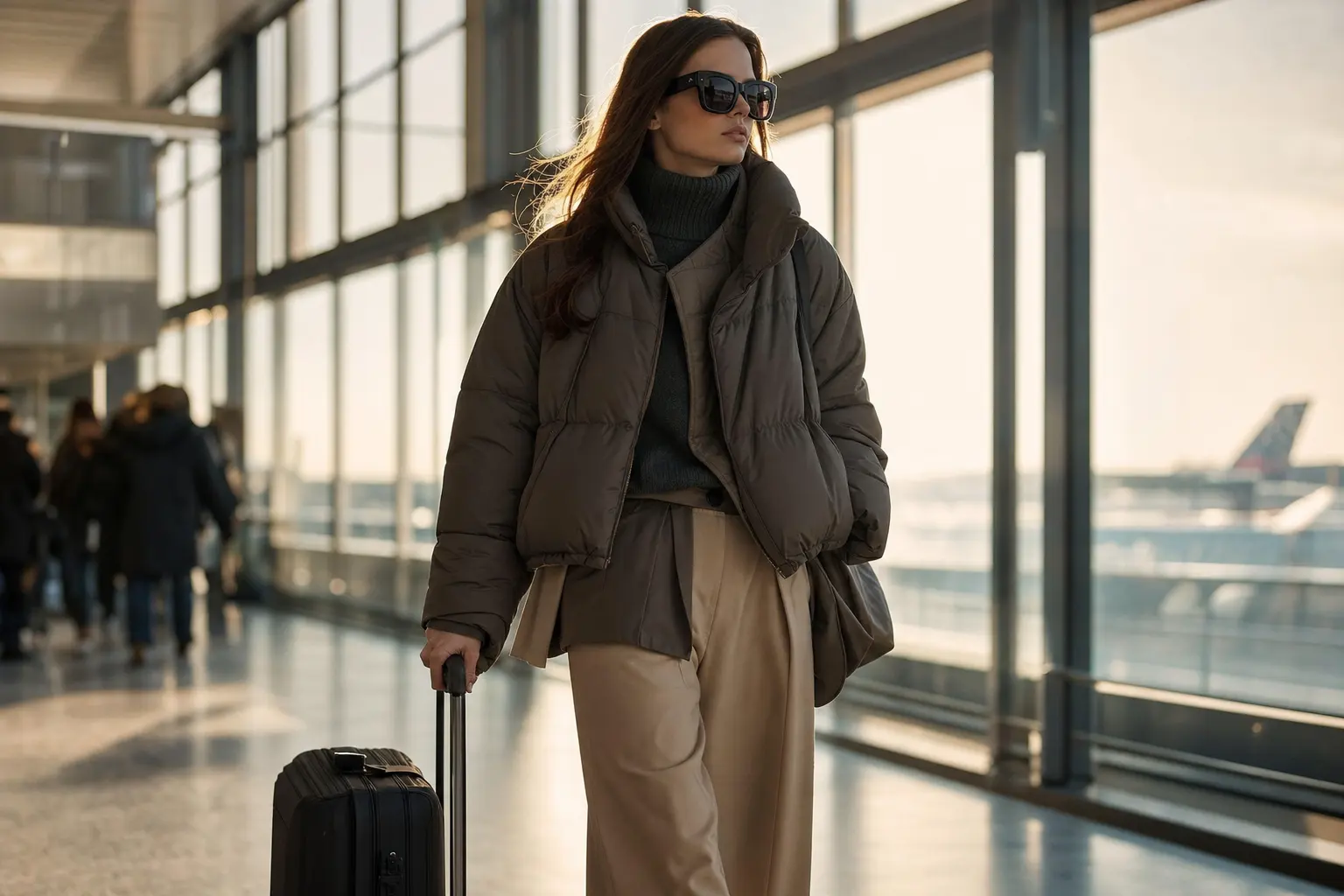
Korean airport fashion looks arrived as a public phenomenon when stylists and media reframed terminals as mini red carpets; now those appearances set fast-moving trends you can borrow for real travel. Whether you care about the photos or just want a comfortable, camera-ready outfit, the formula is simple: controlled volume, layered fabrics, and one strong accessory.
Dispatch-style photos posted within hours keep trends fresh and fast—expect rapid sellouts, seasonal micro-drops, and a mix of luxury and indie streetwear. This article breaks the season rules, the silhouette recipes, exact fabric and fit details, and how to recreate the look on any budget.
Why Korean airport fashion looks matter—context and cultural mechanics
Airport outfits in Korea are not private travel choices; they are curated public moments. Since the early 2000s stylists and media began treating concourses like mini red carpets, turning arrivals and departures into scheduled brand exposure and editorial opportunities [1]. Those images are published quickly—Dispatch and similar outlets often post photos and short clips within hours, which accelerates demand and turns a single look into an instant trend trigger [3].
This system has a few consequences you should understand if you want to replicate the style. First: speed. A single idol’s jacket or sunglasses can sell out domestically and internationally in days thanks to social feed virality and retailer micro-drops [4]. Second: curation. Airport looks are usually assembled by stylists with briefings on silhouette, color story and brand placement—so they read designed, not accidental [7].
Policy and public response shape the spectacle, too. Incheon Airport’s 2024 proposal for a separate celebrity entrance exposed how visible these moments are—public backlash and subsequent discussions showed that airport fashion is both cultural currency and logistical headache for airports and fans [2]. For shoppers that means the looks you see were chosen for optics and mobility: longline outerwear to read well in photos, compact crossbody bags that don’t block the silhouette, and sunglasses that register from a distance.
How this affects your wardrobe choices
- Buy with timing in mind: fast sellouts mean you may need to act quickly on a piece you want.
- Choose pieces that read well both in motion and in photos: clean lines, contrast seams, and controlled volume.
- Favor textiles that travel well—wrinkle-resistant wools, technical nylon puffers, and midweight jersey knits.
In short: these are staged, high-exposure outfits. Treat them as style templates—extract silhouette, fabric and accessory principles, not slavish copies.
How idol styling drives trends and the sell‑out effect
Idol airport fashion is a powerful marketing vector. Stylists layer verified labels and indie finds to create looks that photograph clearly from a distance—silhouettes that translate well into thumbnails and feeds. That scale matters: an image that performs well on social platforms can create immediate international demand, leading to sell-outs across markets within 48–72 hours [4].
Know the staging tactics so you can imitate them without overspending. Stylists use three anchoring moves: (1) a dominant outer layer (oversized puffer, longline blazer, or bomber), (2) one contrasting accessory (sunglasses, a mini bag or a bucket hat), and (3) clean, roomy bottoms that move—wide-leg trousers or straight jeans. When assembled, these three elements create a consistent silhouette that reads from a distance and on video.
There’s also a seasonal rhythm. Fall and winter rely on volume and texture—puffers, quilted nylons and shearling trims—while spring and summer favor lightweight tailoring, linen-blend shirts, and statement shades [6]. Retail platforms and micro-drop cultures, especially local marketplaces, amplify this cycle and create high short-term demand; Musinsa’s growth has become a major amplifier for streetwear and everyday silhouettes feeding airport looks [5].
Practical takeaway for shopping
- If you want an item seen on an idol, act fast: restocks are rare on viral micro-drops.
- Buy the standout element first (outerwear or sunglasses) and assemble supporting pieces later.
- Look for neutral palettes with one tonal contrast—this is cheaper and more versatile than buying multiple logo pieces.
Remember: you’re copying a constructed image. Use the template to pick pieces that work for your body and travel habits rather than trying to match labels exactly.
Seasonal blueprints: fall/winter and spring/summer Korean airport outfits
Seasonality is decisive in airport aesthetics. For fall and winter (the 2025–26 cycle reinforced this), oversized puffers, bombers and longline blazers dominate—paired with wide-leg trousers and layered knits. In contrast, spring and summer lean on lightweight tailoring, minimal linen blends, and statement sunglasses for a polished but breathable look [6].
Let’s break each season into an outfit blueprint you can reproduce with exact pieces and textures.
Fall / Winter blueprint
Start with a base layer: fitted merino wool or midweight cotton jersey (skin-contact knit) to avoid bulk. Add a wide-leg wool or blended trouser with a 1–2 inch break—this keeps the hem clean when worn with chunky sneakers or loafers. Top with an oversized puffer (matte nylon finish) or a bomber with soft ribbing; aim for shoulder drops of 2–3 cm beyond your natural shoulder to get the relaxed silhouette. Finish with a compact crossbody and opaque sunglasses—contrast is crucial, so pair a neutral coat with a single color pop in the bag or hat.
Spring / Summer blueprint
Choose breathable fabrics: 60–70% linen blends, Tencel or lightweight cotton. Wear a lightweight single-breasted longline blazer over a fine-knit tee; keep lapels narrow and sleeves tailored to 1–1.5 cm above the wrist to avoid sloppy proportions. Swap puffers for an unlined bomber or overshirt in crisp cotton. Sunglasses take center stage in warm months—pick bold shapes that read in low-angle airport lighting.
- Color rules: autumn/winter—deep neutrals with one muted accent; spring/summer—soft pastels or stark black-and-white contrasts.
- Shoe rules: winter—chunky sneakers or leather loafers; summer—platform sandals or low-top leather sneakers.
These blueprints are flexible templates. The key is proportion: controlled volume above with a slightly softened bottom so movement looks deliberate, not bulky.
Practical playbook: what to wear for security lines, long flights and arrivals
Airport outfits must balance photo-readability with practical travel needs: mobility, security screening protocols, and temperature variability. Build a system of layers that you can remove quickly and a carry solution that keeps essentials accessible. Here’s a step-by-step playbook for a long flight or a tight connection.
Step 1 — base and comfort
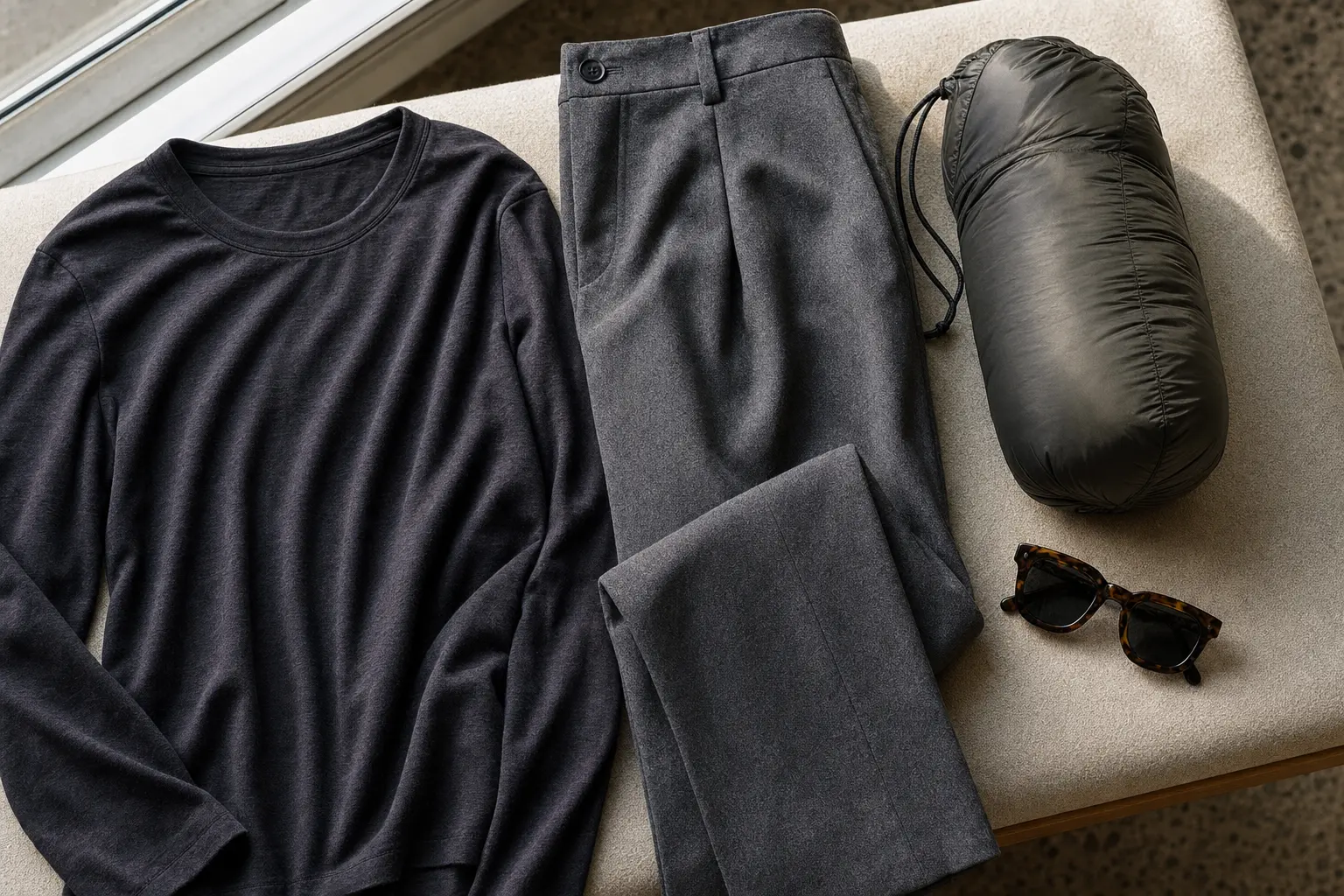
Wear a close-fitting base layer: a long-sleeve jersey or thin merino tee. Fit matters—too loose and it adds bulk under outerwear; too tight and it’s uncomfortable on long flights. Aim for soft, breathable fabrics: 160–200 gsm cotton jersey or 180–220 gsm merino blends work well. Tuck the base layer into mid-rise trousers with a gentle elastic or clean waistband to reduce shifting during flights.
Step 2 — easy layers
Choose a mid-layer you can remove without taking off shoes: a zip hoodie or a light knit with a full zip makes security checks faster. For hand-luggage-friendly temperature control, pack a compressible puffer in your carry-on so you can ditch the bulk if the cabin is warm, then re-don it on arrival. Opt for a puffer with 20–30% less loft than a full winter model so it packs tight without feeling thin.
Step 3 — outer layer and shoes
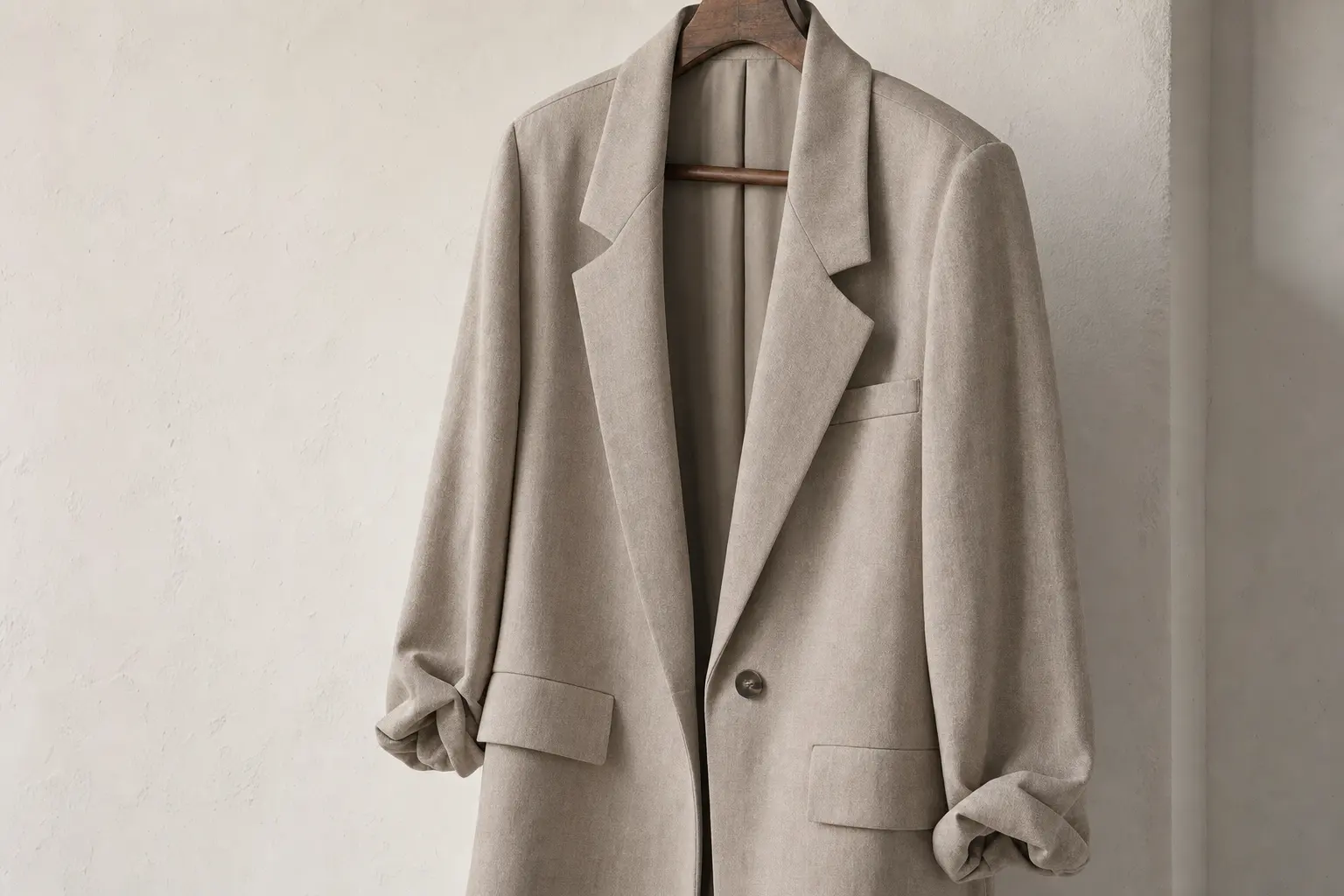
Wear your outer layer through security if it’s photo-worthy and comfortable. A longline blazer with an unstructured shoulder is easier to remove and re-wear than a fully padded coat. Sneakers should be slip-on or have easy lacing—this speeds through security and doesn’t sacrifice style. If you prefer loafers, use heel-friendly insoles for flight comfort.
Accessories and bagging
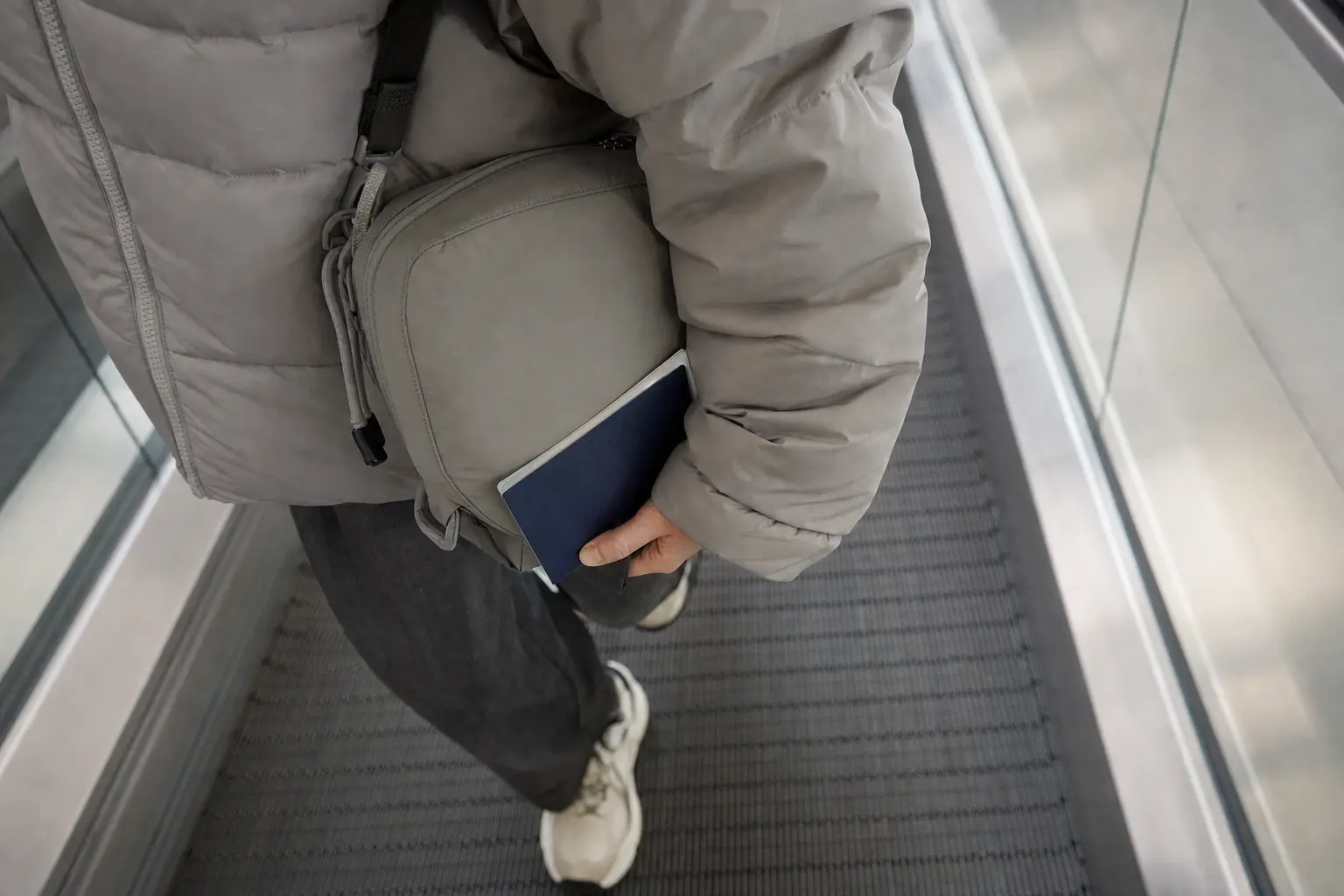
- Carry a compact crossbody for passport and phone—keep it on your body at all times for photos and quick access.
- Place liquids and electronics at the top of your carry-on for rapid screening.
- Sunglasses: keep them on your face or in a hard case; soft cases collapse and can smear lenses.
Common mistakes: too many loose scarves that obscure the silhouette; oversized backpacks that hide the coat line; and heavy jewelry that becomes annoying on long flights. Travel smart: the silhouette should remain legible in motion.
Budget copy: recreate airport looks without luxury prices
You don’t need luxury labels to get the airport look. The two most valuable investments are proportion and texture—buy one outer layer that reads well on camera and then fill in the rest with minimalist, well-fitting pieces. Fast-moving domestic marketplaces and indie designers supply many of the silhouette staples that idols wear, and you can mimic those styles efficiently.
Three-step budget approach
- Prioritize one statement outerwear piece. A matte-nylon puffer or longline unstructured blazer is high-impact and versatile.
- Invest in neutral trousers with good drape: look for blends with 2–4% elastane for movement and a clean hang.
- Choose one visible accessory: sunglasses, a small crossbody, or a bucket hat. This single piece creates a focal point without spending across the board.
How to spot value: check construction over embellishment. A well-cut blazer with clean seams and reinforced buttonholes will look more expensive than a logoed but poorly constructed item. For puffers, examine quilting density and zipper quality—coherent quilting (consistent 2–3 cm channels) keeps fill in place and photographs better than uneven stitching.
Shopping hacks used by Seoul shoppers:
- Set alerts on marketplace drops; viral sellouts happen fast, so speed matters [4].
- Buy neutral basics in off-seasons for better prices, then use the seasonal outerwear as the focal investment piece.
- Mix textures: pairing a matte puffer with a slightly glossy nylon bag or a wool trouser gives perceived richness at lower cost.
If you want a quick education on idol silhouettes and how to adapt them, our piece on How to Dress Like a Korean Idol explains tailoring milestones and proportion rules you can apply immediately.
Signature pieces: the 10 items you need to build an airport-ready wardrobe
Assemble a compact edit of ten items and you can mix dozens of airport-ready outfits. These are not luxury brand recommendations—these are categories and construction notes that determine how the item reads in photos and how it performs for travel.
List of signature pieces and exact selection criteria:
- Matte-nylon oversized puffer — shoulder drop 2–3 cm, mid-thigh length, consistent quilting channels.
- Unstructured longline blazer — soft shoulder, single-breasted, sleeve length ends 1–1.5 cm above the wrist bone.
- Bomber with soft ribbing — rib height 2–3 cm, lightweight lining for layering.
- Wide-leg midweight trousers — 1–2 inch break, fabric weight 280–360 gsm wool blend or heavy twill for cleaner drape.
- Fitted long-sleeve jersey — 160–200 gsm, minimal seam tape, neutral colors.
- Compact crossbody bag — 18–22 cm width, adjustable strap that shortens to sit at hip bone.
- Statement sunglasses — bold acetate frames or flat aviators that read in thumbnails.
- Chunky low-top sneakers — 3–4 cm platform, easily cleaned uppers.
- Leather loafers — minimal hardware, cushioned insole for flights.
- Lightweight packable puffer for carry-on—compressible bag with integrated stuff sack.
Comparison at a glance:
| Item | Minimalist | Streetwear | Luxury-lean |
|---|---|---|---|
| Outerwear | Unstructured blazer | Matte-nylon puffer | Longline wool coat |
| Bottoms | Straight tailored trouser | Wide-leg cargo trousers | Tailored pleated trouser |
| Shoes | Low-top leather sneakers | Chunky sneakers | Leather loafers |
| Accessory | Minimal crossbody | Logo bucket hat | Sculptural sunglasses |
Practical selection tips: prioritize neutral palettes and invest in one well-made outerwear piece. If you own a longline blazer and a packable puffer, you cover most season needs. For product discovery of Korean labels and designer-focused options, see our curated reference on Korean Fashion Brands to Know.
Packing, fabrics and fit: material choices that travel well and photograph better
Fabric choice is where travel functionality meets camera-readability. Some textiles crease but photograph well; others travel like a dream but flatten on camera. The trick is to combine breathable bases with structured layering so you look crisp off the plane.
Fabric cheat-sheet
- Merino or fine wool jersey (180–220 gsm): excellent for base layers—breathable, odor-resistant and low-bulk.
- Wool blends (280–360 gsm): ideal for trousers and blazers; resist wrinkling and hold a clean hem.
- Matte nylon puffer shells: photograph evenly and repel light reflections that wash out silhouette lines.
- Linen blends (60–70% linen + viscose/Tencel): good for spring/summer if blended to reduce wrinkling and add drape.
Compression and packing: use a thin packing cube for knit and jersey layers and a separate compressible sack for puffers. Roll trousers with a tissue layer along the crease to prevent stubborn wrinkles. When you arrive, hang the blazer in a steamy bathroom for 10–15 minutes—gravity and humidity relax fibers and reduce travel wrinkles without an iron.
Fit details that read on camera
Shoulder fit: aim for a soft drop for outerwear—2–3 cm beyond your natural shoulder gives the relaxed look without feeling oversized. Sleeve length: outerwear sleeves should end where the wrist meets the hand; mid-layers can be 1.5–2 cm shorter so cuffs peek out slightly. Trouser break: a slight 1–2 inch break keeps lines clean; too long creates bunching that photographs poorly.
Common mistakes and fixes:
- Too many textures at once: pick two textures, max, to avoid visual noise in photos.
- Heavy logos: they become focal points and date a look. Choose shape and texture over visible branding.
- Overstuffed bags: a sagging crossbody obscures your silhouette. Use structured pocket organizers to keep the bag looking compact.
These choices make an outfit travel-friendly and camera-ready—balance is the point, not maximalism.
Where to shop: Korean indie labels, marketplaces and StyleMZ essentials
Shopping for airport-inspired pieces mixes three sources: local marketplaces and micro-drops, indie Korean labels, and curated designer-forward stores. Musinsa has become a major channel for the streetwear and silhouette staples that feed airport looks, accelerating drops and helping smaller labels reach wider audiences [5]. But you can also build a streamlined wardrobe from versatile designer pieces and minimalist basics.
How to choose: look for construction notes (stitch counts, seam finishing), fabric specs and clear measurements. Korean sizing trends toward slim fits and shorter torso lengths; for relaxed airport silhouettes, size up one where shoulder drop or sleeve length is essential to the look. If you prefer an exact translation, check the vendor’s garment measurements rather than relying on size names.
StyleMZ edits and where they fit
We curate pieces that translate the airport aesthetic into wearable, minimalist originals. Explore our clothing selections for clean longline blazers, jersey basics and compact crossbody pieces that pair well with puffers and wide-leg trousers. For capsule shopping, start with our Clothing and T-Shirts categories—these anchor pieces form most airport looks.
Where to prioritize spend: outerwear first, then shoes and one accessory. For seasonal interest, check New Arrivals for curated micro-edits that echo Seoul streetwear trends: we select items that photograph well and travel easily. Browse New Arrivals when you want the latest silhouettes with designer-forward cuts.
Finally, mix and match. A minimalist graphic tee under a longline blazer will read as intentional and modern—see our piece on Mastering the Korean Long Sleeve Jersey Trend for precise fits and layer matches. When you’re ready to add a statement accessory, we recommend selecting one from our Most Viewed section to ensure it photographs well and travels comfortably.
Styling pitfalls, etiquette and the modern ethics of airport looks
Airport dressing has an etiquette layer you should respect. The spectacle of public arrival photos has led to debates in Korea about crowd safety, privacy and the ethics of staged visibility—Incheon’s 2024 proposal for a separate celebrity entrance sparked public backlash and further discussion about how visible these moments should be [2]. That matters for how you approach airport style: aim for thoughtful, functional outfits that prioritize practicality over provocation.
Common styling mistakes to avoid:
- Obscuring identity with excessive face coverings or sunglasses that impede quick identification at gates and check-ins—keep items accessible and removable.
- Overpacking bulky accessories that make movement awkward; the airport is a walking environment.
- Wearing looks that require constant adjustment (long trailing coats, loose belts) while navigating queues and security.
Public behavior and photography
Be aware of local context. Photos circulate quickly in Korea; if you prefer privacy, choose low-profile neutrals and avoid staged moments near fan clusters. If you like the attention, plan for quick outfit changes and compact organizers so you can transition from travel mode to photo-ready swiftly without delaying others.
Styling for respect: select shoes that won’t scuff airport floors and avoid dragging chains or items likely to catch on seating. Keep carry-ons tidy; a neat bag looks better in photos than a bag that’s bulging and unstructured. And finally, remember that these looks are often curated—use them as inspiration rather than a mandate. Practicality and comfort are not stylistic concessions; they are the backbone of the best airport fashion.
Shop the collection: Korean graphic tees, Korean long sleeve shirts, Korean sweatshirts, Korean hoodies and Korean tank tops – original graphics designed in Korea, made to order.
Frequently Asked Questions
What is Korean airport fashion and why is it so visible?
Korean airport fashion refers to intentionally styled travel outfits that are photographed and published widely by media and fan accounts. The visibility comes from fast editorial cycles—outlets publish arrival photos quickly—and from the cultural attention on idols and celebrities, which turns arrival outfits into trend signals almost instantly [3][4].
Can I recreate idol airport looks on a budget?
Yes. Focus on proportion and texture rather than labels: buy one strong outer layer (puffer or blazer), neutral trousers with good drape, and one visible accessory. Mix higher-quality basics with more affordable outerwear or find similar silhouettes from indie labels and fast drops to save cost [4].
What are the best fabrics for travel that still look good in photos?
Choose breathable bases like merino or fine jersey, structured midweights for trousers and blazers (280–360 gsm blends), and matte nylon for puffers. Linen blends work in summer if blended to reduce wrinkling. These fabrics balance travel comfort and camera-ready appearance.
How do seasonal trends affect airport outfits?
Seasonal trends determine dominant pieces: fall/winter favors oversized puffers, bombers and layered knits, while spring/summer favors lightweight tailoring and statement sunglasses. Retail micro-drops and marketplace growth accelerate these seasonal cycles, so expect quick turnarounds for trending items [6][5].
Where should I shop to find pieces that read well on camera?
Look for clean silhouettes with clear construction notes on measurements. Local marketplaces and curated designer stores are good for trend pieces, while minimalist label edits and basics retailers supply camera-friendly foundations. Our Clothing and New Arrivals sections contain curated items chosen for their travel and photo performance.