 OBJECT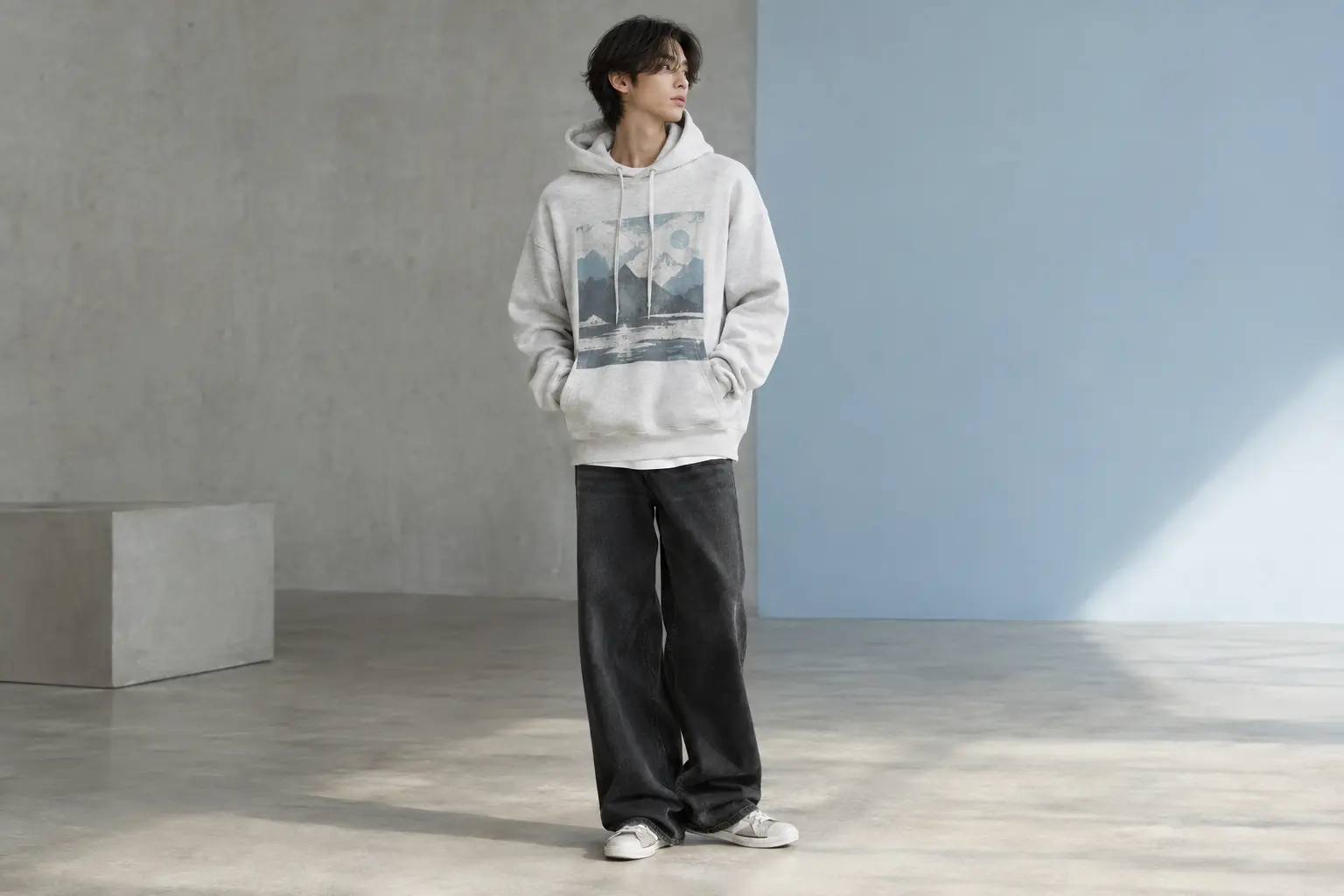
Korean hoodie sizing and fit guide questions usually begin with the wrong comparison: “What Korean size do I wear?” For these two graphic designs, the useful answer is more concrete. They are printed on the same listed unisex pullover blank, so the decision should come from the finished garment measurements and the silhouette you want.
That changes the shopping process. Do not convert a Korean 95, 100 or 105 directly into S, M or L. Measure a hoodie you already like, compare the available listing information, then decide whether you want a relaxed everyday shape or extra volume for a more deliberate streetwear look.
Why Korean hoodie sizing is not the same as Korean design language
The crane illustration, expressive lettering and Korean cultural references give these products a Korean design identity. They do not prove that either garment was cut for the Korean domestic market. The catalog identifies both designs as using the same Gildan 18500 unisex pullover blank. The blank manufacturer describes that style as a classic fit for loose comfort rather than an officially oversized cut. [1]
That distinction matters because a size label can describe several different things. A regional apparel designation may be connected to body dimensions used for a particular category, while a retail hoodie listing may show the finished garment. Those are not interchangeable measurements. A familiar number on one system cannot tell you how much fabric will sit across your chest, shoulders or hem on another.
The useful translation
Read these pieces as Korean-inspired graphics on a unisex hoodie blank. The blank is listed at 8 ounces per square yard and uses a cotton-polyester blend, with the stated composition differing between solid and heather colorways. [1] Its double-lined hood, pouch pocket, rib cuffs and bottom band create a relaxed casual structure, but those details do not turn a standard size into an oversized size.
- Artwork language: crane imagery, expressive lettering and Korean cultural references.
- Garment logic: the listed blank, available sizes and finished measurements.
- Fit decision: your preferred amount of room, length and layering space.
If you usually shop Korean clothing, keep your old size label as background information only. The better reference is a hoodie in your wardrobe that fits the way you want this one to fit. That single comparison removes most of the uncertainty created by country-based assumptions.
The distinction is also useful when comparing photographs. A model image can communicate the mood of a design, but it cannot reliably show how the same size will sit on your shoulders or where its hem will land. Treat the image as styling direction and the measurement information as the buying evidence.
How to measure a hoodie you already own
The most reliable starting point is not your body measurement or your usual letter size. It is a pullover hoodie whose proportions already feel right. A familiar garment captures your preferred ease, shoulder position and body length in one reference, which is more useful than trying to guess how a new listing interprets “medium.”
A five-minute measuring method
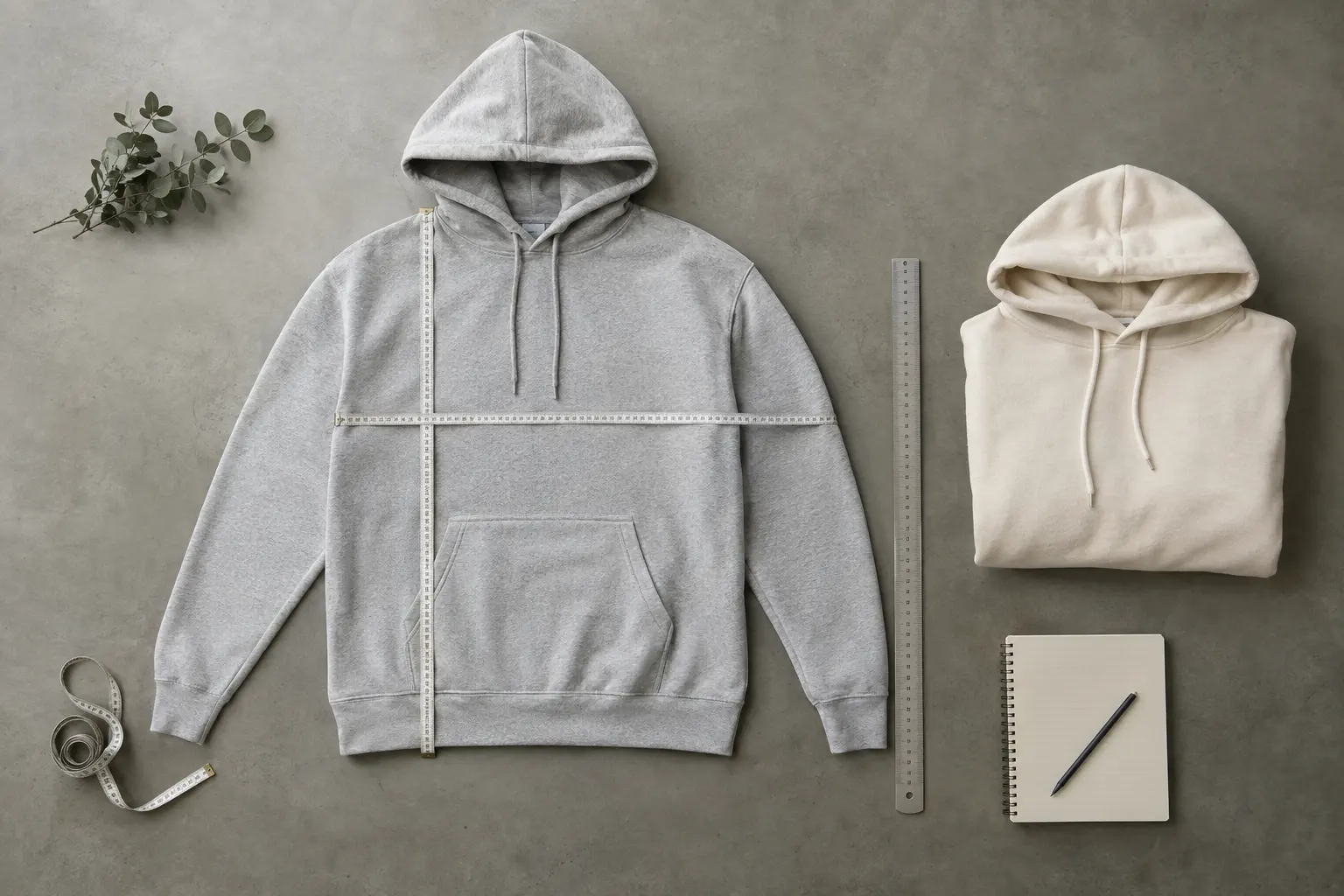
- Lay the hoodie flat on a clean surface and smooth the front without stretching the fabric.
- Measure straight across the chest, just below the armholes, from one side seam to the other.
- Double that flat width to create an approximate garment chest circumference.
- Measure body length from the highest point of the shoulder near the hood down to the bottom hem, using the same starting point each time.
- Write down the result in inches or centimeters, then compare it with the information shown on the product listing.
The width number is not your body chest measurement. It is the width of the finished garment while laid flat. Doubling it gives an approximate circumference at that level, but it does not account for seams, construction or the way the fabric sits when worn.
Use a hoodie with a similar purpose as your reference. If you want a clean everyday layer, compare a regular pullover rather than a dramatically oversized fashion piece. If your target is a generous streetwear silhouette, measure the largest hoodie you genuinely enjoy wearing, not one that only looks appealing in a product photograph.
Keep the measuring method consistent. A width taken at the underarm should be compared with another underarm width, and a shoulder-to-hem length should be compared with the same length method. Mixing points from different charts creates false precision and can make two similar garments appear farther apart than they are.
For a broader reference on how silhouette changes across casual tops, StyleMZ’s Korean unisex crewneck tee fit guide uses the same useful principle: choose the proportion you want, then verify it against measurements rather than relying on a label.
Take one more measurement if sleeve comfort is a major concern: measure your reference hoodie from the shoulder seam to the cuff, then use the product imagery and listed construction as a visual check rather than forcing an unmatched sleeve measurement into the comparison. Chest width and body length remain the clearest first checks.
Korean hoodie size chart: how to read the available information
The listings show a size range from S through 3XL, but the supplied catalog evidence does not expose a complete set of finished measurements for every size. One listing visibly provides partial chart information, including a medium size at 22 inches or 55.9 centimeters in width and 28 inches or 71.1 centimeters in length. Use the live chart on the specific product page for the remaining sizes rather than treating an unavailable figure as verified.
| What to compare | What the listing or your garment tells you | How to use it | Common mistake |
|---|---|---|---|
| Available size | S through 3XL are listed for the catalog hoodies | Confirm the exact color-size combination before ordering | Assuming every color has every size |
| Flat chest width | Measure across the chest below the armholes | Compare the same point on a hoodie you own | Confusing garment width with body measurement |
| Body length | Measure from the same shoulder-area starting point to the hem | Check where the sweatshirt will finish on your body | Sizing up for width without considering a longer hem |
| Fit description | Classic, relaxed unisex construction | Expect ease rather than a deliberately exaggerated cut | Assuming Korean-inspired artwork means oversized sizing |
| Color availability | Options vary by product and color | Verify the chosen variant on the listing | Using one color’s availability as a promise for another |
The visible medium measurement is a useful demonstration of method, not a substitute for the complete chart. Lay your reference hoodie flat, record its width and length, and compare those figures with the current listing before checkout. If the product page displays updated measurements, those current product-specific figures should take priority over any general estimate.
Width and length deserve equal attention. A roomier size may solve a chest or layering issue while also making the body longer. If your current hoodie fits across the chest but already reaches your preferred hem position, sizing up can fix one problem while creating another.
A small difference should be treated as a proportion question rather than an automatic defect, particularly for a made-to-order garment. The more useful question is whether the difference changes the silhouette you intended. When a fit is close, decide which measurement you are least willing to compromise: torso room, sleeve reach or body length.
Because both featured designs use the same listed blank, this measurement logic applies to Korean Greeting Basics and Can’t Speak Korean. The artwork changes the visual impression, not the underlying size decision.
Relaxed fit or oversized streetwear silhouette?
The blank manufacturer describes the garment as a classic fit for loose comfort. [1] Separate product guidance describes the same style as a regular, comfortable fit that works for layering and movement. [2] That is a useful base, but it is not the same as a fashion label deliberately cut oversized. The distinction is visible in the shoulders, sleeves, hem and overall balance.
Choose the measured size when you want:
- A relaxed pullover that does not dominate the rest of the outfit.
- Enough room for a light layer without intentionally lengthening the hem.
- The graphic to remain proportionate to the body instead of looking unusually small.
- A classic sweatshirt profile with rib cuffs and a defined bottom band.
Consider one size up when you specifically want:
- More torso width for substantial layering.
- A lower hem and longer sleeves as part of the styling proportion.
- A looser, more casual streetwear effect rather than a close comparison to your current hoodie.
- Extra visual space around the artwork, accepting that the graphic may not grow in exact proportion.
A larger garment does not guarantee a larger print. The listings do not document exact print scaling across every size, so do not assume that moving from M to L will enlarge the artwork in the same ratio as the body. You may gain more fabric around the graphic without gaining a larger graphic itself.
Imagine three hypothetical shoppers. If you wear a medium hoodie that fits comfortably and like its length, start by comparing the listed M measurements. If you wear M but want a visibly loose layer over a substantial long-sleeve shirt, compare L and accept the extra length only if it suits your proportions. If you are between sizes and dislike long hems, the smaller option may produce the sharper proportion even if the larger one feels roomier through the chest.
Do not use “Korean streetwear” as a reason to size up automatically. Streetwear proportions vary. The sound decision is to size up only when the added width and length are part of your intended outfit, not because the graphic has Korean references.
One practical styling test is to imagine the hoodie without its artwork. Would you still want that body volume, hem position and sleeve reach? If the answer is no, the size increase is probably being driven by the graphic’s mood rather than by a genuine fit preference.
Choosing between the two graphic hoodie designs
Once the size is settled, the choice between the two designs is mainly a question of visual energy and how much meaning you want the front graphic to carry. Their hood, pouch pocket, cotton-polyester fleece construction, classic unisex fit and size logic come from the same listed blank. You are choosing artwork, not a different cut.
Korean Greeting Basics uses a playful crane illustration and a detailed greeting lesson scene. Its gray, navy, orange and cream tones give the front more narrative movement, so it suits a wardrobe where the hoodie is intended to be the main visual statement. The catalog lists Light Blue, Ash, Light Pink and Sand, with sizes S through 3XL.
If your existing wardrobe leans toward quiet denim, simple neutral tops or restrained casual layers, the illustration can supply the focal point without requiring a complicated outfit. Keep the rest of the look visually calm so the crane scene has room to read. The relaxed shape and pouch pocket already add visual volume; extra graphic pieces may make the outfit feel busy.
Can’t Speak Korean takes a more direct route, pairing a bold English-language message with expressive lettering and orange and blue accents. Its typography gives the garment a sharper identity and may appeal if you prefer words and quotes to a scene-based illustration. The listing includes White, Sand, Light Blue, Light Pink, Ash and Sport Grey, with the same S-through-3XL range.
That difference affects sizing perception. A bold text graphic can feel more immediate on a closer, measured fit because the message remains compact and legible. A detailed illustration can benefit from a little breathing room, although adding size still changes the garment more than it changes the artwork.
Choose Korean Greeting Basics if you want a story-led print with warm color accents and a playful cultural reference. Choose Can’t Speak Korean if you want typography to do the work and prefer a graphic that reads quickly from a distance. Neither is inherently more fitted or more oversized; use the same measurement process for both.
If you are buying a first piece, choose the design that matches the role you want it to play. The crane illustration is a conversational focal point. The typography option is more declarative. That distinction is more useful than trying to assign one design a different fit.
How print scale and pocket placement affect the look
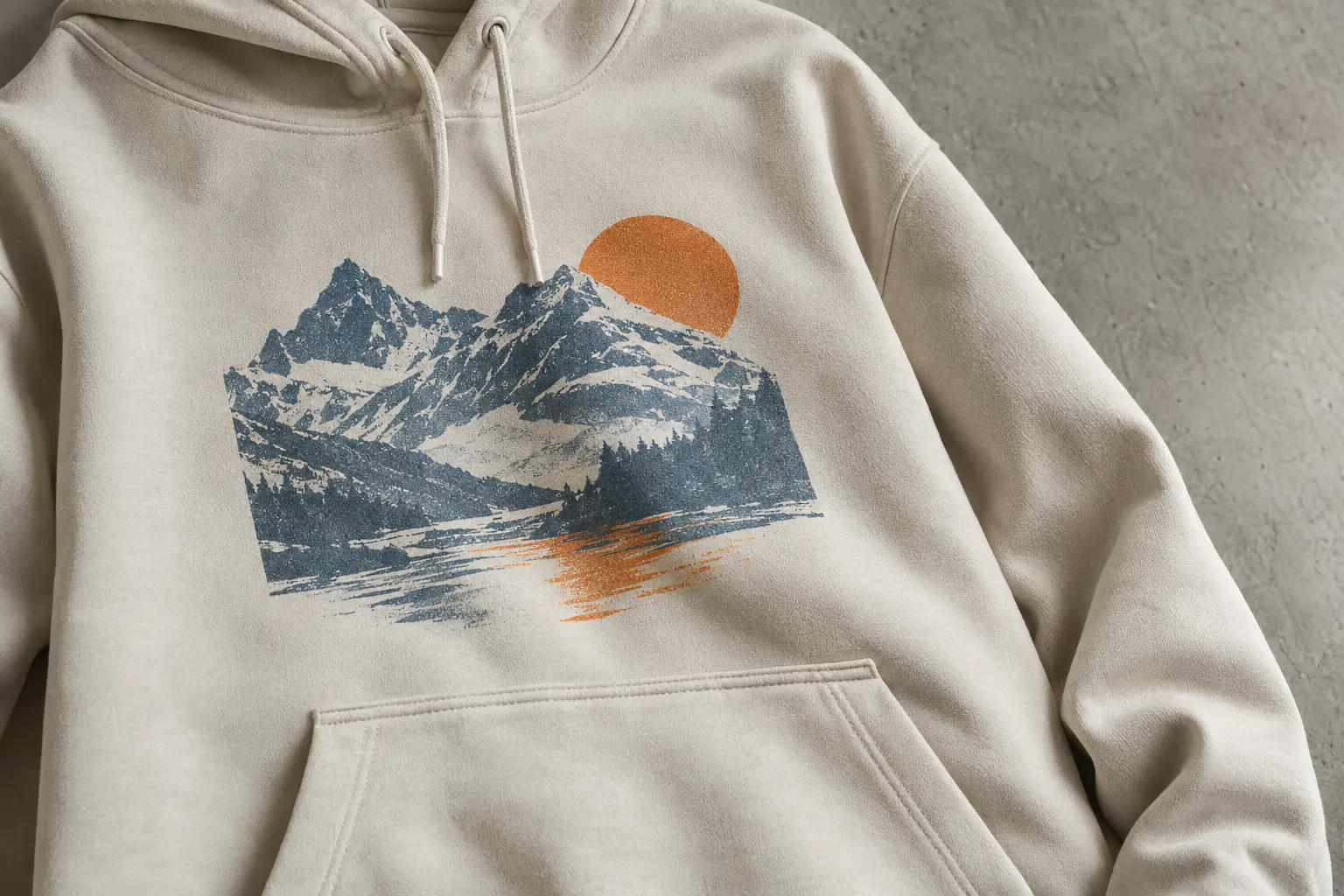
Fit is not only about the body of the garment. A printed graphic has its own visual scale, and the relationship between the print and the fabric can change as you move from S to 3XL. A design that fills much of a smaller front may appear more contained on a larger body, even when the artwork itself is not enlarged.
This is particularly relevant to detailed illustration and lettering. The crane scene in Korean Greeting Basics contains several visual elements, while Can’t Speak Korean relies on a bold written message. If the print remains close to one standard size, the crane may feel more spacious on a larger garment, while the lettering may occupy a smaller percentage of the chest. The listings do not document exact scaling rules, so treat this as a visual possibility rather than a production promise.
Think about the pocket before judging the front
A pullover hoodie’s pouch pocket occupies the lower front, so a graphic placed too low can visually compete with the pocket seam or become harder to read when the fabric folds. Critical lettering generally benefits from remaining above that visual interruption. This is a placement principle for evaluating the product image, not a claim about undocumented coordinates on either listing.
Before ordering, inspect the product image with three questions:
- Does the important part of the design sit high enough to remain clear above the pocket?
- At your chosen size, will the artwork feel appropriately prominent or intentionally understated?
- Does the color of the blank give the print enough contrast for the design to read?
If you are choosing between sizes, do not assume the larger option will make the print more impressive. It may give the artwork more surrounding space while also extending the sleeves and hem. If the graphic is your priority, select the size that gives you the desired body proportion first, then judge the print as part of that silhouette.
The same editing instinct applies to the rest of your outfit. When the hoodie has a detailed or high-contrast front, let it lead. For more advice on keeping a printed top visually controlled while adding another layer, see how to layer a graphic tee for fall without losing the print; the principle of protecting the main graphic also works for a pullover hoodie.
Can’t Speak Korean suits a shopper who wants the message to be the dominant design element. Choose the size by the garment’s width and length, then assess whether the lettering has enough clear space around it in the product imagery.
Made-to-order production, care and long-term fit
These products are made to order, so the shopping decision includes timing as well as fit. Production takes place after purchase, and the listings advise allowing additional processing time before delivery. That model means the hoodie should not be treated like an immediately available stock item. If you need it for a specific trip or event, build in production and shipping time rather than planning around dispatch alone.
The blank itself is a cotton-polyester blend. Solid colorways are listed at 50% cotton and 50% polyester, while heather colorways use 40% cotton and 60% polyester; the manufacturer also lists an 8-ounce fabric weight, brushed interior, double-lined hood and rib details. [1] Those are construction facts, not a guarantee that every fulfillment process will produce an identical result under every washing condition.
Use the supplied care information as the authority
Follow the care label or supplied product instructions first. Care instructions are expected to describe the regular care needed for ordinary use, and the responsible seller or manufacturer must have a reasonable basis for those instructions. [6] Generic printed-apparel advice is secondary to the information attached to your actual garment.
When the supplied instructions permit it, a cautious routine for printed clothing is to avoid treating the graphic aggressively and to use the lowest practical heat during drying. Do not press an iron directly over the print unless the supplied instructions specifically explain a safe method. These are conservative handling principles, not a replacement for the label on the specific order.
Do not interpret the cotton-polyester blend or a “pre-shrunk” description as a promise of zero dimensional change. Heat and repeated laundering can affect the way a garment fits over time, and print-and-cure processes may differ between providers. If you are choosing between two close sizes, the safer long-term decision is the one that already gives you the intended room without depending on substantial post-wash shrinkage.
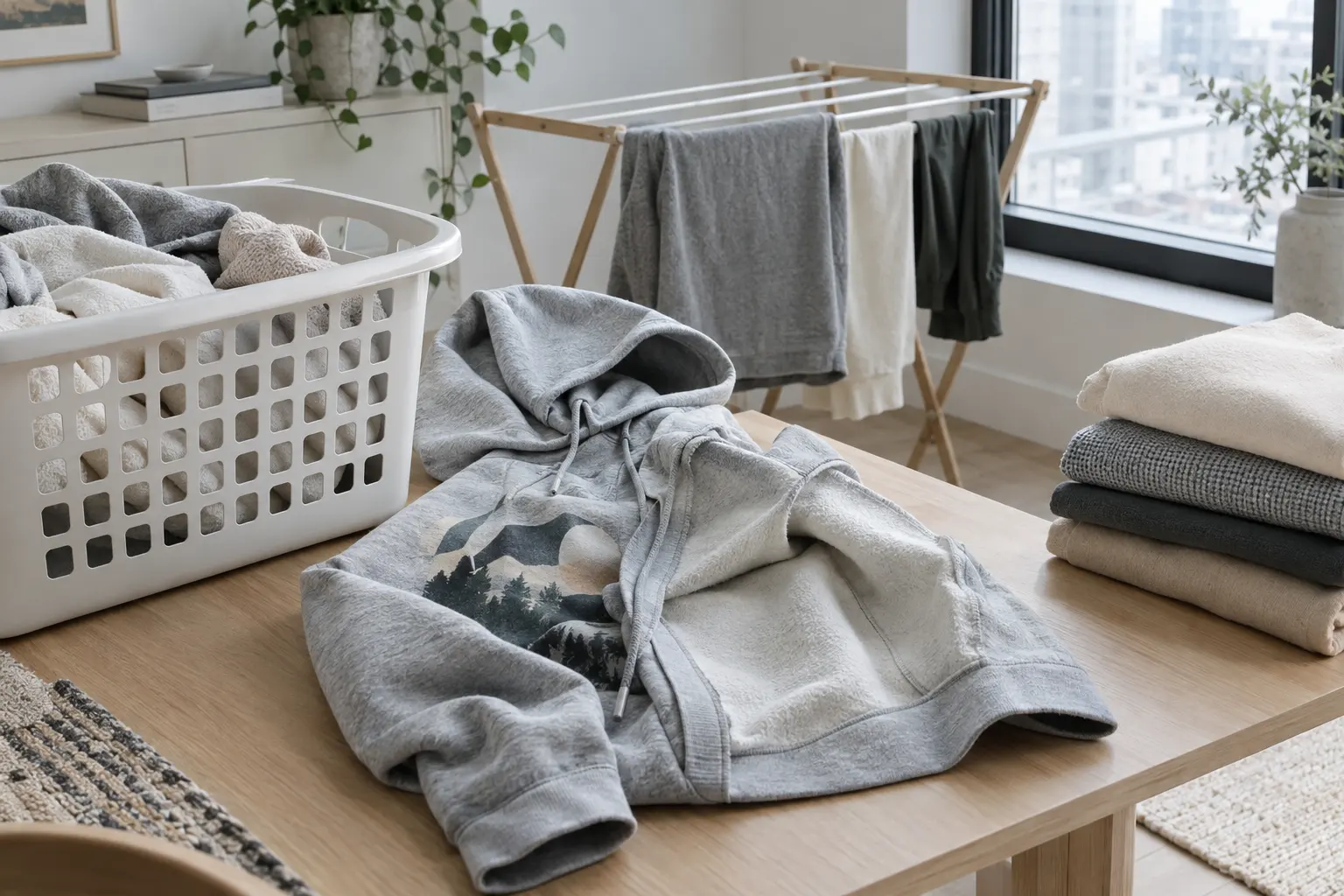
Care also begins with storage. Avoid leaving the hoodie compressed while damp, and give the printed front enough room that it is not repeatedly folded against rough surfaces. These are practical ways to preserve the garment’s shape and graphic without claiming a guaranteed lifespan or result.
For a broader view of how garment weight affects proportions in printed clothing, StyleMZ’s heavyweight tee versus standard tee comparison offers a useful parallel: fabric weight influences presence, but it does not replace measurements.
Three buying situations and the final fit rule
The chart becomes useful when it answers a specific wardrobe problem. Start with the garment you already own, then decide whether you are matching its proportions or intentionally departing from them. The same listed hoodie can look precise on one person and oversized on another because the choice is about both measurements and styling intent.
If you want an everyday relaxed hoodie
Imagine that your favorite pullover measures 22 inches across the chest and 28 inches long. The catalog’s visible medium example is approximately 22 inches in flat width and 28 inches in body length, so M is the logical starting point for comparison. Choose it if you want the new hoodie to occupy the same visual space, whether you select Korean Greeting Basics or Can’t Speak Korean.
If you want a looser layered proportion
Imagine that you normally wear M but plan to layer the hoodie over a substantial shirt and want extra room through the torso. Compare the next listed size rather than assuming that Korean-inspired streetwear automatically means a dramatic oversize. Check the larger size’s current chart entry, then accept the increase only if its longer hem and sleeves suit your proportions.
If you are between sizes or sensitive to length
Imagine that your chest measurement sits between two options, but you dislike a long sweatshirt hem. Give body length equal weight to width. The larger size may create better ease across the chest while adding length; the smaller size may preserve a cleaner proportion if your reference hoodie already sits close to the body.
There is no virtue in forcing a conversion from a Korean label. The right choice is the one that reproduces—or deliberately changes—the silhouette you can describe. Measure first, compare second, style third.
If you still feel uncertain, prioritize the measurement that will be hardest to tolerate when wrong. For most shoppers that means chest width for movement and layering, or body length for overall balance. Then check the listed color and size combination, since availability can vary by color.
For browsing other printed clothing after you settle the hoodie, the StyleMZ clothing collection keeps the same practical distinction in view: the graphic sets the mood, while the garment specification determines how it sits.
The final rule is simple: choose the nearest measured size for the classic relaxed shape, and size up only when the additional width and length are part of the look you actually want. That is a more reliable path to Korean-inspired streetwear than any universal size conversion.
Shop the collection: Korean graphic tees, Korean long sleeve shirts, Korean sweatshirts, Korean hoodies and Korean tank tops – original graphics designed in Korea, made to order.
Frequently Asked Questions
Is this a Korean-size hoodie?
No. Korean Greeting Basics and Can’t Speak Korean use the same listed unisex pullover blank, so the practical reference is the product chart rather than a Korean domestic size label. The Korean design language describes the artwork, not the cut. Compare the hoodie’s width and length with a garment you already own.
Should I size up for a Korean streetwear look?
Only if you want the added width and length. The blank is described as a classic loose-comfort fit, not an officially oversized silhouette. Size up when you deliberately want more layering room or a longer, looser proportion, and remember that the graphic may not enlarge in exact proportion.
Can I convert Korean 95, 100 or 105 directly to S, M or L?
Not reliably. Those label systems and finished-garment charts describe different things, and the relationship can vary by category and maker. Measure a familiar hoodie flat, compare its chest width and body length with the current listing, and then choose the closest available size.
Do both featured hoodies fit the same way?
Yes, their fit logic is the same because the catalog identifies both as using the same blank. Korean Greeting Basics has a detailed crane illustration, while Can’t Speak Korean uses a bold English-language graphic, so they may create different visual impressions. The construction and size decision remain the same.
How should I care for a printed hoodie?
Follow the actual care label or supplied instructions first. Use conservative heat and handling only when those instructions allow it, and avoid pressing directly over the print unless the label explains a safe method. Do not assume a cotton-polyester blend eliminates all dimensional change.