 OBJECT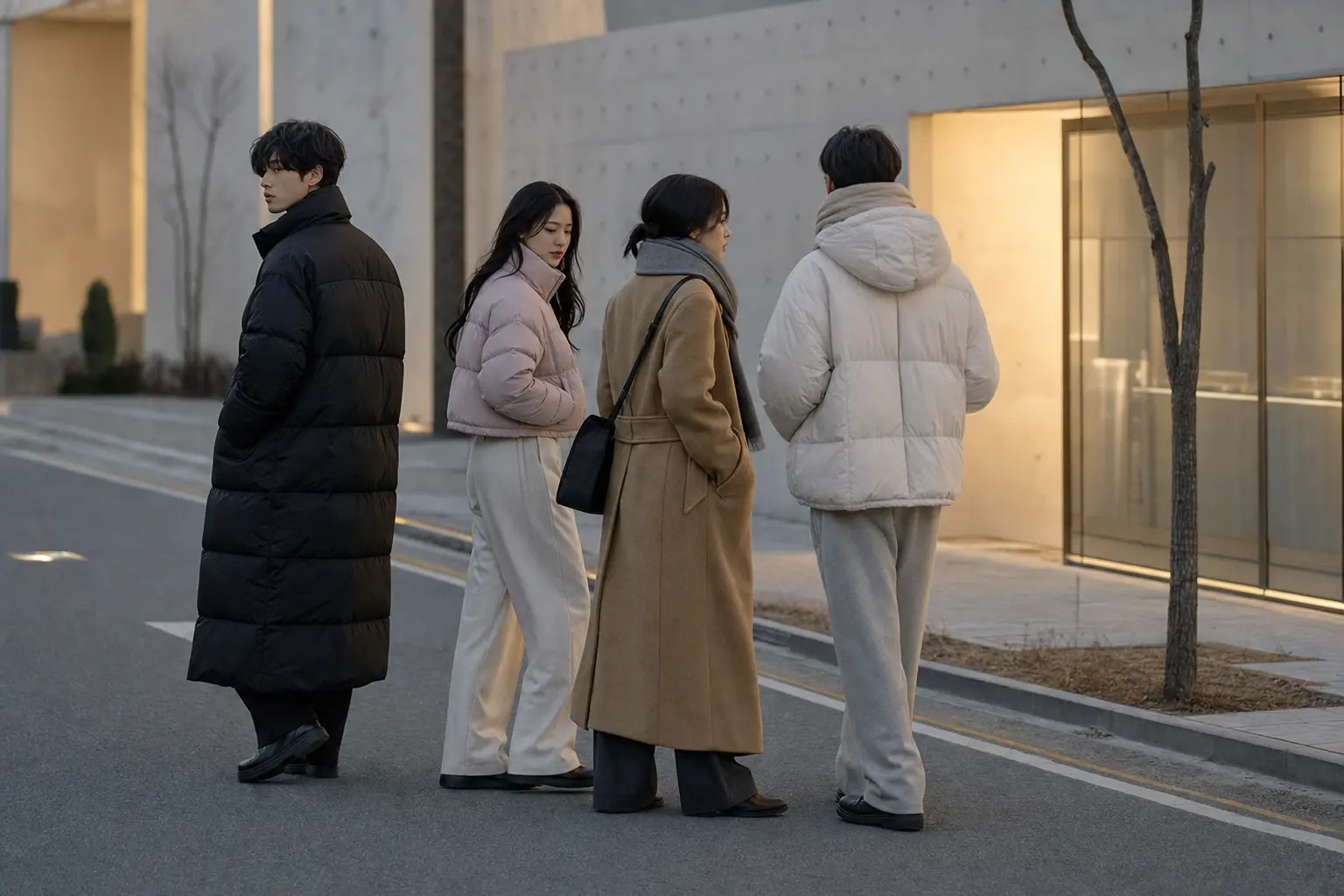
korean winter coat styling guide: Seoul’s winter wardrobe is less about one heavy coat and more about a precise three-layer system that handles short autumns, sudden cold snaps, and street-style polish in the same outfit. This article gives exact, wearable rules for proportions, fabric choices, and the seasonal silhouettes Korean shoppers actually buy.
Expect clear choices: when to pick long padding for real warmth, when a wool overcoat makes sense for smart-casual days, and why a cropped or packable puffer is the best daily compromise for city life. You’ll get outfit recipes, care instructions, and a shopping checklist tuned to how Koreans shop now—including limited POD patch drops and lighter puffers trending last season [2][3][4].
Why the Seoul three-layer formula works for winter coats
The practical backbone of contemporary Korean winter styling is a simple three-layer formula: a thermal or base layer, a slim knit mid layer, and a structured outer shell. This is not an aesthetic slogan—retailers and style editors across Seoul recommend this exact stack because it balances warmth, silhouette control, and mobility [6].
Start with the base: a fitted thermal top or lightweight merino long-sleeve that sits close to the skin. It should wick moisture and be thin enough to preserve clean lines. Quantities: choose 1–2 base pieces (one neutral, one patterned or ribbed) to rotate through the season. The mid layer is the visual anchor—think fitted crewneck knit, thin funnel-neck, or a slim hoodie in cashmere-blend or cotton. Aim for one mid layer per outfit; it provides insulation and controls bulk without stealing shape from the outer coat.
How the outer works
The outer is the statement and the weather shield. Seoul shoppers use three outer archetypes: long padding for maximum warmth, wool overcoats for mixed formal days, and cropped or packable puffers for commuting and social wear. Because winters in Korea have shortened autumns and variable temp swings, the market shifted in 2025 toward lighter, versatile puffers and packable designs [2][1]. That means more removal options: detachable hoods, removable liners, and convertible sleeves are common features you should prioritize.
Practical checklist: choose a neutral base (black, camel, grey), one color-point outer (pastel or pink is trending), and a functional commuter piece (packable/ultralight fill). With that capsule, you can layer for warmth or style without looking bulky.
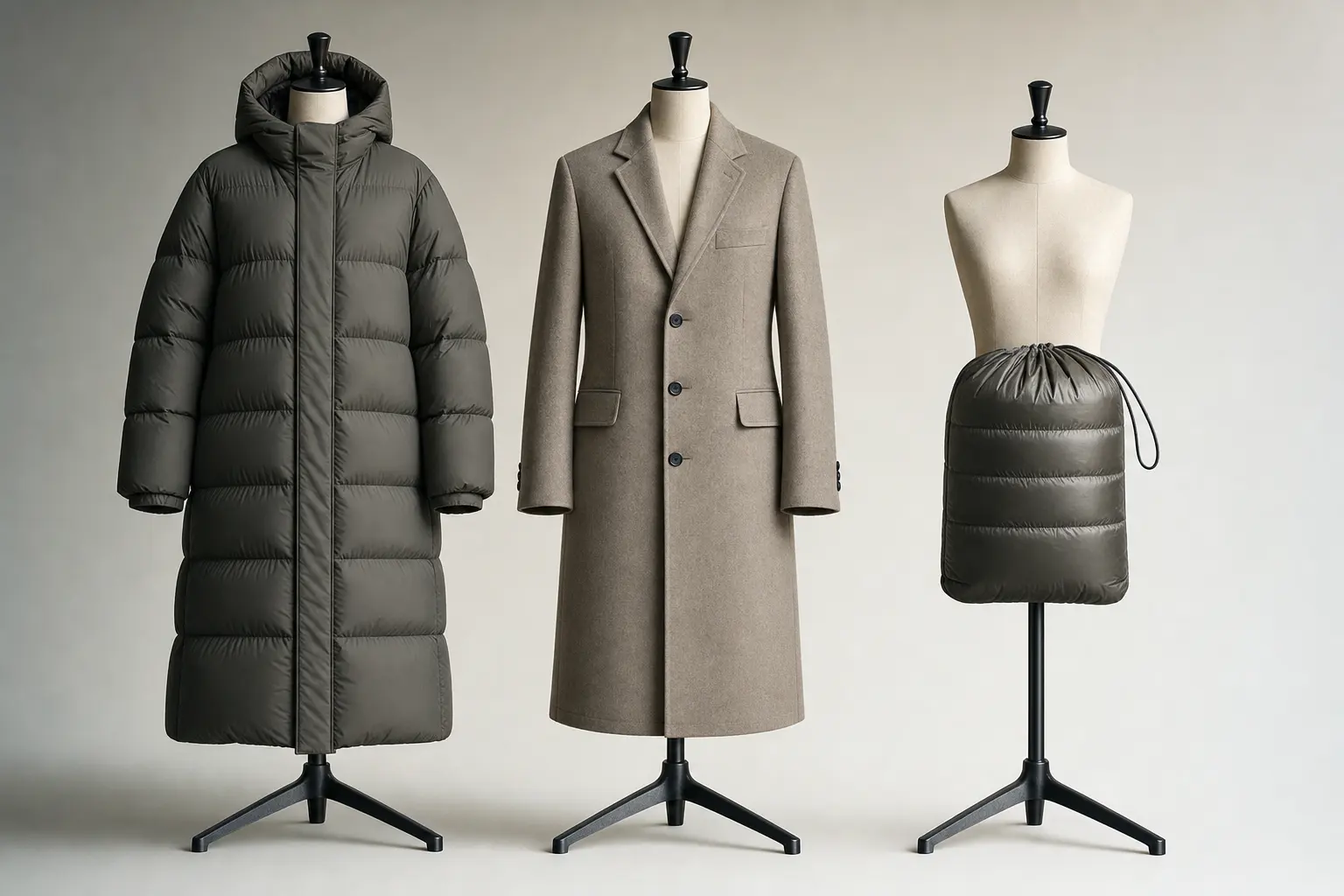
Coat types compared: long padding, wool overcoat, cropped puffer, packable puffer
Picking the right outer starts with a straightforward comparison: warmth vs. weight, silhouette vs. mobility, and commute convenience. The table below lays out practical differences so you can choose by daily routine and climate risk (windy streets vs. brief cold snaps).
| Coat Type | Warmth & Use | Fit & Styling Notes |
|---|---|---|
| Long padding (long padding) | Highest warmth; ideal for sustained cold and windy nights—streetwear staple | Volume from mid-thigh down; pair with slim bottoms to balance; core Seoul winter archetype [5] |
| Wool overcoat | Moderate warmth; best for smart-casual wear and layering over hoodies | Structured, elongated lines; choose belted or single-breasted for tailored looks |
| Cropped puffer | Good for urban commuters and quick warmth; popular with Gen-Z streetwear | Short silhouette emphasizes high-waist bottoms and layered hoodies; easier movement [4] |
| Packable/ultralight puffer | Light warmth; excels for travel and variable temperatures | Compresses into a pouch; looks casual—ideal as a backup layer |
Use cases: choose long padding when temperatures stay low for long periods or when you spend long stretches outdoors. Opt for a wool overcoat when you need polish and will be mostly indoors but still require insulation. Pick a cropped puffer for everyday Seoul streets where social life and commutes mix; it keeps proportions sharp. For travel or days with big temperature swings, the packable puffer is the best utility pick.
Trend note: in 2025–26 the market moved toward lighter, versatile puffers, and color-point limited editions—so you can find pieces that mix functional fill with street color accents [2][3].
Styling proportions without bulk: exact rules and visual checks
Bulky outerwear looks resolved or messy depending on proportion control. Korean street style masters this with rules that you can apply step-by-step. Use these three exact guidelines to keep a clean silhouette with any padded coat.
Rule 1 — Keep the base slim
Your base layer should be tight to the body and thin. A fitted thermal or merino long-sleeve is ideal. If you wear a hoodie as the mid layer, choose a slim-cut hoodie (not oversized) or size down one size: this creates the insulating volume you want without adding mass. Visual check: sleeve seam should sit at your natural shoulder joint under the outer layer.
Rule 2 — Decide the focal hem
Long coats demand slim bottoms to avoid a boxy look. With long padding, use tapered trousers or a straight mid-rise jean. With cropped puffers, pick high-waist bottoms; the short outer creates an optical elongation of the legs. If you want to wear a wool overcoat, balance length: a calf-length coat over wide-leg trousers reads intentional; a knee-length coat works with cropped trousers.
Rule 3 — Control sleeve and shoulder lines
Bulky sleeves are the giveaway. If the outer has heavy quilting, avoid chunky knit mid layers. Instead, use thin knits or a fitted sweatshirt. Tip: roll the mid-layer sleeve up half an inch so a clean cuff peeks out—this visually slims the forearm and defines the wrist.
- Fast outfit check: stand sideways in a mirror—if the coat creates a single block from shoulder to hem, add a mid-layer with contrasting texture or a belt to break the block.
- Accessorize to refine proportion: a structured beanie or a simple crossbody bag across the chest adjusts perceived shoulder width.
These are practical, repeatable moves; practice them once and the silhouette control becomes second nature.
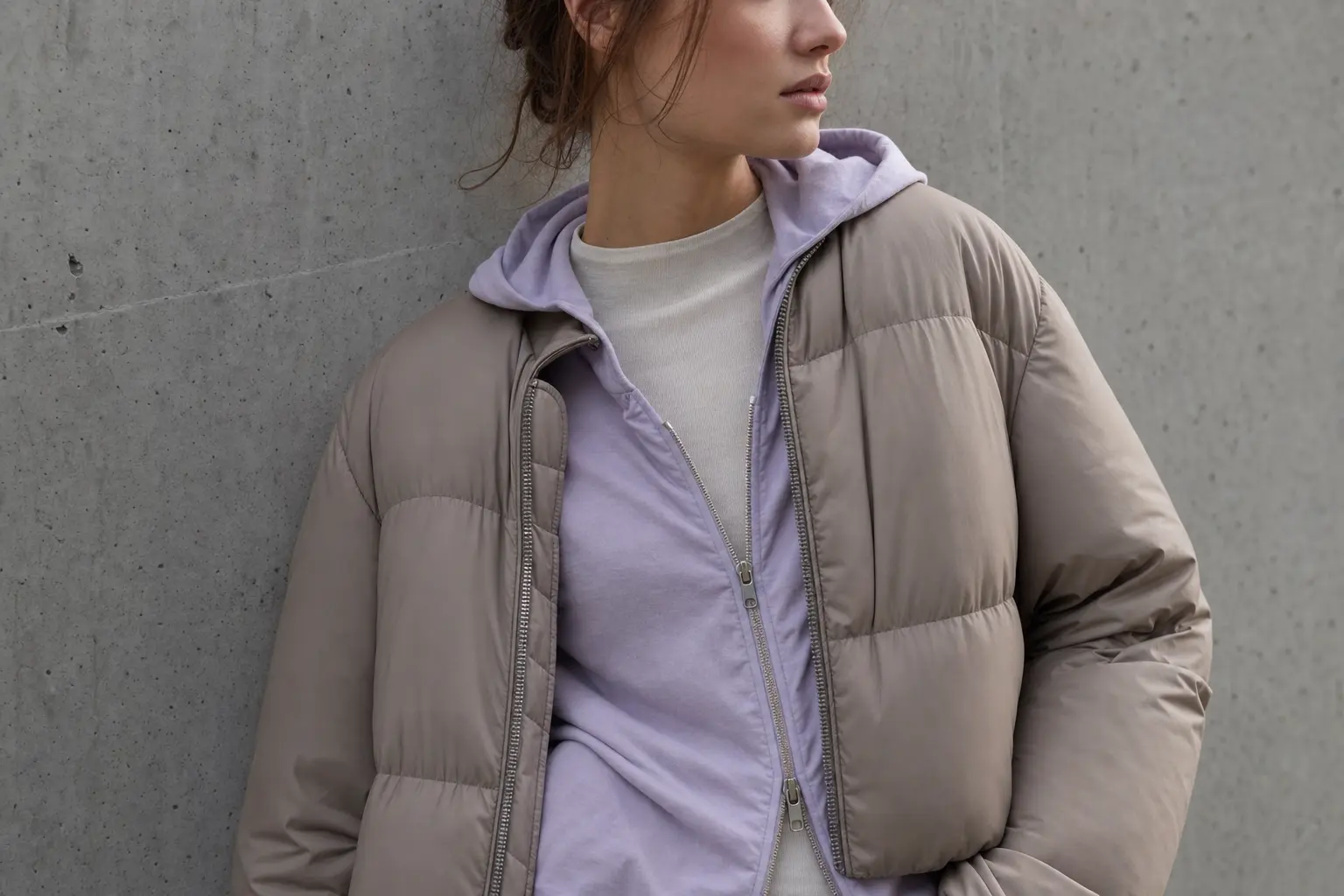
Color, texture and the street cues Koreans shop this winter
Colors and texture choices tell the story of Seoul’s streets each season. In late 2025 Korean shoppers pushed a color shift: pastel and pink “color-point” puffers gained visibility, while limited-edition patches and collectible embroidery amplified small-batch desirability [3][4]. Using color as an accent instead of the full outfit keeps the look modern and easy to wear.
How to add color without losing restraint
Choose one color point per outfit. That could be a pastel cropped puffer, a pink hood liner peeking from under a neutral overcoat, or a scarf in muted lavender. Keep the rest of the outfit neutral: charcoal, camel, and off-white are Seoul favorites because they let a single color sing. Textures matter too; a matte nylon puffer reads street-ready, while a slight sheen makes the same piece feel dressier.
Fabric accents and patches are now a design language. Print-on-demand platforms and small studios deliver limited patch drops and embroidery that let you personalize a neutral outer without overpowering it [7]. For example, a monochrome wool coat with a small embroidered emblem at the cuff reads curated rather than loud. Puffer finishes—matte vs. glossy—also change tone. Matte nylon feels utilitarian and pairs with utility boots; a glossy finish feels youthful and pairs with sneakers.
Gen-Z consumers pushed cropped puffers and playful palettes in 2025; if you want a streetwear edge, pair a cropped pastel puffer with structured trousers and a minimal beanie for contrast. If you prefer a grown-up palette, choose a camel wool overcoat and layer a pastel scarf as your color-point. Seasonal pick: invest in one pastel or limited patch outer for trend currency, then ground it with classic neutrals for longevity [2][4].
Functional features that matter: liners, fill, packability and convertible design
Feature shopping beats gimmick shopping. When evaluating coats, inspect four design areas: liner systems, fill type and weight, packability, and convertible elements. These features determine how a coat performs across autumn and winter in Seoul’s variable climate.
Removable liners and convertible sleeves
Removable liners let one coat act as two. A full-zip liner that detaches from the shell turns a heavy winter coat into a lightweight fall jacket. Look for secure snap or zip systems that don’t gape at seams; cheap zippers cause wind intrusion. Convertible sleeves—zips at the cuff to change length—expand a coat’s use cases and ease mobility while commuting.
Fill types and warmth ratings
Down fill gives compressible warmth; synthetic fill performs better in damp weather and retains insulation when wet. In recent Korean collections, designers favored lighter fill with high warmth-to-weight ratios, reflecting a market move toward versatile puffers [1][2]. A practical metric: a mid-weight puffer should compress to a third of its volume and still trap air. If a coat lists fill power (for down), higher numbers mean more loft and a lighter feel for the same warmth. If there’s no fill-power number, test compressibility in-store.
Packability and travel details
Packable puffers fold into a pouch and often include a carabiner loop; these are ideal for commuters who move between heated indoors and cold outdoors. Pay attention to seams: welded seams shed wind better than stitched quilting but are harder to repair. Also check pocket design—lined hand pockets and a secure inner pocket for a phone or commuter card matter more than flashy hardware.
Quick shopping checklist: removable liner preference, fill type (down vs synthetic), ability to compress for a bag, and convertible details that suit your daily movements. Those four features will keep a coat versatile season after season.
Seven Seoul-ready outfits: exact combinations for commute, date, airport and weekend
This section gives seven complete outfit formulas you can recreate in minutes. Each look lists exact pieces, textures, and proportion notes so you know what to shop for and how to layer them. These are practical, street-forward combinations used around Seoul for different daily rhythms.
1. Commuter: packable puffer
Pieces: thin thermal top, slim fleece mid-layer, packable puffer in neutral, tapered trousers, low-profile sneakers, crossbody. Tip: compress the puffer into your tote when indoors and use the mid layer to stay warm. This keeps the outfit purposeful and avoids post-commute bulk.
2. Cold office day: wool overcoat
Pieces: merino crew, fitted hoodie (thin), single-breasted camel overcoat, straight-leg trousers, loafers or Chelsea boots. Fit note: the hoodie should be slim to keep the coat seams clean—this reads elevated casual.
3. Night out / date: belted padded coat
Pieces: ribbed turtleneck, belted padded coat (structured), slim black jeans, Chelsea boots. The belt defines the waist and prevents a boxy silhouette.
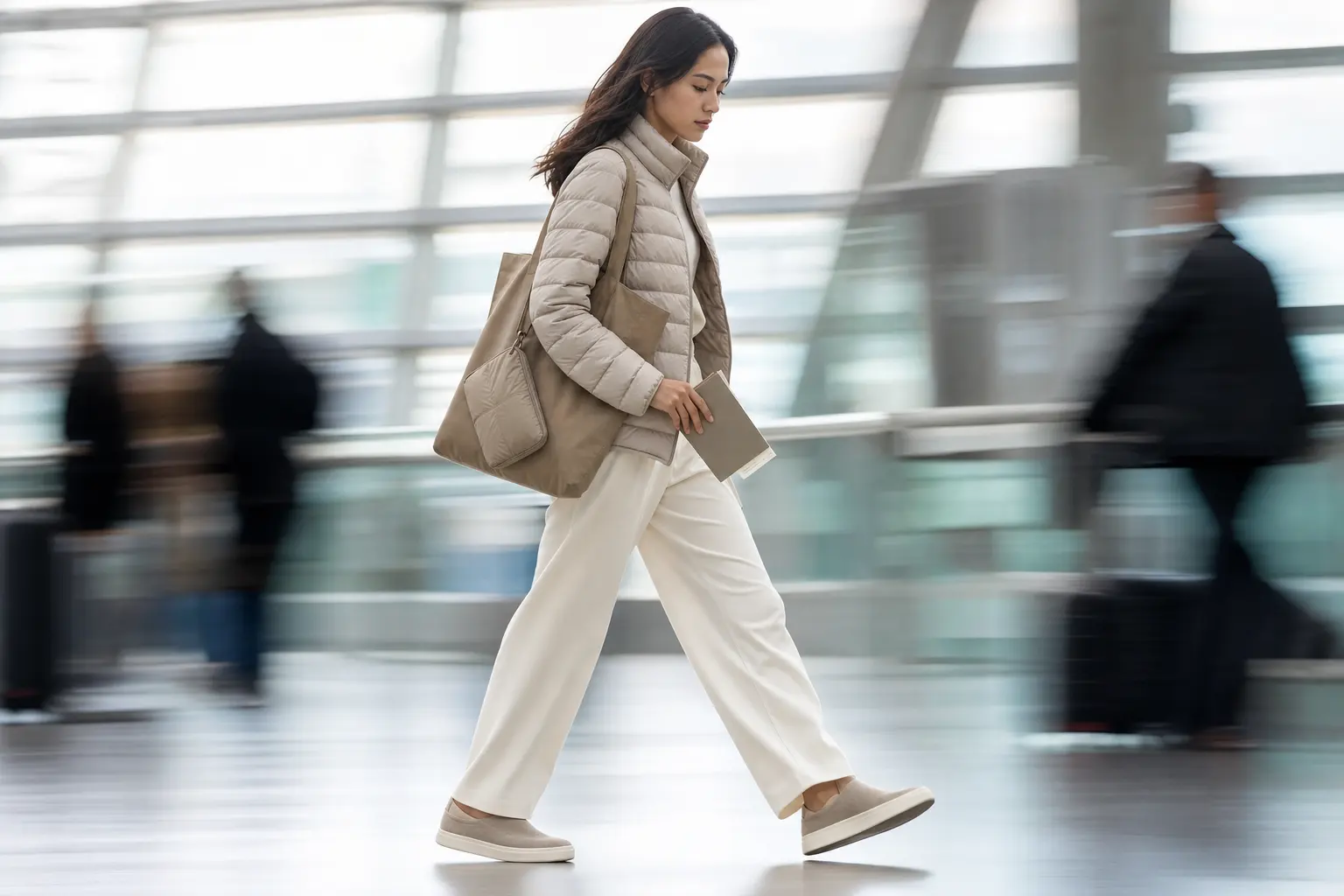
4. Airport / travel look
Pieces: fitted long-sleeve tee, ultralight puffer vest, neck scarf, jogger trousers, slip-on trainers. For inspiration on Korean airport styling and layering for flight, see our Korean Airport Fashion Looks for tangible outfit references and accessory choices: Korean Airport Fashion Looks — How Idols Travel in Style.
5. Weekend streetwear
Pieces: cropped pastel puffer, oversized graphic tee, straight high-waist jeans, high-top sneakers, beanie. Keep one color point and neutral base pieces.
6. Errands and coffee
Pieces: thermal base, zip-up knit, light quilted coat, relaxed trousers, lug-sole boots. Practical pockets are essential here.
7. Layered smart-casual
Pieces: thin cotton shirt, cardigan, long overcoat, tailored trousers, Derby shoes. Use the cardigan as a mid-layer and keep patterns minimal for a clean effect.
These recipes make morning decisions simpler: pick the outer by commute and the mid layer by warmth, then use a single accessory as a color anchor—scarf, beanie, or bag.
Caring for down, synthetics and wool: exactly what to do (and what to skip)
Outerwear care extends life and keeps pieces looking sharp. Down, synthetic puffers and wool require different routines. Follow these steps for each fabric type and avoid common errors that shrink, flatten, or strip insulation.
Down and down-blend puffers
Spot clean minor stains with a damp cloth and mild detergent. For full washing, use a front-load machine on gentle with a specialized down wash or mild detergent. Use cold water and run an extra rinse. Drying is crucial: tumble dry on low with 2–3 clean tennis balls or dryer balls to restore loft. Expect a full dry cycle of 60–90 minutes depending on dryer; pause periodically to break clumps. Never air-dry a saturated down coat—moisture clumps the fill and reduces insulation.
Synthetic puffers
Many synthetics tolerate machine washing better than down. Use a gentle cycle, cold water, and mild detergent. Tumble dry low; synthetics regain loft faster but may develop static—add a dryer sheet for a single pass. For welded-seam shells, avoid high heat to protect laminate coatings.
Wool overcoats
Brush wool with a soft garment brush after each wear to remove surface dust. For smells or light soil, steam the coat—either handheld steamer or hang in a steamy bathroom for 15 minutes—then brush. Dry-clean only when necessary; overuse of professional cleaning strips natural oils. For small holes or loose threads, use a razor or sweater stone to remove pills carefully, then stitch any openings with matching thread before they widen.
Seasonal storage
Store coats in breathable garment bags in a cool, dry place. Fold packable puffers into their storage pouch rather than hanging to save closet space, but for down and wool, hang on broad wooden hangers to preserve shoulder shape. Moth prevention for wool: use cedar blocks—not mothballs—inside the storage bag.
Common mistakes: using hot water, skipping dryer steps for down, and cramming heavy coats into small closets. Follow these steps and your outerwear stays functional and fresh season after season.
Where to shop Korean-designed coats and how POD and small drops change the market
Finding the right Seoul-style coat is a mix of shopping channels: designer labels, small studios, print-on-demand drops, and focused capsule collections. Korean production has increased on-demand capabilities, which makes small-batch outerwear and collectible patch drops possible—an advantage for shoppers who want unique details without waiting for major brand cycles [7].
Korean designer names shape the vocabulary of season dressing, and independent studios combine street references with functional features. For a rounded view of designers and labels that influence outerwear vocabulary, see our designer primer: Korean Fashion Brands to Know: A Designer-Forward Guide. That piece helps you recognize silhouettes and label signatures before you buy.
How print-on-demand affects outerwear
Print-on-demand (POD) reduces minimum order sizes, allowing limited embroidery or patch drops that make a neutral coat feel distinct. When shopping a POD or small-batch outer, check construction details closely: seam reinforcement, liner attachment, and pocket finishing. These are the places small-runs sometimes cut costs. If the product card notes reinforced seams and metal zipper hardware, it’s usually a safer long-term buy.
Shopping checklist for Seoul-style coats
- Confirm detachable liners and zips are robust.
- Test compressibility for puffers—can it fit into a tote or pouch?
- If buying a limited patch or POD piece, inspect stitch density and edge finishing.
- Check return policies for small-batch pieces—fit can vary by run.
For everyday shopping and to see how outerwear pairs with capsule basics, browse StyleMZ’s clothing selection and New Arrivals to sample current outer silhouettes and seasonal drops: Clothing (shop category) and New Arrivals. Small-batch patches and limited editions let you own a piece that reads like street art—without sacrificing function—but always prioritize construction over novelty.
Building a capsule winter coat wardrobe and a practical shopping checklist
A capsule approach minimizes decision fatigue and maximizes wear. For a Seoul-ready winter, the most functional capsule contains three outer pieces: a long padding or heavy coat for real cold, a neutral wool overcoat for smart wear, and a compact cropped or packable puffer for daily commutes. This trio covers 90% of seasonal needs when paired with a small rotation of mid layers.
Capsule breakdown (pieces and quantities)
- One long padding (neutral or black) for the coldest days.
- One structured wool overcoat (camel or charcoal) for smarter outfits.
- One cropped/packable puffer (a color-point option recommended) for everyday wear and travel.
- Two mid layers (one fitted merino, one slim hoodie), two base layers, and two pairs of adaptable trousers.
Budget notes: SPA brands introduced sub-100,000 KRW lightweight puffers in 2025, expanding affordable options for the packable piece, while designer and small-studio pieces command higher prices for construction and detailing [2]. If you plan to prioritize one investment, spend more on the long padding or wool overcoat; the commuter puffer can be economical if it’s primarily a backup layer.
Shopping checklist (exact questions to ask)
- Is the liner removable and fastened with secure hardware?
- Can the puffer compress to fit inside a standard tote or pouch?
- Does the coat list fill type and care instructions clearly?
- Are seams reinforced at stress points and is the hardware durable?
When trying on coats, perform three quick checks: sleeve seam alignment at the shoulder, hem balance with your typical trousers, and whether the coat gapes at the chest while buttoned or zipped. If two out of three checks fail, try a different size or silhouette. Build slowly: start with one reliable outer, then add a color-point or small-batch piece each season.
Seasonal trends and what to expect next winter in Korean outerwear
Seasonal trends offer tactical signals for buying: in 2025–26 Seoul saw a movement toward lighter, more versatile puffers and a visible color shift to pastel and pink accents [2][3]. Cropped puffers rose with Gen‑Z streetwear influences, and limited POD drops made collectible patches common [4][7]. Expect that trajectory to continue, with small studios experimenting with hybrid coats—wool shells with detachable puffer liners, or padded panels in tailored coats.
What to shop now for next winter
If you’re planning ahead, choose versatility over maximal trend. A well-constructed neutral long padding or wool overcoat remains a season-defining buy; add a cropped pastel puffer as your trend piece. If you travel a lot, invest in a high-quality packable puffer with welded seams and a compression pouch. For a fashion-forward edge, look for removable patches or limited embroidery that you can swap between seasons.
Retail behavior note: market reporting shows the Korean puffer-jacket market was valued around USD 211.32 million in 2025, which helps explain designers’ emphasis on variety—there’s consumer appetite for both heavy long padding and lighter, packable options [1]. Given the market’s size, designers will likely keep releasing hybrid and convertible outerwear that bridges streetwear and tailored wardrobes.
Practical move: buy one timeless outer (wool or heavy padding) and one seasonal playful piece (cropped pastel puffer or special-patch coat). That combination keeps your wardrobe grounded and gives you currency on the street without overinvesting in fads.
Shop the collection: Korean graphic tees, Korean long sleeve shirts, Korean sweatshirts, Korean hoodies and Korean tank tops – original graphics designed in Korea, made to order.
Frequently Asked Questions
Which coat length is best for Seoul winters?
For raw, sustained cold and wind, a long padding coat is best because it protects the legs and traps more warm air. For daily urban life with frequent indoor transitions, a cropped or packable puffer offers better mobility. A wool overcoat sits between these extremes for polished indoor/outdoor days.
How do I layer for warmth without adding bulk?
Use the three-layer system: a fitted thermal base, a slim mid layer (thin knit or slim hoodie), and a structured outer. Keep the base thin to preserve silhouette, choose a mid layer that provides insulation but not mass, and pick an outer that complements rather than swallows the mid layer.
What features should I prioritize for commuting?
Prioritize a packable or cropped puffer with a secure zipper, lined hand pockets, and a compressible design. Removable liners and a weather-resistant shell help for unpredictable commutes. A neutral base color with one color-point accessory keeps your look flexible.
How do I care for down and synthetic puffers?
Wash down on a gentle cycle with specialized detergent, then tumble dry low with dryer balls to restore loft—air-drying wet down will clump fill. Synthetics tolerate machine washing more easily but should be dried low to avoid damaging finishes. Spot-clean when possible and follow the manufacturer’s label.
Are limited POD patch drops worth it?
Yes for individuality—POD patches let you personalize a neutral piece without significant cost. However, inspect construction (stitch density, seam finishing) before buying a small-batch outer; novelty is only worth it if the coat’s fundamentals are sound.