 OBJECT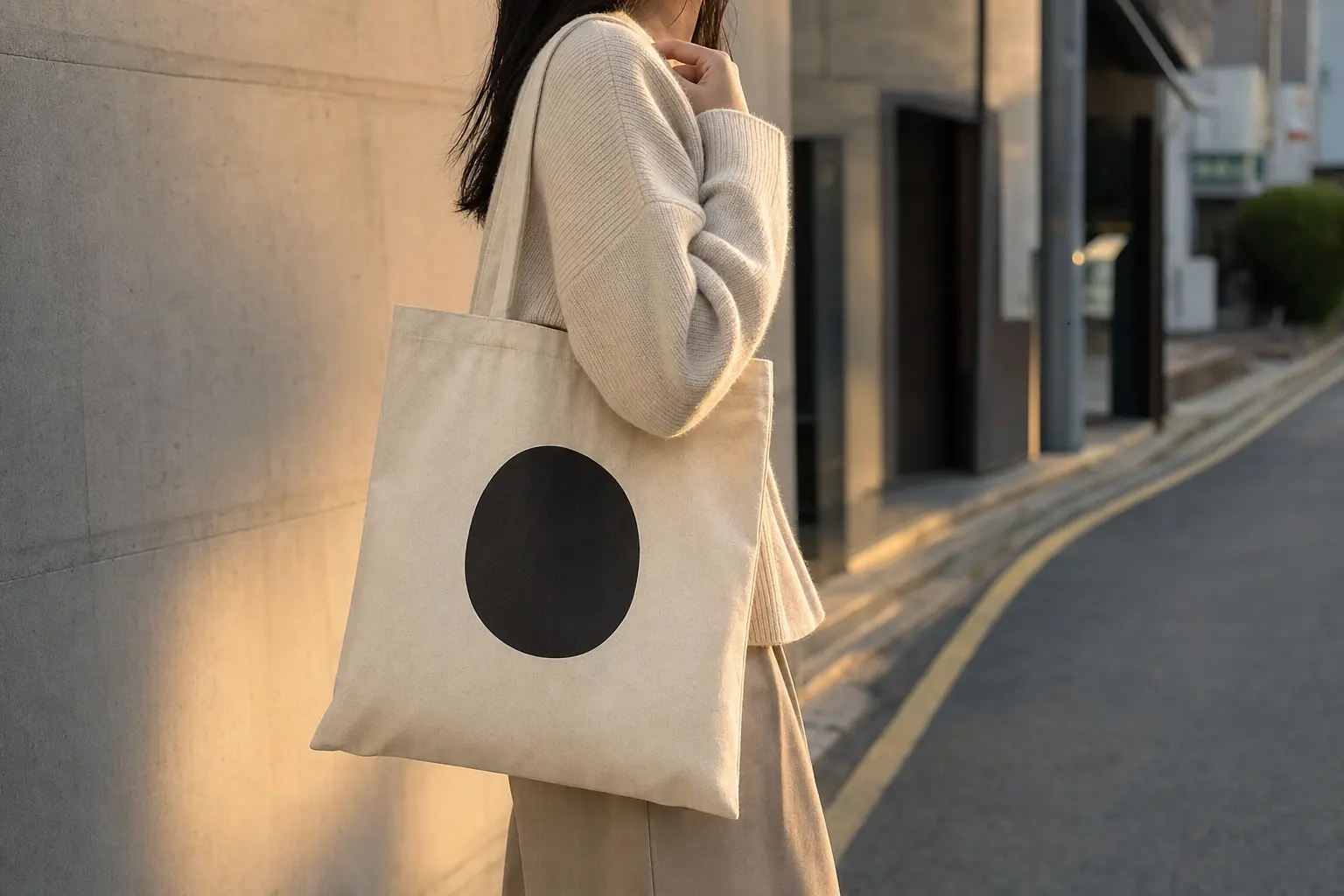
Korean tote bag styling starts with one clear rule: keep it considered, not loud. Korean tote bag styling blends minimal materials, artist-made graphics and an effortless shoulder carry—neutral canvas, long handles, and a single bold print or clean text are Seoul staples.
This article breaks down what to look for (canvas weight, print type, handle drop), exact outfit pairings for street, campus and work-adjacent looks, how to care for printed canvas, and which StyleMZ pieces fit each need.
Why Koreans love the canvas tote: a short cultural primer
Canvas totes are everywhere in Seoul because they balance utility with taste. The look is unforced: a neutral cotton canvas acts as a blank stage for a single graphic or line of calligraphy. That quiet center is what makes a tote feel like part of an outfit rather than an accessory trying too hard. In Seoul’s neighborhoods—from Hongdae to Seongsu—you’ll see totes used like an identity device: an artist print, a slogan, or the city name quietly announcing the wearer’s aesthetic.
Functionally, canvas handles Seoul’s quick-change weather better than delicate leather. A mid‑weight canvas bag resists wind and light rain while keeping structure for daily items like a 13″ laptop, a water bottle, and a small umbrella. That’s why many local designers favour long handles for an over‑the‑shoulder carry: strap drops in the 15–25 cm range are common because they free up hands for a phone, coffee, or transit card.
Design-wise, the Korean preference is minimal and graphic. Small centered prints, distressed calligraphy, and single-color sketches read as intentional. The aesthetic also leans practical: interior pockets, reinforced stitching and open tops that are easy to access during a quick subway exit. Those details make the bag useful without drawing attention to luxury cues like heavy hardware or big logos.
How this plays into your wardrobe
- Neutral canvas keeps outfits cohesive—think natural, oatmeal, and stone shades.
- A single statement print works as the outfit’s focal point; avoid matching multiple loud accessories at once.
- Long strap, slouch-friendly structure—wear the tote on the shoulder for an authentic city look.
Choosing the right canvas weight, size and construction
Picking the correct canvas weight and construction is where the tote goes from ‘just a bag’ to a reliable daily tool. For everyday carry in Seoul-style, mid‑weight cotton canvas—around 10 oz (≈339 GSM)—is the sweet spot: it holds shape, resists creasing, and still folds when you want to pack it flat [1]. Lighter 6–8 oz canvases are fine for giveaways or very light loads; heavy duck canvas (12–16 oz) gives a rigid, workwear feel but can be stiff and bulky for daily shoulder carry [2].
Handle length matters as much as body weight. For comfortable over‑the‑shoulder wear, look for a strap drop of roughly 15–25 cm and reinforced stitching (box‑X or bartack) where the handles meet the bag. Interior pockets and a flat base or small gusset turn a casual tote into a commuter bag that keeps a phone, keys, and small notepad organized. Zippered tops are practical in rainy seasons, but open tops are more common in Korean streetwear for quick access.
Printing technique also influences choice: if you want a bold, single‑colour logo or calligraphy, screen printing on cotton canvas is economical and durable. For multi‑colour photographic prints, most POD providers recommend polyester substrates or AOP-compatible blanks rather than standard cotton—full‑bleed photo prints on cotton will be limited in colour range unless special discharge inks are used [3].
Quick comparison of common specs
| Feature | 10 oz Cotton | 12–16 oz Duck |
|---|---|---|
| Feel | Structured but pliable | Very rigid, durable |
| Use case | Daily carry, campus, streetwear | Work bags, heavy loads |
| Prints | Screen, DTG, discharge | Best for bold prints, limited colours |
| Typical strap drop | 15–25 cm | May require longer straps |
| Care | Machine wash cold, air dry | Spot clean or gentle wash |
Use this table to match function to fabric. For a daily Seoul tote that feels light on the shoulder but holds essentials, target the 10 oz canvas option and look for reinforced handles and at least a small interior pocket [2].
Prints, placement and the graphics that read as Korean streetwear
Graphics decide the tote’s personality. In Korea, the trend favors restraint: one strong element placed centrally or offset near the upper third of the bag reads as intentional design. Small, hand-drawn motifs or distressed calligraphy have more cultural resonance than glossy photographic panels. Minimalism with a twist—either a single bold smiley, a line of city text, or an evocative sketch—fits Seoul’s sensibility.
Print methods change the look and longevity. Screen printing gives dense, matte colour that sits on top of the canvas and wears in a pleasant way. DTG (direct-to-garment) can reproduce detailed art but loses punch on rough cotton textures unless pretreated. Discharge printing on natural cotton yields soft-to-the-touch prints by removing dye from the fabric; it’s prized for a vintage feel but requires specialist inks and works best on dyes, not natural canvas bases [3].
If you want a photographic, full‑bleed effect, choose polyester substrates or AOP-capable blanks—standard cotton canvas won’t reproduce the same saturated results without special treatments. For graphic longevity, avoid heavy metallic finishes and select water-based or pigment inks, both of which age better and are easier to care for.
What to avoid and what elevates a print
- Avoid multi-logo clutter—one artist print or phrase is more effective.
- Prefer prints positioned near the centre or top third for visual balance.
- Choose pigment or water-based inks for washability; avoid direct ironing over the print.
When a design is part of your outfit, its scale is crucial: a small chest-size motif pairs well with layered neutrals; a large sketch commands a simpler base outfit. That’s why many Seoul designers favor single-image statements—the tote becomes an accessory, not the whole outfit.
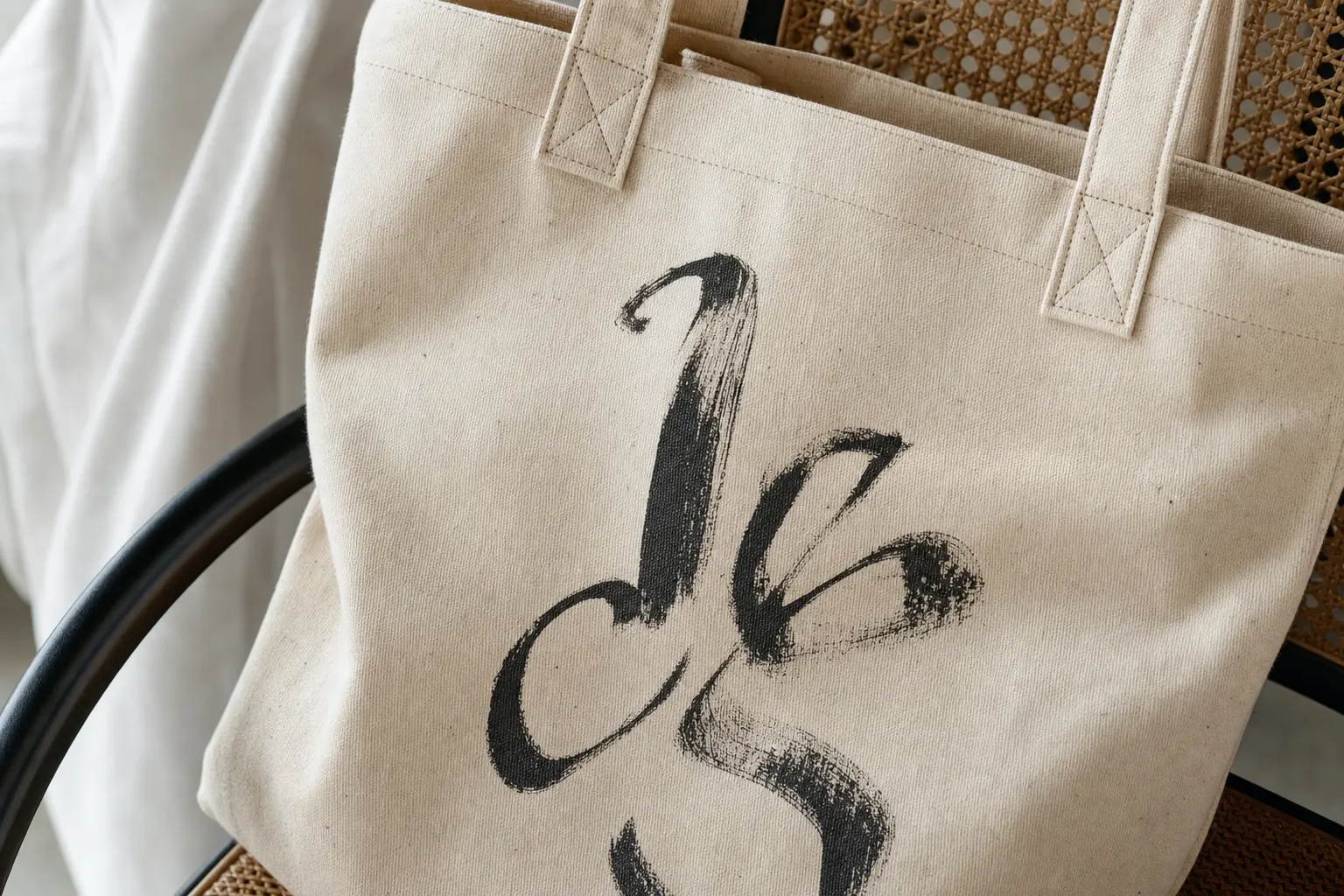
For a classic Seoul-ready tote, the ‘Live Simply’ distressed calligraphy aesthetic speaks the language of minimal graphics and practical prints.
Why this works: this canvas print is centered, uses distressed Korean calligraphy for an artsy-but-subtle statement, and is made on durable cotton—perfect for daily use and pairing with minimalist looks.
Outfit recipes — how to style a tote for nine Seoul-ready looks
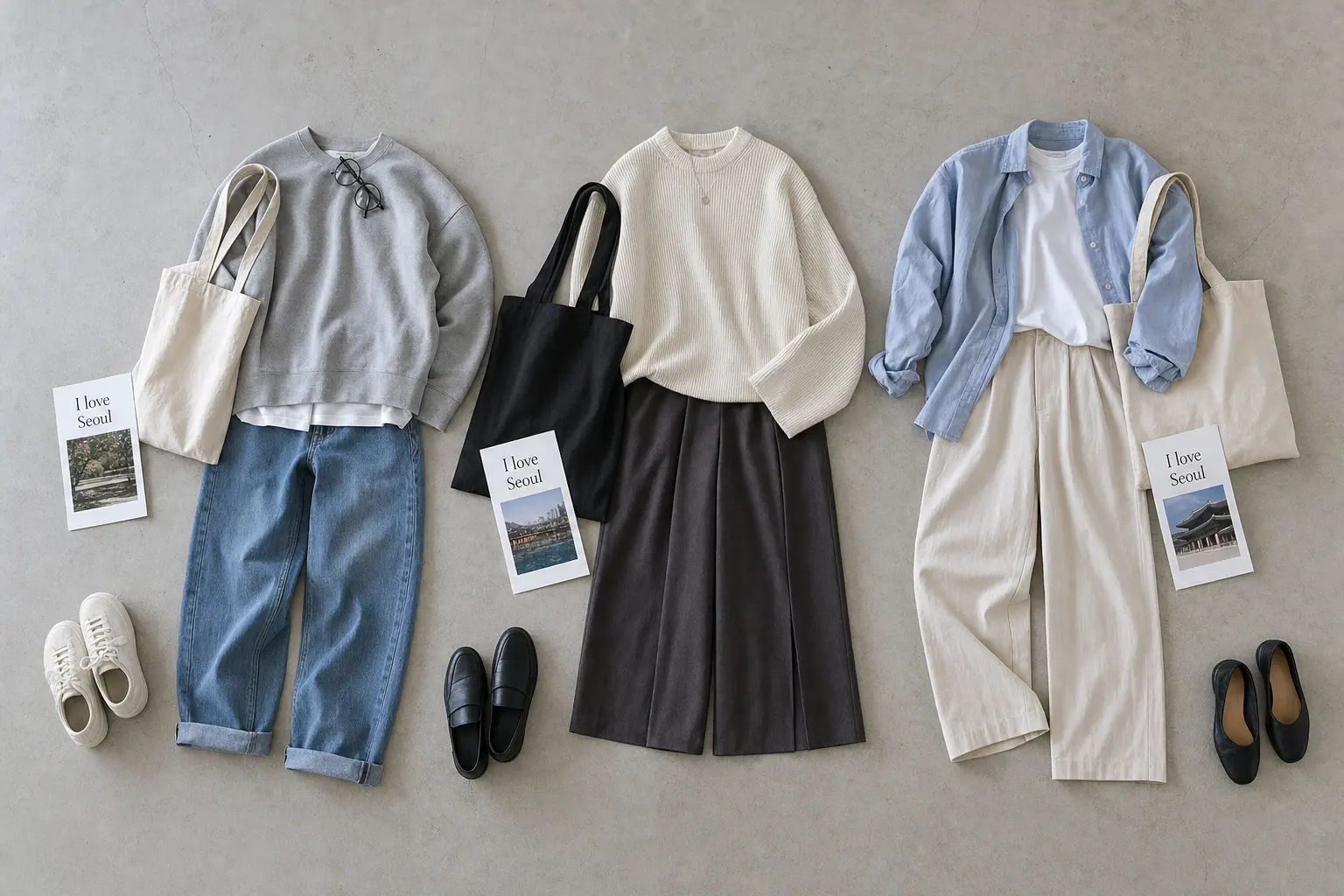
Seoul outfits are about proportion and mood. The right tote anchors an outfit whether you’re heading to class, the office, or a café. Below are specific recipes with exact pairing notes—materials, colours and small styling moves that matter.
1. Campus casual
Wear a slouchy sweatshirt, straight-leg jeans and a mid‑weight canvas tote over one shoulder. Keep the tote natural or light‑tone and let the graphic be the outfit’s only print. Add a thin crossbody phone case for hands-free transit.
2. Minimal city run
Monochrome knit top, cropped trousers, and the tote slipped under the arm. A tote with reinforced long handles keeps the line clean; avoid bulky gussets that disrupt the silhouette.
3. K‑shopper layered
Layer an oversized short-sleeve shirt over a long-sleeve tee, pair with slim cargo trousers, and sling the tote cross‑body or shoulder. Opt for a tote graphic that nods to art or city names rather than brand slogans.
4. Work-adjacent smart
Swap denim for tailored culottes and choose a structured canvas with a flat base. A neutral ‘I love Seoul’ tote reads cultured and city-specific without being loud.
Why this product fits: the ‘I love Seoul’ Premium Tote Bag Natural is a sturdy 100% cotton canvas tote with reinforced long handles that suit shoulder and hand carry. Its city text motif works as a subtle focal point in both casual and smart looks, making it versatile for campus and polished outfits.
5–9. Weekend market, travel airport comfort, artsy gallery visit, summer picnic, and evening casual: treat the tote as your secondary piece. When the bag’s graphic is bold, neutralize the rest of the outfit. When the outfit is busy, pick a natural canvas with minimal print.
- Use handle position to change mood: short carry for tidy looks, shoulder slouch for relaxed ones.
- Match the tonal weight of the canvas to shoe weight—light canvas with sneakers, heavier canvas with boots.
- Store soft items inside (scarf, tee) to create a pleasing, structured silhouette when the bag feels flat.
These recipes reflect how Seoul wears the tote: practical, graphic, and quietly designed for the city’s pace. For gender-neutral proportions and runway‑proven tweaks, see how Korean designers are shaping streetwear trends in our write-up on Seoul Fashion Week.
Seoul Fashion Week Trends: What 2026 Runways Are Selling Right Now
Sizing, carrying and real‑world details that matter
Size the tote to its role. A compact tote (roughly 30–35 cm wide) works for daily essentials, while a larger 35–40 cm width with a 32–40 cm height is better for students or those carrying laptops and sketchbooks [2]. Gusseted bases add capacity but widen the silhouette; flat panels give a slimmer profile and sit closer to the body.
Carrying posture changes how the tote dresses. Over‑the‑shoulder carry elongates the torso; brief arm carry reads tidy and formal. If your daily load includes heavier items, choose a bag with box‑X reinforced handle stitching and consider leather or strong webbing handles to reduce stretch. Many StyleMZ premium totes list reinforced long handles precisely for this reason.
Small construction details bring longevity: metal rivets or bartacks at stress points, an interior pocket for small items, and a top closure if you commute in rainy months. If you rely on the tote as your main bag, pick a 10–12 oz canvas with a declared capacity near 10 kg and reinforced seams—factory specs commonly list these measures for commuter-ready models [2].
Packing tips to keep shape
- Pack heavier items close to the base to prevent the bag from sagging and to keep the shoulder carry comfortable.
- Flat items like notebooks should be placed against the back of the bag to maintain a sleek profile.
- Use a small pouch or structured organizer for loose items so they don’t fall to the bottom and create uneven bulges.
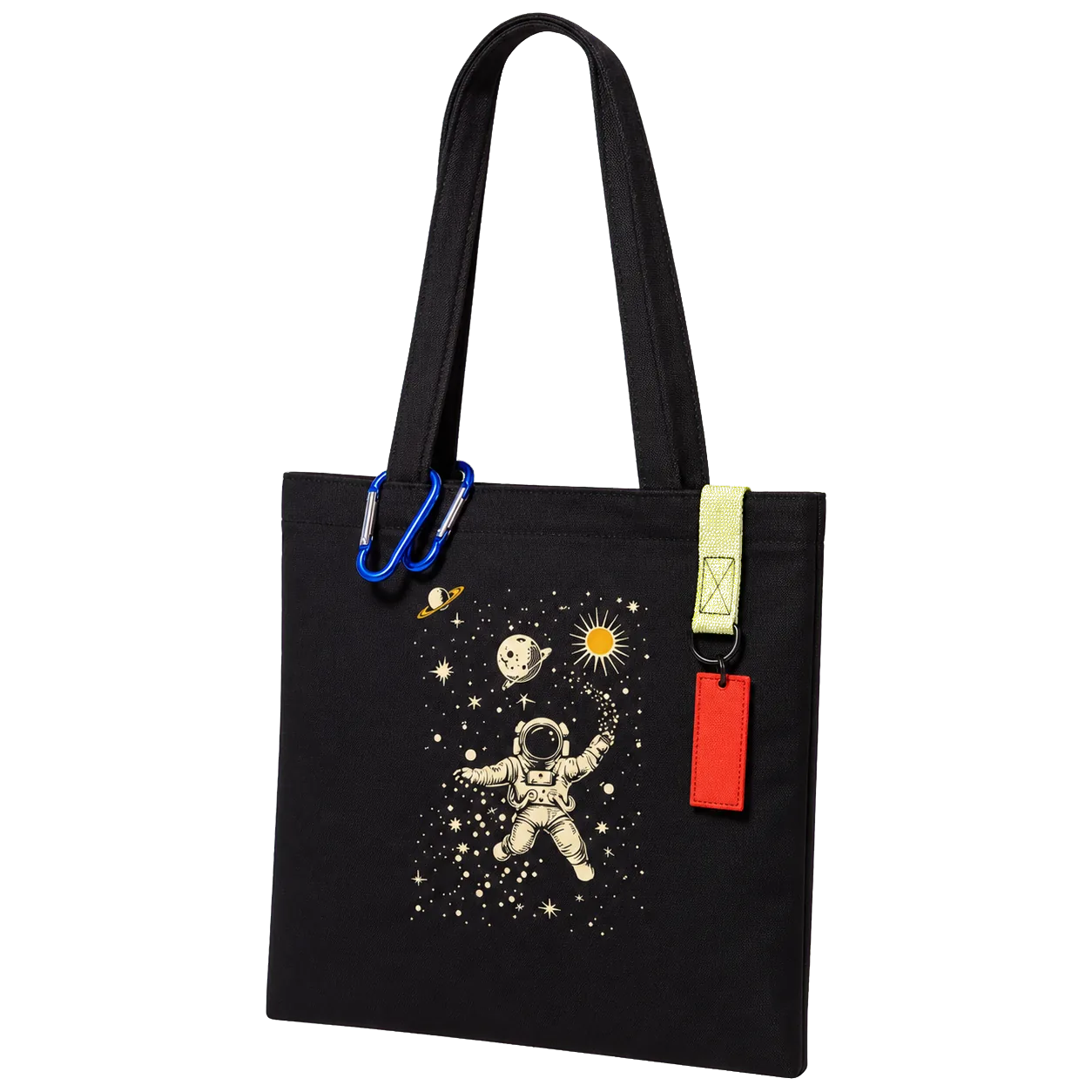
For everyday errands and city roaming, the ‘Astronaut caching stars’ tote is a premium heavyweight option that stays structured. Its reinforced long handles and heavier cotton keep the silhouette stable while the whimsical print reads youthful and artistic—ideal when you need a bag that holds its form for heavier loads.
Why this works: heavyweight build, reinforced long handles and a design that balances structure with personality.
Care, finishes and the compliance checklist every buyer should know
How you wash a tote influences how long the print and canvas will last. Standard POD and POD-adjacent care recommendations for cotton canvas are: machine wash cold (≈30°C / 90°F), gentle cycle; avoid chlorine bleach; tumble low or air-dry; and do not iron directly over prints [4]. These simple steps protect pigment and water-based inks and extend the fabric’s life.
Be cautious with surface finishes. Water- or stain‑repellent coatings often used on lifestyle totes may include PFAS chemistries; California introduced restrictions on PFAS in textile articles on Jan 1, 2025 (threshold 100 ppm TOF), tightening to 50 ppm on Jan 1, 2027—this affects treated finishes and consumer safety claims [5]. If you want a water-repellent surface but prefer fewer regulatory risks, choose untreated natural canvas and use removable, PFAS-free fabric sprays only when necessary.
When caring for printed canvases, avoid long hot washes and never use chlorine bleach; pigment and water-based inks can fade or change texture under heat. Air drying keeps shape and prevents heat from setting into the print. If a print looks distressed by design, that’s part of its aesthetic—do not attempt to restore it with detergents that strip pigments.
Repair and maintenance moves that extend the bag’s life
- Reinforce loose stitching at handles with a small hand-sew using heavy thread before the tear grows.
- Spot-clean stains promptly with mild soap and a soft brush; rinse and air-dry.
- If a tote loses structure, fold and flatten it, then stuff with a towel and let it sit to relax the canvas into a neater shape.
For buyers who prefer artist-made prints and careful wash instructions, pick made‑to‑order totes that list care clearly. StyleMZ’s premium cotton options provide the kinds of ink and fabric pairings that hold up to recommended care—and they’re printed on demand so you won’t find unknown chemical finishes hidden in a mass-run batch.
Buying strategy: POD, made-to-order and seasonal trends to watch
Deciding whether to buy off-the-shelf or made-to-order should hinge on quantities, print method and your tolerance for lead times. Screen printing is cost-effective for larger runs and provides a durable, matte finish; DTG and heat transfer suit short runs and samples. Print-on-demand (POD) is ideal for unique artist prints and small batches because it avoids inventory risk, but lead times can be longer depending on print method and factory schedules [3].
Supply-side realities matter: many manufacturers list 10 oz or 12 oz canvas in their specs, and declared capacities of around 10 kg for basic canvas models are common—use those factory specs as a baseline when you’re comparing options [2]. For seasonal trends, Korean street and campus styling favors natural-tone canvases and woven textures in spring–summer, while graphic logo and slogan totes remain year-round staples—so buy the neutral base and swap designs seasonally if you like variety [7].
Promotional and reusable bag markets remain large, but fashion-conscious shoppers prefer fewer, better-made pieces. Buy one or two premium made-to-order pieces for everyday use and add a printed novelty tote for weekends. That strategy reduces waste and keeps your wardrobe cohesive.
Where to place your purchase bets
- Buy a mid‑weight, reinforced-handle tote as your daily bag.
- Add a small artist-print tote for seasonal rotation.
- Use POD for one-off artist collaborations, but expect slightly longer lead times for specialty inks or discharge printing [3].
StyleMZ’s ‘Make me smile’ Premium Tote Bag Natural is a strong seasonal pick: a bold smiley-face print, premium 100% cotton, and made-on-demand production make it perfect as the playful second bag in a curated roster. Its graphic is readable at a distance and pairs well with minimalist city looks.
For more context on how genderless silhouettes and runways in Seoul are shifting streetwear codes, our article on the genderless Korean fashion trend explains why simple totes work cross‑gender and across looks.
How the Genderless Korean Fashion Trend Rewrote Streetwear Rules
If you’re browsing StyleMZ’s popular pieces first, check the Most Viewed collection for current favourites and styling cross-references.
Shop the collection: Korean graphic tees, Korean long sleeve shirts, Korean sweatshirts, Korean hoodies and Korean tank tops – original graphics designed in Korea, made to order.
Frequently Asked Questions
Which canvas weight should I choose for daily use versus giveaways?
For daily use choose a mid‑weight cotton canvas around 10 oz (≈339 GSM). It balances structure and pliability so the bag holds shape but isn’t stiff. For giveaways or very light use, 6–8 oz canvas is cheaper and lighter; for heavy-duty loads choose 12–16 oz duck canvas, but expect a stiffer feel.
Can you print full-colour photos on a cotton tote?
Photographic, full‑bleed prints are best on polyester AOP blanks or specially coated substrates. Standard cotton canvas reproduces graphics well with DTG or discharge but won’t give the same saturation as polyester-based all‑over print methods. For a richly saturated photo look, opt for an AOP-capable fabric rather than standard natural cotton.
How should I wash and maintain a printed canvas tote?
Machine wash cold (≈30°C / 90°F) on a gentle cycle, avoid chlorine bleach, and air dry or tumble low. Do not iron directly over prints; if needed, place a cloth over the print and iron on low. Prompt spot-cleaning and storing the tote flattened will extend both fabric and print life.
Are organic or recycled totes really certified?
Certifications like GOTS (for organic cotton) or OEKO‑TEX are real and require documentation—if a tote claims certification, ask for the certificate or look for a verified product page. Recycled options (rPET) are common but should state the standard or percentage of recycled content. Genuine claims generally come with a certification label or verified product spec.
Do water‑repellent finishes create compliance risks?
Yes—some water‑resistant finishes use PFAS chemistries. California restrictions on PFAS in textiles took effect Jan 1, 2025 at 100 ppm TOF and tighten to 50 ppm on Jan 1, 2027. If avoiding these chemicals matters to you, choose untreated canvas or confirm the vendor uses PFAS‑free treatments and can provide compliance details.